Plan for an adult you can actually handle
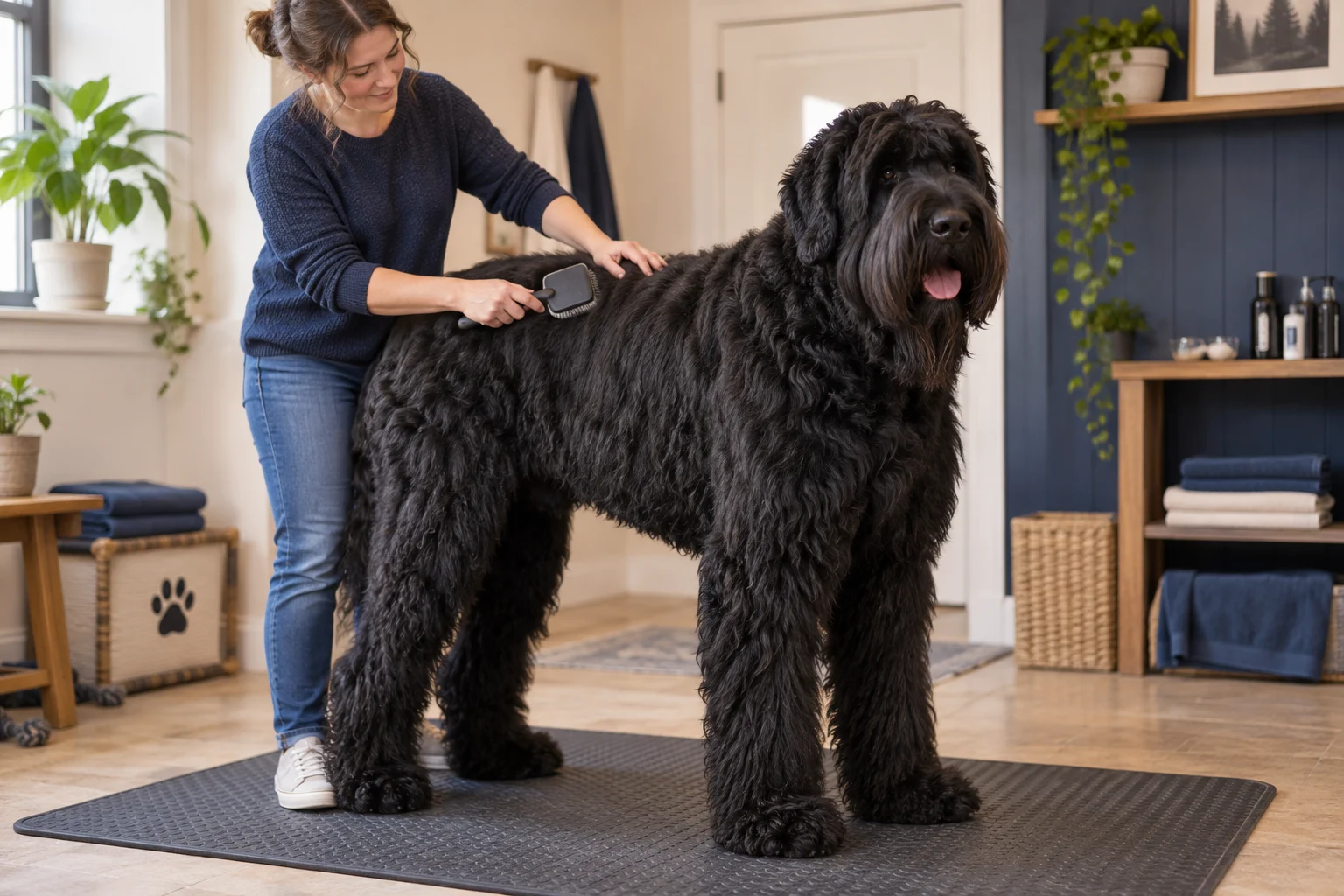
AKC lists an adult reference of 80–130 pounds. Walk through the places where size matters: the vehicle opening, the route to the veterinary clinic and the space beside the grooming area. Check who can assist if the usual handler is away. A calm greeting during one visit does not establish whether your whole household can manage the dog in those settings.[1]
Turn a visitor policy into a routine
The breed has a guarding background and can be reserved with unfamiliar people. Make a clear arrival arrangement: who answers the door, where the dog waits, and how a guest knows when to enter. Ask the current carer to explain an ordinary successful visit. You are looking for a reproducible arrangement rather than a promise that the dog will protect you.[1]
Budget for the beard as well as the body
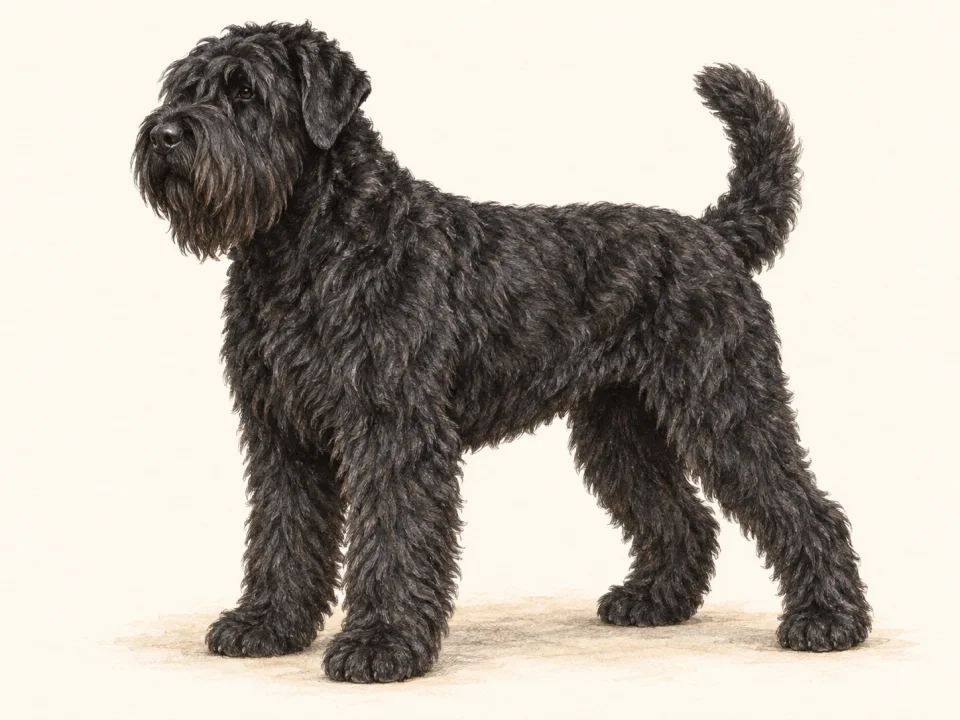
AKC describes a dense double coat requiring regular brushing and trimming. Ask a groomer to show the work around the face and beard, not only the attractive final silhouette. Write down what you should do between visits and what needs professional attention. Price the appointment for the actual coat condition and size instead of using a generic small-terrier estimate.[1]
Choose a skill you can demonstrate
Select one household task, such as waiting while a door opens, and ask a reward-based trainer how to introduce it. Every carer should use the same cue and record what assistance was needed. Practice under manageable conditions before adding visitors. The point is reliable communication with a powerful dog, not winning a contest of strength or judging success by the number of repetitions.[1]
Keep screening claims attached to records
Request identifiable health reports and ask the veterinarian which records are relevant to your prospective dog. A parent’s screening, a puppy examination and a current adult assessment are different pieces of information. Store the original documents together and note the questions that remain unanswered. Do not let a reassuring label on an advertisement substitute for a conversation about the evidence.[1]
Test the backup-care arrangement
Give the proposed backup carer a realistic handover: demonstrate the transport setup, handling cues and grooming equipment, then let them explain the plan back to you. Identify any step that would be difficult alone. Fix that logistical gap before booking travel. A suitable care network needs to work on an inconvenient day, not only when the usual owner is present.[1]
Frequently asked questions
How big is a Black Russian Terrier?
AKC lists adults at 80–130 pounds, with males about 27–30 inches tall and females about 26–29 inches. Check vehicle access, resting space and who can handle the adult dog before committing.
Source [1]Does a Black Russian Terrier need professional grooming?
Its dense double coat requires regular maintenance, including care around the beard and face. A professional can demonstrate the upkeep and help you decide which tasks you can safely manage at home.
Source [1]Is the Black Russian Terrier a small terrier?
No. Despite the name, this is a substantial working dog. Plan around the published adult size rather than assumptions associated with smaller terriers.
Source [1]What health records should I request?
AKC lists hip, elbow, cardiac and eye checks, plus a JLPP DNA test. Ask for identifiable reports and discuss their meaning with your veterinarian; a list of tests is not a guarantee of health.
Source [1]FAQ sources
- American Kennel Club — Black Russian Terrier ↗FAQ reference 1
Sources & methodology
Breed-level measurements and comparison scores provide context. They do not predict an individual dog's health, behaviour or suitability. Open the original publisher pages below to verify the facts and compare any later updates.
- American Kennel Club — Black Russian Terrier breed and care guidance ↗Reference 1 · reviewed 2026-09-26
Make it about your dog
Build a profile around your dog's age, experiences and everyday needs.
Meet your dog →Explore local care