
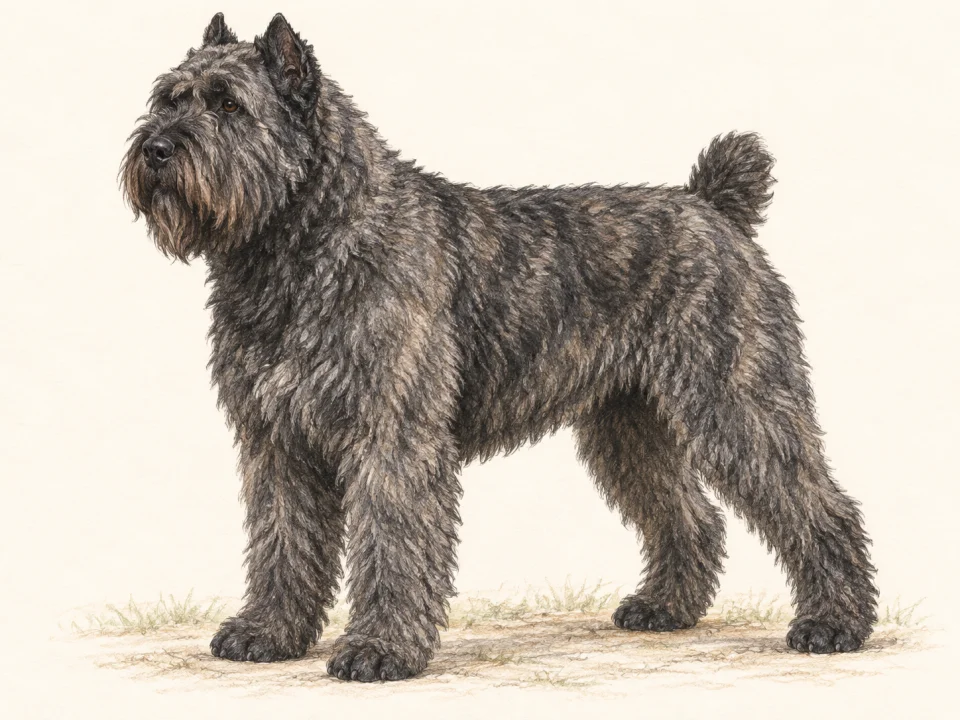
Plan for the adult beneath the rough coat
AKC references males at 24.5–27.5 inches, females at 23.5–26.5 inches, with a weight range of 70–110 pounds. Consider transport and the ability of regular carers to manage the adult safely. Measure equipment around the actual frame, not the volume of hair. A large sturdy appearance does not make the highest reference weight an appropriate feeding target.[1]
Make the working role useful in a household
Choose appropriate tasks such as controlled searching, reward-based learning or a suitable dog activity alongside exercise. Define who provides that engagement on ordinary workdays. Do not treat children as a job for the dog to supervise or herd. Adults remain responsible for safe interactions, and the dog should have its own clear activities and protected resting space.[1]
Build physical demands gradually
The AKC guidance cautions against heavy exercise while the dog is growing. An eager puppy should not automatically follow a fit adult’s running or load-bearing routine. Ask your veterinarian about development and condition, then increase demands appropriately. Meanwhile, teach practical cooperation such as standing for checks and walking calmly so later activity is easier to manage.[1]
Keep prey interest under deliberate control
A dog that enjoys working with its owner can still be strongly interested in moving animals. Use a leash outside secure areas and assess other-pet introductions individually. Practise attention with manageable distractions rather than repeatedly testing it in a chase situation. A favorable training reputation is a reason to teach carefully, not evidence that containment or supervision is unnecessary.[1]
Include the beard in the grooming plan
AKC recommends brushing once or twice weekly with suitable tools, with attention to the beard as needed. Check beneath the outer coat and around equipment contact points for debris and tangles. Teach brief comfortable handling rather than leaving all care for a long session. Nails, ears and teeth also need routine attention even when the coat occupies most of the grooming time.[1]
Request the listed tests and clarify their scope
AKC gives a lifespan reference of 10–12 years and recommends hip, elbow, cardiac and eye evaluations. Obtain reports identifying the dogs assessed and discuss wider family history. A long list of possible concerns is not evidence that one panel tests for all of them. Keep individual veterinary advice separate from general statements about a robust working breed or its diet.[1]
Frequently asked questions
How large is a Bouvier des Flandres?
AKC lists a 70–110 pound range, with males 24.5–27.5 inches tall and females 23.5–26.5 inches. Use individual measurements and body condition rather than feeding toward the largest number.
Source [1]Can a growing Bouvier do the same heavy exercise as an adult?
Do not assume so. The cited guidance cautions against heavy exercise during growth; discuss development and gradual conditioning with your veterinarian.
Source [1]How often does the coat need brushing?
AKC recommends once or twice weekly, with beard care as needed. Check through the coat rather than only tidying its outer outline.
Source [1]Does the recommended test panel exclude every listed health concern?
No. Hip, elbow, cardiac and eye evaluations answer specific questions. Request actual records and discuss other family-history concerns separately.
Source [1]FAQ sources
Sources & methodology
Breed-level measurements and comparison scores provide context. They do not predict an individual dog's health, behaviour or suitability. Open the original publisher pages below to verify the facts and compare any later updates.
- American Kennel Club — Bouvier des Flandres breed and care guidance ↗Reference 1 · reviewed 2026-09-27
Make it about your dog
Build a profile around your dog's age, experiences and everyday needs.
Meet your dog →Explore local care