
Muddy Dog Paws After a Walk: A Calm Doorway Cleanup Routine
Set up a simple muddy-paw station, decide when to towel or rinse, clean between the pads and help your dog learn a calmer after-walk routine.
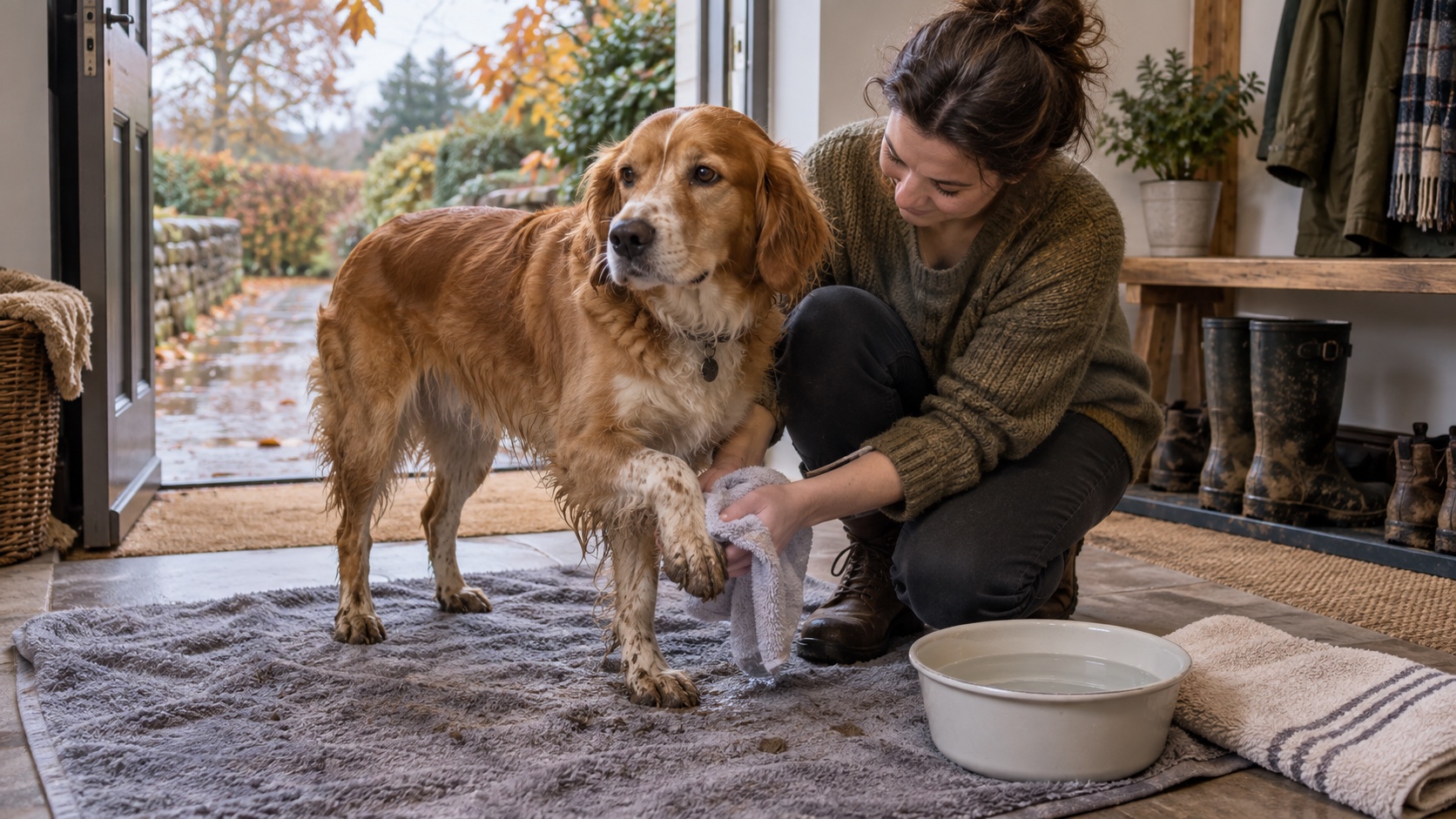
Use three small zones instead of chasing muddy footprints
Before the next wet walk, set up a pause zone outside or just inside the door, a cleaning zone on a non-slip towel, and a dry zone beyond it. Put a damp cloth, a bowl of clean lukewarm water, two dry towels and the dog's usual rewards within reach. The lead stays on until the paws are clean and the route into the house is clear.
At the pause zone, let loose mud fall from the coat and check what is actually on the paws. Move onto the large towel, clean one paw at a time, then dry before releasing the dog into the home. This sequence keeps the job predictable and gives the handler somewhere safe to put wet equipment.
Keep the setup modest. A clean towel and water are enough for many ordinary walks. A crowded collection of scented sprays, gadgets and new handling rules can make the doorway harder for both dog and person.
Choose a towel, a rinse or professional advice
For paws that are wet but visibly clean, dry them thoroughly with a towel. For a light film of ordinary mud, use a damp cloth or pet-safe wipe and then dry. When mud is packed between the toes or around the pads, a gentle rinse with lukewarm water is more useful than repeated rubbing. The American Kennel Club advises checking between the toes, around the pads and under the nails, then drying thoroughly.
If the dog may have walked through road salt, ice melt or another known irritant, wash the paws rather than treating the material as ordinary mud. The ASPCA recommends washing and drying feet after winter walks to remove salt and chemicals. For an unknown spill, corrosive substance or possible poison, keep the dog from licking and call a veterinarian or animal poison service for instructions.
Do not use household cleaners, alcohol, essential oils or human shampoo on the paws. A product being safe for floors or human skin does not establish that it is safe for a dog to lick.
| What is on the paw | First step | Escalate when |
|---|---|---|
| Clean rainwater | Dry thoroughly with a towel | The dog is limping or the skin looks irritated |
| Light ordinary mud | Use a damp cloth or pet-safe wipe, then dry | Debris remains between the pads |
| Packed mud or grit | Rinse gently with lukewarm water, check and dry | There is a cut, torn nail, swelling or pain |
| Salt, ice melt or known irritant | Wash and dry; prevent licking | Exposure is unknown, corrosive or symptoms appear |
Make the cleaning surface secure
Put the large towel or a rubber-backed mat on a level floor so the dog is not balancing on a slippery tile. Keep the bowl where it cannot be kicked into the walking route. If two adults are available, one can hold the lead loosely and deliver rewards while the other handles the towel.
Stand or kneel beside the dog rather than pulling a leg forward from the front. Many dogs can keep the paw on the towel while you wipe the top and sides; lift it only as far and as long as the dog can manage comfortably. Support the lower leg without twisting the joints.
If the dog repeatedly pulls away, freezes, growls or becomes more worried, stop forcing the cleanup. Create more space, use the least handling needed for the immediate mess and plan short practice sessions when the dog is dry and calm. Pain, a sudden change in tolerance or an inability to bear weight needs veterinary advice.
Clean and check one paw at a time
Start with the least muddy paw so the first repetition is easy. Wipe from the lower leg toward the paw, then gently clean around the pads and between the toes. Change the cloth or rinse the water when it becomes dirty rather than moving grit from one paw to another.
As you clean, look for a torn nail, cut, crack, swelling, redness or material caught between the pads. The ASPCA recommends regular checks for wounds, infection and foreign objects. Do not dig at an embedded object or cut a mat from a moving paw; ask a veterinarian or qualified groomer when safe removal is uncertain.
Use the second towel to dry the top, underside and spaces between the toes. Drying matters because a paw that remains damp can be uncomfortable, and wet floors can be slippery. Release each paw before moving to the next instead of holding the dog in one position for the entire job.
Teach the routine on a dry day
Practise when there is no mud and no rush. Put the towel down, guide the dog onto it, mark and reward a brief pause, then finish. On another repetition, touch one shoulder or lower leg and reward. Build gradually toward a short paw wipe, keeping each session to a few easy repetitions.
The RSPCA recommends reward-based methods and gradual introduction to grooming equipment and products. Keep the towel and cue consistent across the household. A dog who can leave the station after one calm repetition is more likely to return willingly than a dog held there until patience runs out.
Do not use a dirty walk as the first test of a full four-paw routine. When cleaning is necessary before training is complete, use the shortest safe version and manage the doorway with towels or a gate. Continue the cooperative practice separately.
Include the belly, feathering and walking equipment
Mud often travels above the paws. Blot wet feathering on the legs and belly rather than rubbing tangles tighter. Use a separate damp towel for ordinary dirt, then dry the coat. A full bath is unnecessary after every muddy walk unless the coat is heavily soiled or your veterinarian or groomer has given individual guidance.
Hang the lead and harness where they can dry without blocking the entry. Wash them according to the manufacturer's instructions when needed and check clips, stitching and reflective surfaces before the next walk. Replace soaked towels so the station is ready rather than leaving a cold, dirty surface for the next outing.
Wipe the floor only after the dog is secure in the dry zone. A person carrying a bowl, holding a lead and reaching for a mop at the same time is more likely to spill water or lose control of the doorway.
Know when the problem is more than mud
Contact your veterinarian when you find significant bleeding, a deep or embedded object, a torn nail, marked swelling, discoloration, exposed tissue, persistent redness or pain. Limping, repeatedly holding up one paw or intense licking after the paw is clean also deserves professional advice. VCA notes that licking or limping can accompany a torn, punctured or burned pad.
For a suspected chemical exposure, tell the clinic what the substance was, when contact happened and what you have already done. Keep the label or a photograph of the container if it is safe to do so. Do not apply ointments or bandages unless a veterinary professional directs you.
Routine paw cleaning is a useful observation point, not a home diagnostic exam. Learn what your dog's healthy pads, nails, skin and usual handling response look like so that a real change is easier to describe.
Leave a one-minute handover for the next walker
Keep the note practical: which entrance to use, where the clean towels are, whether the dog stands or keeps paws on the mat, and what happened on the last walk. Record a paw concern by location, such as “front right, redness between the middle toes,” instead of writing only “sore paw.”
Can I use baby wipes? Choose wipes specifically labeled safe for pets, or use a damp cloth. Avoid fragranced or alcohol-based products and stop if irritation appears.
Do I need soap for normal mud? Often a damp cloth or lukewarm-water rinse is enough. Use only a dog-safe product when more cleaning is needed and follow its directions.
What if my dog hates paw handling? Shorten the task, improve footing, reward small steps and practise while dry. Ask a reward-based professional for individual help if fear persists.
What should always be ready by the door? A non-slip towel, damp cloth, clean water, a dry towel, waste bag and the contact details you would use for an urgent paw injury or exposure.
| Record | Example | Next action |
|---|---|---|
| Entrance and setup | Use the back door; towels are on the lower shelf | Prepare the station before opening the door |
| Dog's easiest position | Stands on the mat; front paws stay down for wiping | Use the same calm sequence |
| Observed concern | Front right paw, redness between middle toes | Avoid guessing and contact the vet if advised |
| Equipment status | Harness is drying; spare lead is ready | Check before the next walk |
Sources and further reading
Sources checked: 2026-09-15. Educational planning guidance; seek individual professional help for signs of distress.