
Acorns on Your Dog Walk: What to Do Before, During and After
A practical autumn walk plan for dogs that pick things up: avoid acorn-covered ground, respond to suspected chewing or swallowing, and prepare useful information for your vet.
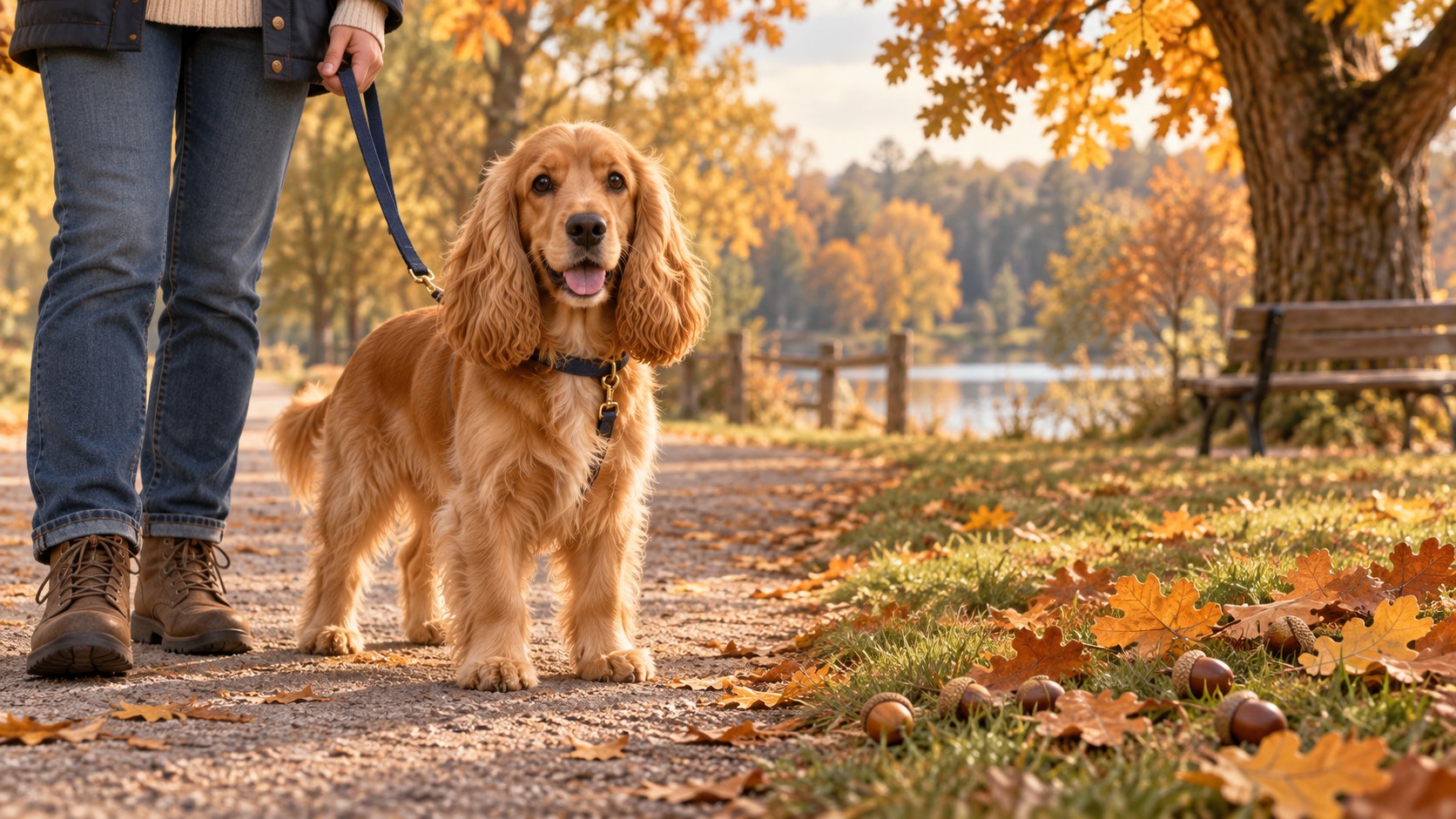
If your dog may have eaten one, call your vet
If you think your dog has chewed or swallowed an acorn or conker, contact your vet promptly rather than waiting for this checklist to be completed. Dogs Trust advises speaking to a vet right away after suspected chewing or ingestion. This article helps you organise the walk and the information you provide; it cannot assess the risk for an individual dog.
Do not try to make your dog vomit or give a home remedy unless a veterinary professional tells you to do so. If your dog is struggling to breathe, collapses or appears severely unwell, seek emergency veterinary help immediately. Keep the dog away from further material while you call.
Change the route before asking for more self-control
A dog that habitually picks things up has a harder task on a path covered in acorns than on a clear pavement. Before an autumn walk, look at the ground around familiar oak trees, park entrances and the place where you usually stop to chat. Choose a clear alternative where possible.
PDSA lists acorns as a potential cause of stomach problems or intestinal blockage. Size, shape and the amount involved matter, but owners should not use those factors to invent a safe number to eat. Prevention is more useful than trying to calculate a dose during a walk.
Keep the walk enjoyable: a quieter route with room to sniff can still provide interest. Moving away from one patch of ground does not mean every autumn walk needs to be cancelled.
Use a simple observation plan
Before leaving, check that your phone has the usual vet and out-of-hours contact details. Bring the lead and rewards your dog already uses comfortably. Choose a route on which you can see the ground and change direction without stepping into traffic.
During the walk, notice what happens just before scavenging. Does your dog search under benches, pick up objects while you stand still, or move toward piles of leaves? Record the location and situation after the walk. This gives you a specific management problem to work on, rather than a vague conclusion that the dog is being difficult.
A familiar leave-it or drop cue can be useful, but a cue is not a guarantee. Do not turn a suspected ingestion into a prolonged training test. Move to safety and contact a vet when needed.
Prepare a clear account for the veterinary call
Tell the clinic what you saw, when it happened, whether chewing or swallowing was observed, and whether the amount is known or uncertain. Provide your dog’s approximate size and any signs you have noticed. If safe, photograph the object and surroundings without delaying the call.
For example: “At about 10:15 my dog picked something up under an oak tree. I saw chewing but did not see whether it was swallowed. I do not know the amount. I have a photo of similar objects nearby.” That is more useful than guessing that it was only a tiny harmless piece.
Do not put yourself at risk of a bite by trying to retrieve material. Follow the clinic’s instructions about whether to attend and what, if anything, to bring.
| Detail | Useful observation | Avoid guessing |
|---|---|---|
| What happened | Chewing seen, swallowing seen, or uncertain | A safe amount or a harmless species |
| When and where | Approximate time and location | An exact time you did not observe |
| Your dog | Approximate size, current signs and relevant history | That looking well rules out a problem |
| Available evidence | A photo taken without delaying help | Risking a bite to retrieve the object |
Make the next walk easier to manage
After the immediate concern is dealt with, note a safer route and share it with anyone else who walks the dog. If one member of the household has noticed a heavily covered patch, that information should reach the next walker before they set out.
For a dog that repeatedly scavenges, discuss a longer-term plan with your vet or an appropriately qualified reward-based trainer. A basket muzzle may be part of an individual plan, but it needs suitable fit and gradual positive introduction; it should not be improvised as a punishment. Continue supervising and choosing safer ground even when using equipment.
At home, check that collected autumn decorations are out of reach. A bowl of acorns brought indoors can create the same access problem as a patch on the path.
A short handover for every walker
Leave a practical note: clear route available, area to avoid, useful familiar cue, veterinary phone numbers, and any advice already given for this dog. Avoid handing over only “be careful” without the place and action attached.
Can I wait for symptoms? Suspected ingestion is a reason to ask your vet promptly, even when the dog seems well. Can an app identify the object and clear the dog? A photograph can support the conversation, but an identification app does not replace veterinary assessment. Is every oak-lined route unsuitable? The decision is about access, supervision and your dog’s behaviour; choose clear ground and adapt when conditions change.
Sources and further reading
Sources checked: 2026-09-13. Educational planning guidance; seek individual professional help for signs of distress.