
Black Russian Terrier · EVERYDAY CARE
Black Russian Terrier Coat Care: A Home Routine That Holds Up
A Black Russian Terrier needs coat care that happens between professional appointments. Make space for a thorough brush-through, pay attention to the beard and face, and give the groomer an honest account of what you can maintain at home.
PupNudge editorial · Published
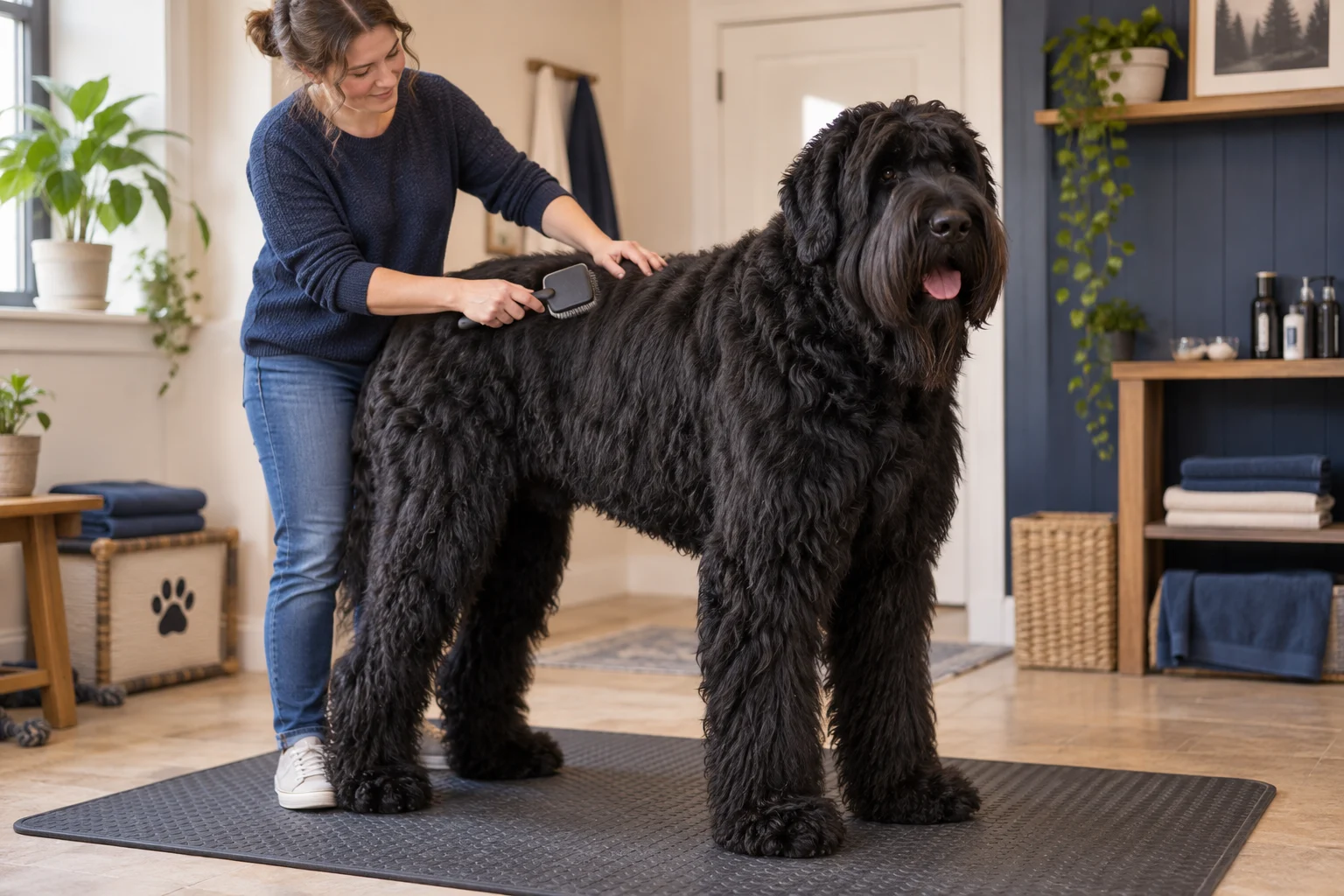
Give the coat a regular appointment
The Black Russian Terrier has a dense double coat, with a softer undercoat under a coarser outer coat. AKC advises a thorough brushing once or twice a week to help prevent mats and notes that the beard and mustache need particular attention. Trimming can be learned, but a professional groomer may be the better choice for some households.[1]
Put two realistic coat-care opportunities on the household calendar. The purpose is to inspect and maintain the actual coat, not to meet a stopwatch target. A dog coming in from wet weather, a longer coat or a change in routine may need a different plan. Ask a groomer to demonstrate the tools and technique for your dog's current coat instead of buying a kit from a generic checklist.
Make the session predictable
Choose a stable, nonslip place and have the tools ready before inviting the dog over. Begin with an easy area the dog accepts, pause often, and reward comfortable participation. Work systematically so you can remember what you have checked: body, legs, areas that rub under equipment, then face and beard. Do not pull hard at a tangle or force the dog to stay through distress. AKC's husbandry guidance describes breaking grooming into small, cooperative steps rather than making care a struggle.[2]
The weekly coat record
- Where was the coat difficult? Note the exact area, not just “matted.”
- What did the dog tolerate? Record the tool, position and length of the comfortable part of the session.
- What changed? Mention wet walks, new equipment, rubbing or a missed session.
- What needs help? Put the question on the groomer's or veterinarian's list before it becomes an emergency.
This record matters with a large dog because more than one person may share grooming, transport and appointments. The next carer can continue a known routine rather than guessing where the previous session stopped.
Do not forget the face
The beard is part of the Black Russian Terrier's recognizable outline, but it is also an everyday care area. Check it after meals and walks, and ask a groomer how to keep it clean and comfortable without pulling or trimming near the dog's face unsafely. AKC specifically mentions scissoring around the face as work an owner must learn or leave to a professional.[1] If the dog moves away, change the handling plan; do not turn sharp tools into a test of compliance.
Coat maintenance does not replace a health check. If you notice painful skin, a new lump, persistent scratching, an unusual odor or a sudden refusal to be touched, ask your veterinarian about the change. A grooming note can help you describe when and where it started, but it cannot establish the cause.
Hand the groomer a usable brief
Before booking, tell the groomer the dog's current size, coat condition, handling comfort and any areas you could not complete at home. Ask what the appointment will include, how the dog will be supported if stressed and what you should maintain between visits. Bring your coat record. Price and timing should reflect the dog in front of them; a tidy photograph does not show how long the coat takes to work through.
The best routine is the one the household can keep and the dog can tolerate. If grooming is consistently difficult, ask for a cooperative-care plan from a qualified professional rather than waiting for the coat to become unmanageable.
Sources and scope
Sources reviewed 28 September 2026. This is general planning information, not a veterinary diagnosis, an individual training prescription or a promise about every dog of this breed.