What is a Basenji?
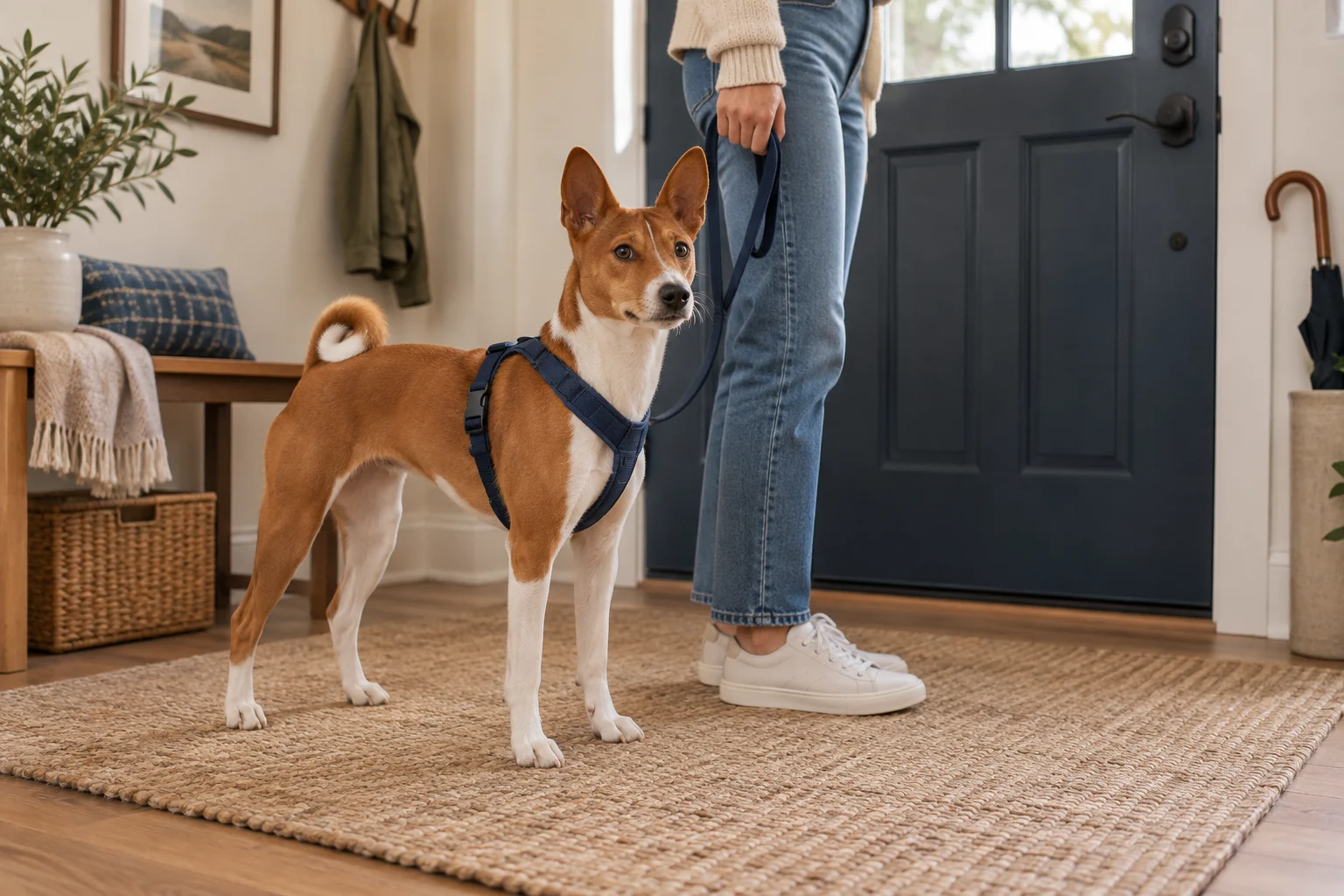
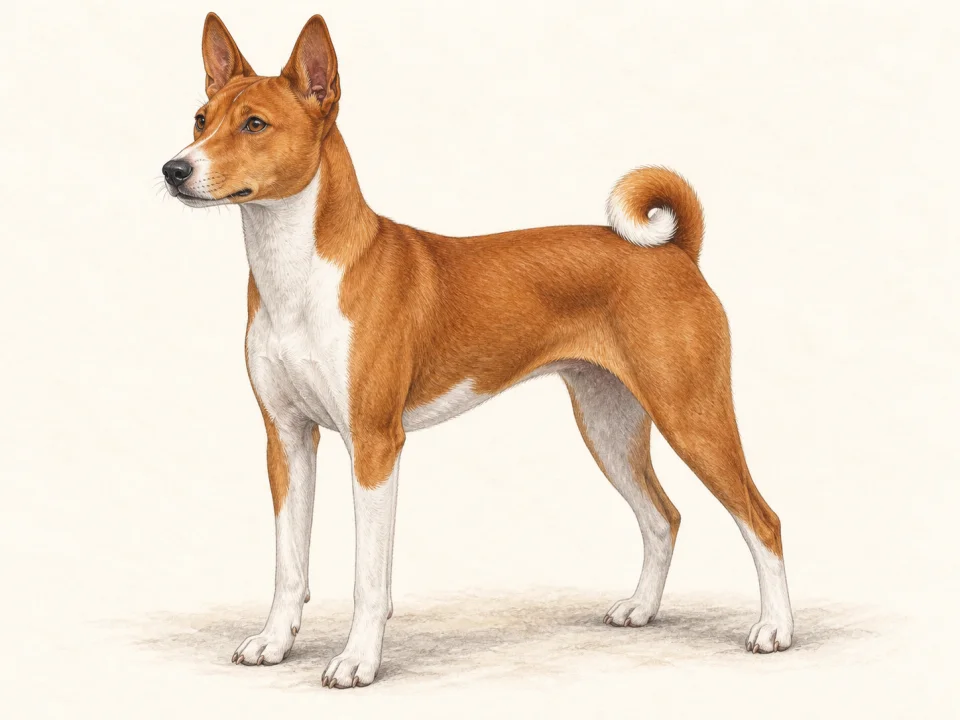
The Basenji is an African hunting hound, recognizable by its upright ears, curled tail and short coat. Barkless is a nickname, not a separate type of dog or a promise about behavior. Its compact outline can make the breed seem an easy fit for a small home, but exercise and training deserve more attention than floor space alone.[1]
Listen beyond the barkless nickname
The breed club describes yodeling, whining and even screaming. Ask the current carer what happens during departures and arrivals; a quiet meeting does not answer that question. For a noise-sensitive apartment, discuss observed behavior before committing. Short coat and little visible hair also do not establish allergy safety: Basenjis are not hypoallergenic, and individual human reactions differ.[2]
Plan the doorway before practicing recall
BCOA emphasizes the urge to chase and the need for a leash or secure enclosure. A useful home check is to trace every exit: front door, yard gate and the route to the car. Decide where the dog waits while each opens. Inspect the enclosure with the current carer and ask about this individual’s escape history. A successful recall indoors is not evidence that the dog can safely ignore a squirrel outside. Use rewards in training; do not make an unsecured walk the test of whether training worked.[2]
Read the test name, not just the phrase health tested
Request identifiable Fanconi and PRA-BJ1 DNA reports, plus the eye, thyroid and orthopedic records on the club’s screening list. The direct Fanconi DNA test replaced an older linked-marker test; an old certificate warrants clarification. PRA-BJ1 tests one form of progressive retinal atrophy, so a clear result does not rule out other inherited eye problems or replace ophthalmologist examinations. Make a simple record with the dog’s identity, test name, result and examination date. Keep DNA reports separate from clinical examinations: their purposes differ, and an examination describes findings at that time. Ask a veterinarian to interpret missing, dated or unclear records rather than treating a bundle of certificates as a lifetime guarantee.[3]
Consider an adult as well as a puppy
The club notes that an adult may be past the most demanding chewing and housetraining stage. That creates an opportunity to ask about a known routine, not a guarantee of effortless adjustment. Before an adoption, request concrete observations about time alone, handling and other animals. Choose a supported transition based on that dog’s history rather than assuming every Basenji needs the same arrangement.[2]
Frequently asked questions
Does Basenji mean any dog that does not bark?
No. Basenji is the name of an African hunting breed, not a category for quiet dogs.
Source [1]Is a barkless Basenji a silent dog?
No. Yodels, whines and other loud vocalizations are possible. Ask about the individual dog’s behavior when alone and during arrivals.
Source [2]Does a clear PRA-BJ1 result replace an eye examination?
No. It addresses a particular genetic form of PRA. Other eye conditions still require clinical assessment.
Source [3]What should I check on an older Fanconi certificate?
Establish whether it records the direct DNA test or the older linked-marker test. The club explains why the direct test superseded the earlier method; ask the testing provider or veterinarian to interpret the record.
Source [3]FAQ sources
- American Kennel Club — Basenji ↗FAQ reference 1
- Basenji Club of America — living with the breed ↗FAQ reference 2
- Basenji Club of America — health screening and test limitations ↗FAQ reference 3
Sources & methodology
Breed-level measurements and comparison scores provide context. They do not predict an individual dog's health, behaviour or suitability. Open the original publisher pages below to verify the facts and compare any later updates.
- American Kennel Club — Basenji ↗Reference 1 · reviewed 2026-09-27
- Basenji Club of America — living with the breed ↗Reference 2 · reviewed 2026-09-27
- Basenji Club of America — health screening and test limitations ↗Reference 3 · reviewed 2026-09-27
Make it about your dog
Build a profile around your dog's age, experiences and everyday needs.
Meet your dog →Explore local care