
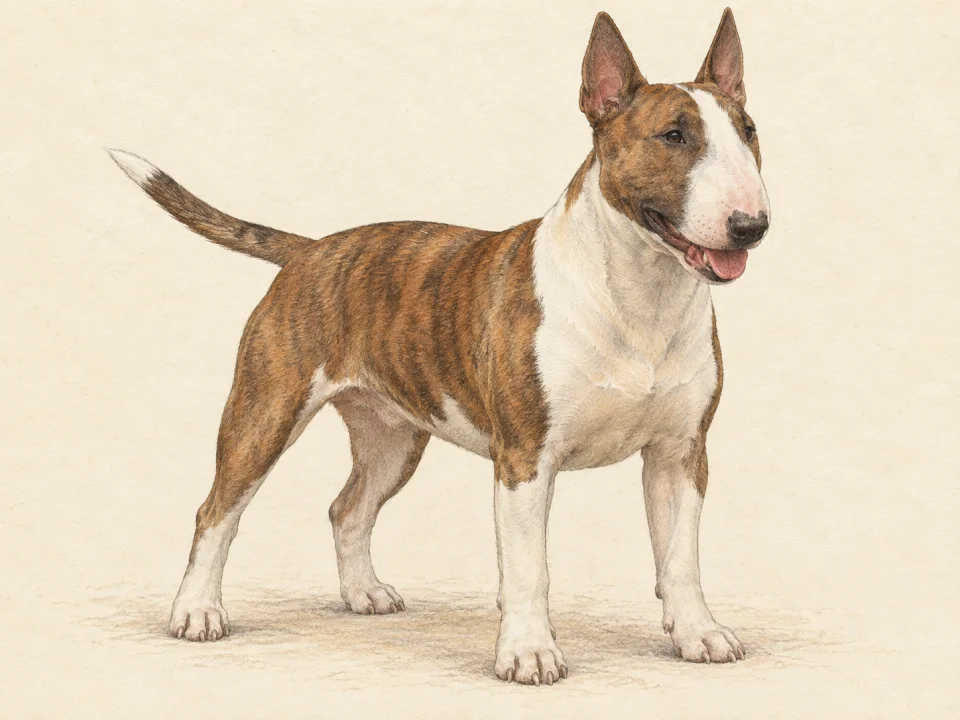
Turn enthusiasm into a household routine
AKC describes an active, curious and independent dog that benefits from patient, positive training. Decide early what a visitor should do when the dog becomes excited and how you will reward a manageable greeting. Practice the same routine with household members before expecting it to work at the busiest part of a visit. Short, engaging lessons are more useful than repeating a cue until both dog and owner become frustrated. Separate a playful personality from permission to rehearse behavior you cannot manage later. For a growing puppy, discuss suitable activity with your veterinarian instead of trying to exhaust it with repeated jumps or abrupt, high-speed turns. If movement changes or lameness appears, seek assessment rather than dismissing it as normal exuberance. The short coat has a straightforward brushing routine, but comfortable nail and body handling still need to be taught.[1]
Request separate evidence for hearing, heart, kidneys and inherited conditions
The Miniature Bull Terrier Club of America’s October 2023 statement identifies lens luxation, breed-specific laryngeal paralysis and lethal acrodermatitis testing, alongside BAER hearing testing, an echocardiogram before breeding and a urine protein-to-creatinine assessment. These are distinct checks, not different names for a single general examination. When reviewing a litter, put each parent’s records beside the puppy’s own records and identify which dog each result belongs to. Ask what was tested, when it was done and whether any follow-up was recommended. A puppy responding to sound at home does not document the named hearing test, and a reassuring appearance does not supply a missing report. Let your veterinarian interpret abnormal or unclear findings before deciding what they mean for care.[2]
A PLL carrier result is not the same as no eye risk
OFA describes primary lens luxation as failure of the fibers supporting the lens. Its result categories distinguish clear, carrier/low risk and affected/high risk; the carrier category is not a zero-risk label. Lens displacement can also occur because of other eye problems. Keep the result in the medical record and ask about appropriate eye monitoring for the individual. Painful, red, teary or cloudy eyes need prompt veterinary assessment, regardless of the DNA result. OFA notes that associated inflammation and glaucoma can threaten vision if not treated early. Do not wait for the next routine check or try to identify a displaced lens from a photograph. The useful role of the genetic record is to inform the clinician, not to overrule new symptoms.[3]
Frequently asked questions
Does a PLL carrier result mean my Miniature Bull Terrier cannot develop the condition?
No. OFA labels this category carrier/low risk, not no risk. Discuss monitoring with your veterinarian and have painful, red or cloudy eyes assessed promptly even if a prior genetic result was reassuring.
Source [1]Does a normal puppy examination cover all the breed’s screening tests?
No. The club statement names separate hearing, heart, kidney and inherited-condition checks. Request the actual records and distinguish results for the parents from those for the puppy.
Source [2]Should training be strict because a Miniature Bull Terrier is independent?
Use patient, positive training with clear, consistent expectations. AKC recommends keeping lessons engaging; independence is not a reason for harsh handling or prolonged, frustrating repetition.
Source [3]FAQ sources
Sources & methodology
Breed-level measurements and comparison scores provide context. They do not predict an individual dog's health, behaviour or suitability. Open the original publisher pages below to verify the facts and compare any later updates.
- American Kennel Club — Miniature Bull Terrier ↗Reference 1 · reviewed 2026-09-27
- Miniature Bull Terrier Club of America — Health testing statement, October 2023 ↗Reference 2 · reviewed 2026-09-27
- Orthopedic Foundation for Animals — Primary Lens Luxation ↗Reference 3 · reviewed 2026-09-27
Make it about your dog
Build a profile around your dog's age, experiences and everyday needs.
Meet your dog →Explore local care