
Match a working temperament with ordinary weekdays
AKC describes enthusiasm for work, trainability and substantial energy. Before choosing a Croatian Sheepdog, list the activities and learning time you can actually provide on a normal weekday. A calm first meeting indoors may follow earlier exercise. Ask about the individual’s full routine rather than assuming that a brief quiet observation represents its needs throughout the day.[1]
Inspect boundaries with jumping and digging in mind
The cited exercise guidance highlights jumping ability and possible digging. Check the actual play area before giving access, including gates and places where the dog could leave the enclosure. Supervise and provide appropriate engagement. A fence that contained a less athletic companion is not proof that it will suit this individual, and a yard does not replace shared activity.[1]
Give intelligence a repeatable task
Suitable searching games, obedience exercises or prepared dog sports can make activity purposeful. Begin with an achievable cue, reward success and build difficulty gradually. Rotate activities while keeping the meaning of cues stable between caregivers. A quick learner still needs instruction; expecting it to invent an acceptable occupation may produce a project quite different from the one the household intended.[1]
Manage alertness without rehearsing alarm
AKC describes a watchful nature and some suspicion of unfamiliar situations. Arrange calm introductions, reward attention to you and give the dog a predictable place to settle when visitors arrive. Ask about the individual’s comfort rather than treating a watchdog description as a reason to encourage threats. Appropriate management remains necessary even when the dog is affectionate with familiar people.[1]
Keep coat care simple but regular
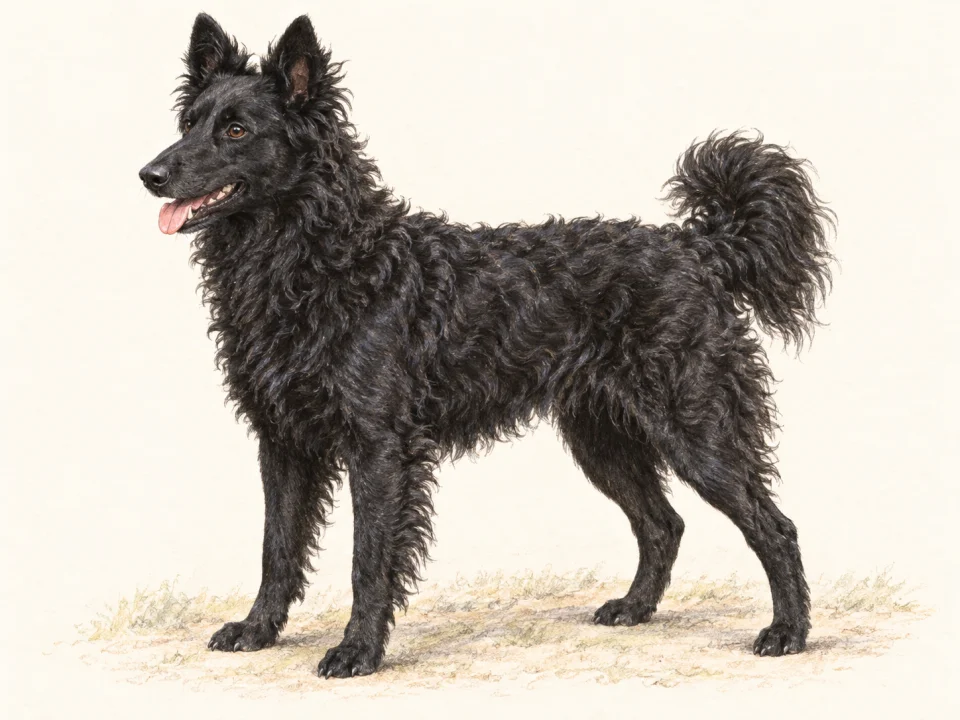
The cited care guidance calls for brushing or combing to remove dead hair, occasional baths and regular nails. Use brief handling sessions to check for debris after activity and notice uncomfortable areas. Straightforward grooming is an advantage only when it is actually done. It does not remove the separate daily responsibilities of activity, learning and safe management around the home.[1]
Ask for detail beyond a general health description
The AKC health section is brief and supplies no named screening panel. Request available veterinary and family records and ask what was assessed before relying on a broad claim of good health. The reference size is 16–20 inches and 29–44 pounds, with lifespan listed at 13–14 years. Those ranges cannot establish an individual’s condition, feeding requirements or future longevity.[1]
Frequently asked questions
Does calm indoor behavior mean this breed needs little exercise?
No. AKC describes a very energetic dog. Ask about the full daily routine and plan appropriate physical and mental activity.
Source [1]Why should I recheck an existing fenced yard?
The cited guidance highlights jumping ability and digging. Inspect the space for this individual and supervise rather than assuming a previous dog’s enclosure is sufficient.
Source [1]Is grooming complicated?
The cited baseline is relatively simple: brushing or combing, occasional baths and regular nail care. That simplicity does not reduce the need for daily engagement.
Source [1]Does the cited health page provide a test checklist?
No named panel is supplied. Request actual records and discuss relevant assessments with a veterinarian instead of assuming a brief healthy-breed statement is clearance.
Source [1]FAQ sources
Sources & methodology
Breed-level measurements and comparison scores provide context. They do not predict an individual dog's health, behaviour or suitability. Open the original publisher pages below to verify the facts and compare any later updates.
- American Kennel Club — Croatian Sheepdog breed and care guidance ↗Reference 1 · reviewed 2026-09-27
Make it about your dog
Build a profile around your dog's age, experiences and everyday needs.
Meet your dog →Explore local care