
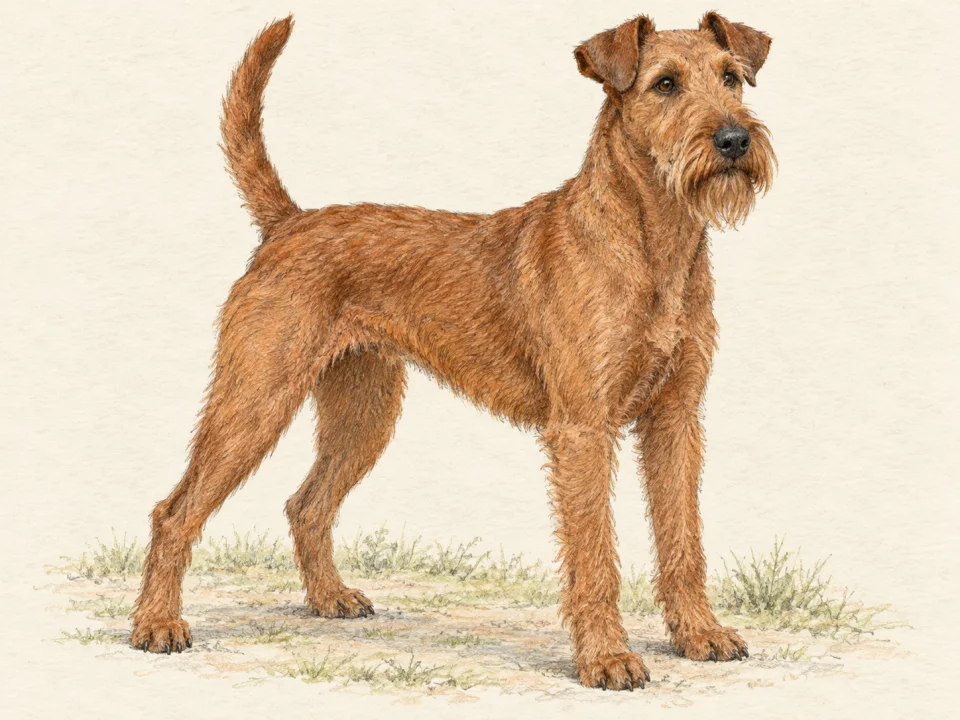
Use size figures as a reference, not a feeding target
AKC lists a height of about 18 inches, with males around 27 pounds and females around 25 pounds. Those figures describe the breed standard reference rather than a requirement for every individual. Fit walking equipment by measurements and assess body condition separately. An adult that differs from a reference number should not automatically be fed more or less without considering its frame and health.[1]
Give athletic energy a safe setting
The Irish Terrier benefits from regular exercise and shared activities. A securely fenced area offers opportunities for play; outside it, keep walks on leash. Think about the route, nearby animals and gate security before starting. A lively dog needs more than access to a yard, so plan engagement with a person instead of expecting a boundary alone to provide exercise.[1]
Keep rules consistent without escalating pressure
Intelligence and independent thinking can appear together. Choose a few practical cues, reward success and make sure household members use them similarly. Practise in a quiet location before expecting the same response around excitement. If the dog struggles, reduce the distraction and teach again. A strong personality is not a reason to replace patient instruction with intimidation.[1]
Introduce social situations with room to withdraw
Early, thoughtful exposure to people and surroundings is useful, but it should remain manageable for the individual. Reward calm observation and avoid forcing a close meeting when the dog is uncomfortable. Supervise children and provide undisturbed resting space. Breed descriptions of loyalty or affection cannot substitute for assessing how a particular dog responds in a particular household.[1]
Preserve the coat’s wiry outer layer
Weekly brushing removes dirt and loose hair, while appropriate stripping and trimming maintain the broken coat. The AKC guidance favors hand-stripping over clipping for the outer texture. Ask a breed-familiar groomer to show a realistic care plan for your dog. Check paws and nails during grooming instead of judging the whole routine by whether the red outline looks neat.[1]
Ask specific questions despite the empty screening panel
The AKC panel lists no recommended tests, but its health discussion names hyperkeratosis affecting footpads and cystinuria associated with bladder stones. Ask about family history and current breed-specific testing guidance rather than interpreting an empty panel as freedom from disease. The lifespan reference is 13–15 years. New paw discomfort or urinary changes need veterinary assessment, not a diagnosis from a breed page.[1]
Frequently asked questions
What are an Irish Terrier’s size and weight?
AKC lists about 18 inches in height, with males around 27 pounds and females around 25 pounds. Use these as reference figures and assess the individual’s body condition separately.
Source [1]Does an Irish Terrier need more than brushing?
Yes. Weekly brushing helps, but stripping and trimming may be needed to maintain the wiry coat. AKC favors hand-stripping over clipping for the outer texture.
Source [1]Does “no recommended health tests” mean no health concerns?
No. The cited entry discusses hyperkeratosis and cystinuria even though its screening panel is empty. Ask about family history and current breed guidance, and review concerns with a veterinarian.
Source [1]What training approach suits an Irish Terrier?
Use consistent reward-based teaching with clear practical cues and gradual distractions. The breed can be independently minded, so short successful lessons are preferable to a confrontation.
Source [1]FAQ sources
Sources & methodology
Breed-level measurements and comparison scores provide context. They do not predict an individual dog's health, behaviour or suitability. Open the original publisher pages below to verify the facts and compare any later updates.
- American Kennel Club — Irish Terrier breed and care guidance ↗Reference 1 · reviewed 2026-09-27
Make it about your dog
Build a profile around your dog's age, experiences and everyday needs.
Meet your dog →Explore local care