
Basenji · EVERYDAY CARE
Basenji Walks: A Doorway and Leash Plan for Everyday Life
For a Basenji, a good walk begins before the front door opens. Put a reliable barrier and leash routine in place, then practise the same calm sequence with every person who takes the dog out.
PupNudge editorial · Published
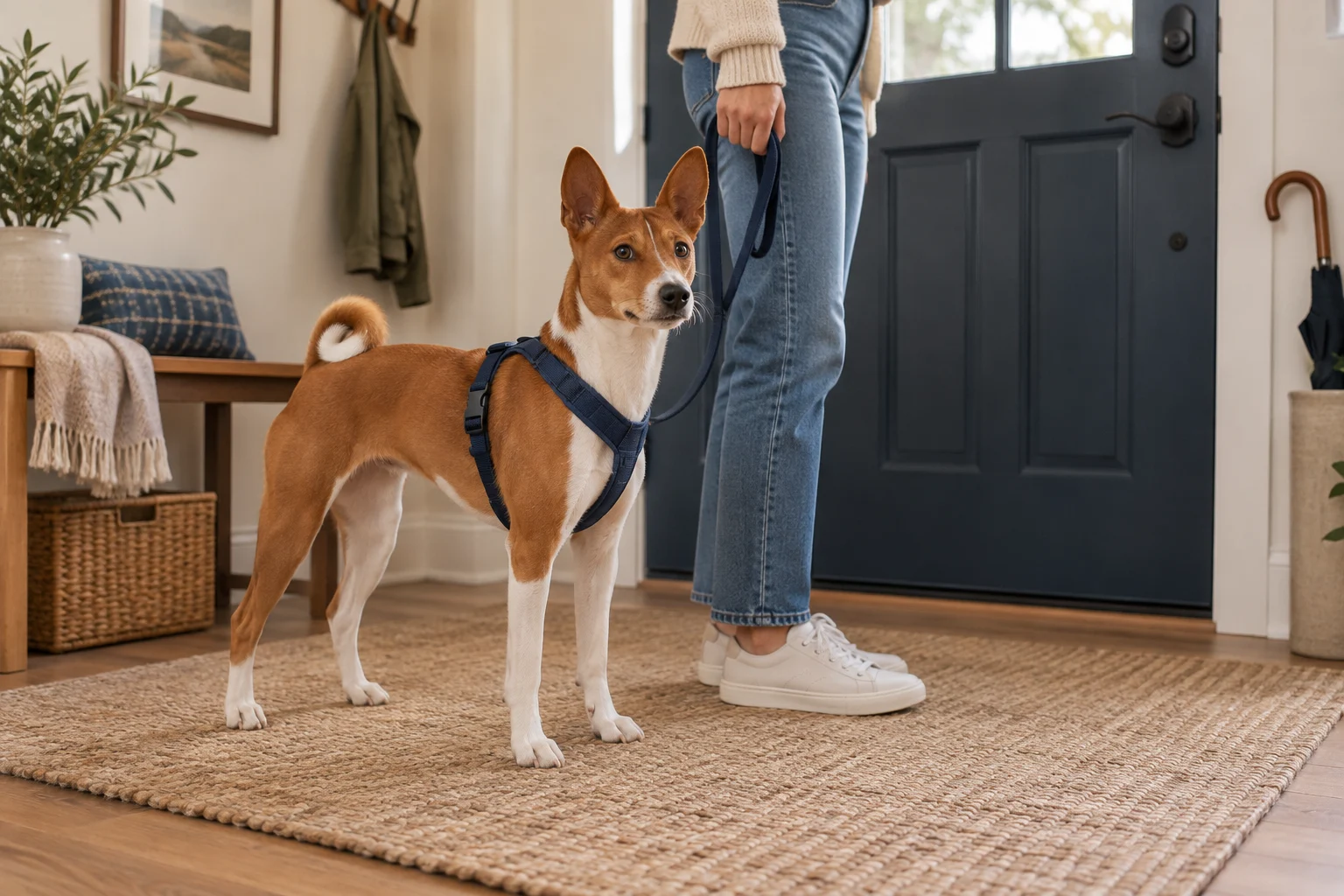
Start with the exit, not the recall cue
A Basenji can be compact enough to live in a small home and still be a serious chasing hound. The Basenji Club of America says the breed is best kept on leash or behind a secure fence when outside: squirrels, cats and rabbits are compelling reasons to run.[1] A good response to a cue in the kitchen is useful training, but it is not a substitute for containment at an open front door.
Before changing a walking routine, observe the individual dog. Ask the current carer whether this Basenji has rushed a doorway, slipped equipment or reacted to a moving animal. If you do not know, plan conservatively and practise in a quiet place. The goal is a repeatable handoff, not a test of how close you can get to an escape.
Draw a one-minute door map
Stand where your dog waits while you prepare to leave. Trace the route to the street, including the front door, lobby, elevator, yard gate and car door. Mark every point at which one person's mistake could put the dog outside without a secure lead. Then decide who holds the leash and which barrier stays closed while another barrier opens.
A simple exit check
- Move the dog away from the outer door while you gather keys and walking equipment.
- Close the inner barrier or room door before fitting the lead. Check the fit with the dog's actual movement; ask a qualified professional if the equipment or fit is uncertain.
- Clip the lead, hold it securely, and only then open the final exit. Ask visitors and other household members to follow the same sequence.
- On return, close the outer door before unclipping anything.
For a household with children or frequent deliveries, put the sequence where every adult can see it. A verbal “stay” is a training goal; the physical arrangement is what protects the dog while that skill is still being learned.
Make the walk more than a chase test
Choose routes with room to turn away from a trigger and a calmer option for busy days. Let the dog explore safely on lead when the setting allows it. The breed club lists tracking, lure coursing, agility and other activities that can suit Basenjis; not every dog will enjoy each one, and a sport still needs suitable supervision and training.[2]
If the dog spots something moving, shorten the decision: create distance, keep hold of the lead and take the pre-planned alternative route. Do not unclip the dog to see whether recall “really works.” Practise reward-based attention and turning with low distractions first; AVSAB recommends reward-based methods for dog training and behavior work.[3]
Write a handoff another person can actually use
A dog walker or family member needs more than “he is usually fine.” Show them the door map, the exact equipment, the safest route and a place to turn around. Tell them what the dog does when surprised and what you want them to do instead of improvising. Walk the route together once if possible.
If the dog escapes, prioritise safe recovery and contact local help rather than chasing into traffic. If the dog has repeatedly escaped, shows serious distress or cannot be managed safely on ordinary walks, discuss the situation with a qualified reward-based trainer; a sudden behavior change also warrants a veterinary conversation. This article cannot assess one dog's equipment, property or risk from afar.
Sources and scope
Sources reviewed 28 September 2026. This is general planning information, not a veterinary diagnosis, an individual training prescription or a promise about every dog of this breed.