
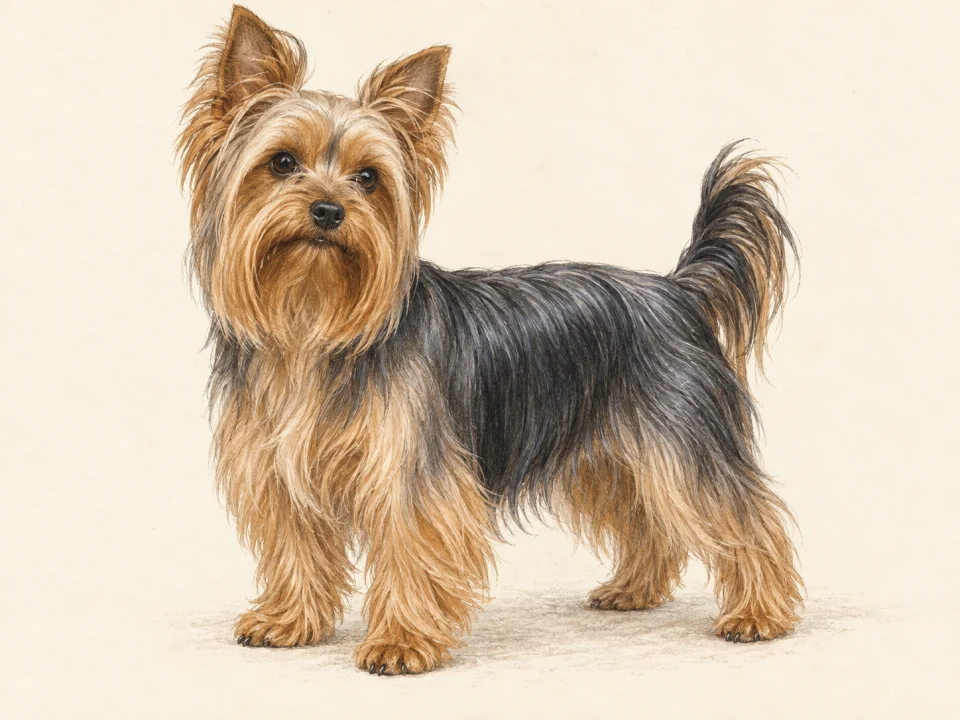
Remember the terrier behind the toy size
AKC traces the Yorkie's confidence and need for mental stimulation to its working-terrier history. Small size does not mean passive behaviour. Build an ordinary week around learning, sniffing, play, rest and safe exploration rather than relying on indoor space alone.[1]
Teach with patience and rewards
AKC and PDSA both describe an intelligent dog that can also be independent or stubborn. Keep sessions short, reinforce useful choices and practise skills in gradually more distracting places. Consistency matters more than physical correction, which can add fear without teaching the desired response.[2]
Provide movement and mental work every day
PDSA notes modest physical exercise needs, while AKC emphasises energy and mental stimulation. Combine walks appropriate to the individual with scent games and learned household tasks. Age, health, weather and recovery should determine intensity.[1]
Treat grooming as ongoing care
The breed's hair keeps growing. AKC describes regular coat trimming plus routine ear, nail and dental care, while PDSA recommends daily grooming for the long coat. Introduce tools gradually and seek professional help before mats, skin irritation or handling fear become established.[2]
Plan for vocal and protective behaviour
AKC notes that Yorkies can be vocal and protective. Reduce rehearsals by managing windows, doors and high-traffic spaces, then reward calm alternatives. Barking can also reflect fear, pain, unmet needs or learned success, so investigate context before choosing a plan.[1]
Supervise children and other dogs
AKC advises supervision around young children even though many Yorkies can be social with families and dogs. Protect the small dog from rough play, provide escape routes and teach children to leave eating, sleeping or worried dogs alone.[1]
Build relationships beyond one person
A Yorkie may show preferences, but a breed label cannot predict a single-person bond. Share feeding, walks, play and calm training among trusted household members. Let the dog approach and leave so affection remains safe and voluntary.
Choose the individual and prepare for long-term care
Discuss the dog's history, grooming tolerance, behaviour, dental care and health screening with a responsible breeder or rescue. Meet adults when possible and budget for professional grooming and veterinary care. Every dog differs, including dogs of the same breed.[1]
Frequently asked questions
What are some useful facts about Yorkshire Terriers?
AKC explains that Yorkies retain working-terrier roots despite their Toy Group size. Their human-like hair keeps growing, and the breed combines an affectionate social side with energy and a need for mental stimulation.
Source [1]What common care problems should Yorkie homes prepare for?
PDSA highlights daily coat care and patient reward-based training, while also warning that breed-linked health problems can occur. Use routine veterinary and dental care and ask a veterinarian about changes in movement, appetite, breathing, skin or behaviour.
Source [2]Do Yorkies bond with only one person?
AKC describes the breed as affectionate and often open to owners, strangers and other dogs. An individual may still show preferences, so build safe relationships through consistent care and voluntary interaction rather than assuming a fixed one-person bond.
Source [3]What are the main benefits and demands of living with a Yorkshire Terrier?
AKC describes an adaptable, affectionate small dog that can suit city homes. The same guide also notes regular grooming, mental stimulation, walks, patient training and possible vocal behaviour, so household fit depends on whether that complete routine is sustainable.
Source [3]FAQ sources
- American Kennel Club — Yorkshire Terrier facts ↗FAQ reference 1
- PDSA — Yorkshire Terrier breed information ↗FAQ reference 2
- American Kennel Club — is the Yorkshire Terrier right for you? ↗FAQ reference 3
Sources & methodology
Breed-level measurements and comparison scores provide context. They do not predict an individual dog's health, behaviour or suitability. Open the original publisher pages below to verify the facts and compare any later updates.
- American Kennel Club — is the Yorkshire Terrier right for you? ↗Reference 1 · reviewed 2026-09-09
- PDSA — Yorkshire Terrier breed information ↗Reference 2 · reviewed 2026-09-09
- American Kennel Club — Yorkshire Terrier facts ↗Reference 3 · reviewed 2026-09-09
Make it about your dog
Build a profile around your dog's age, experiences and everyday needs.
Meet your dog →Explore local care