
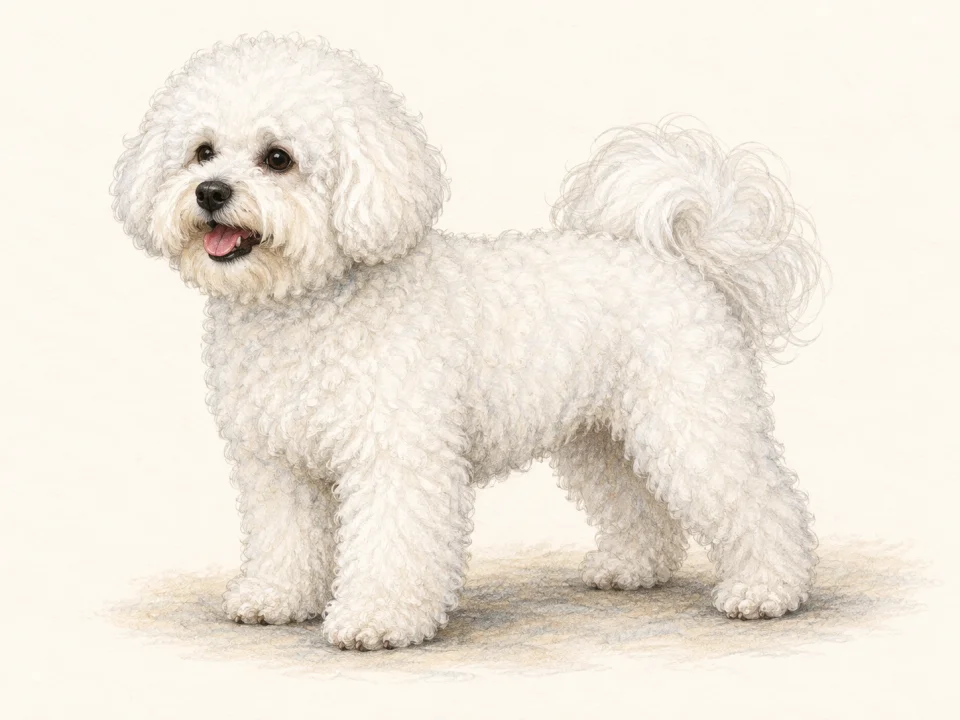
A weight range is not a measured average
AKC lists the Bichon Frise at 12–18 pounds and 9.5–11.5 inches tall. That range is a breed reference, not evidence that a particular weight is the population average or the right target for your dog. Check body condition and growth with your veterinarian. When ordering a harness, measure chest and neck rather than choosing only by the breed name.[1]
Understand where loose hair goes
The coat sheds relatively little onto surrounding surfaces because loose hair can remain caught in the undercoat. That hair still needs removal to avoid mats. Brush through small sections rather than smoothing only the fluffy outer shape. A short trim can simplify care but does not cancel it; arrange a routine that the household can maintain between professional grooming visits.[1]
Put coat maintenance on the calendar
AKC recommends brushing at least two or three times weekly, ideally daily, and describes professional grooming commonly every four to six weeks. Agree on a practical trim and home-care method with your groomer. Check friction areas around equipment and legs, and use gentle handling. A painful tangle calls for appropriate help rather than repeatedly pulling through it to finish a session.[1]
Make toilet training predictable
Some Bichons take patience to housetrain. Offer consistent opportunities, supervise when the dog is awake and reward the desired result promptly. A simple record of meals, naps and successful outings can reveal where the routine needs adjustment. Avoid punishment after an accident; if a previously reliable dog suddenly changes its habits, consider a veterinary check rather than assuming forgotten training.[1]
Combine companionship with small learning games
Bichons often enjoy learning tricks and participating with their people. Use brief reward-based sessions and daily play alongside walks. Plan who provides company and care during long workdays, rather than assuming another dog automatically meets those needs. Build comfortable separations gradually and seek help for persistent distress; an affectionate personality does not guarantee ease with long periods alone.[1]
Keep teeth and screening in the care plan
AKC lists a lifespan of 14–15 years and recommends patella, hip and eye evaluations for breeding dogs. Ask for dated results tied to each parent. Dental care deserves attention alongside the white coat: discuss home brushing and professional assessment with your veterinarian. Good screening and a long breed reference range cannot promise that an individual will remain free of illness.[1]
Frequently asked questions
What is the average weight of a Bichon Frise?
AKC provides a 12–18 pound reference range, not a measured population average. The appropriate weight for one dog depends on its frame and body condition; do not feed solely toward the middle or top of the range.
Source [1]Does low shedding mean a Bichon Frise needs little brushing?
No. Loose hair can remain in the undercoat and contribute to mats. Regular brushing and grooming are needed even when little hair is visible around the home.
Source [1]How often should a Bichon Frise visit a groomer?
AKC describes visits commonly every four to six weeks. The best interval depends on coat length and home care, so agree on a schedule with your groomer and brush between visits.
Source [1]Why does a Bichon need a toilet-training routine?
Consistent opportunities and immediate rewards help make the expected behavior clear. Keep a short record if progress stalls, and seek veterinary advice for a sudden change in a previously reliable dog.
Source [1]FAQ sources
Sources & methodology
Breed-level measurements and comparison scores provide context. They do not predict an individual dog's health, behaviour or suitability. Open the original publisher pages below to verify the facts and compare any later updates.
- American Kennel Club — Bichon Frise breed and care guidance ↗Reference 1 · reviewed 2026-09-28
Make it about your dog
Build a profile around your dog's age, experiences and everyday needs.
Meet your dog →Explore local care