
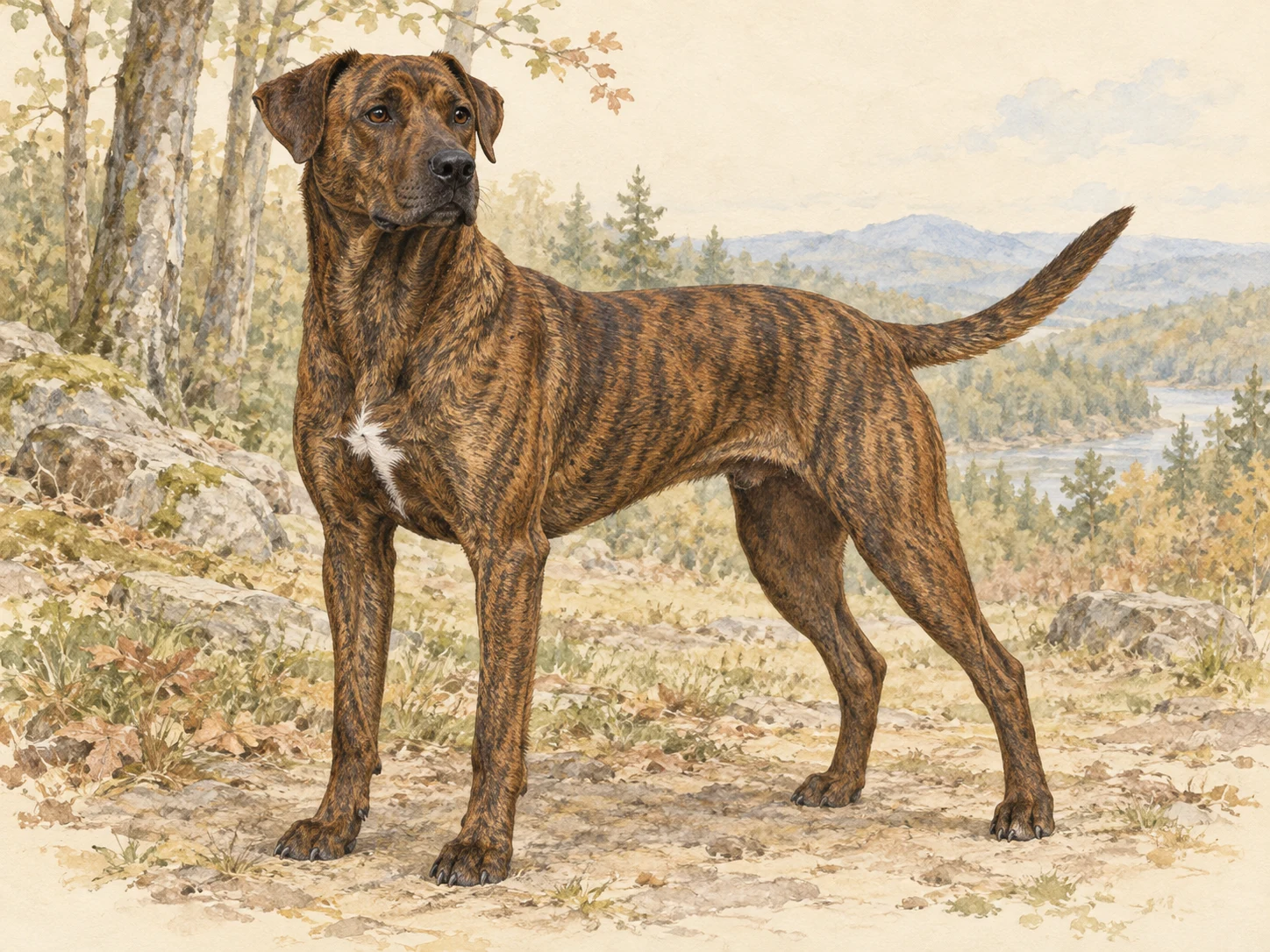
Brindle markings do not identify a pedigree
UKC accepts brindle or black with brindle trim, with a little white permitted on the chest or feet. The standard’s shoulder-height ranges are 18–24 inches for males and 16–22 inches for females; weight should suit height. These are reference points for the breed, not a method of identifying an unknown dog from a photograph. Stripes occur in other breeds and mixes. If an adoption listing uses this name as an estimate, keep that uncertainty in the dog’s records. Ask what the identification is based on, and use the individual dog’s measured size, behavior and known history to make care decisions. A resemblance to a breed illustration cannot supply missing ancestry.[1]
Plan for activity and a hunting voice, not just a short coat
AKC describes a dog with a strong hunting instinct that bays while hunting. Listen to adult dogs and discuss noise before choosing one for a home with close neighbors. Ask how a particular dog behaves around squirrels, at a fence and when an activity ends. Arrange leashed walks and secure exercise rather than using a first off-leash outing to discover the strength of its pursuit. AKC also suggests training and play as activity options. Alternate movement with tasks the dog can solve, such as a simple supervised search, and make room for rest. Coat care is comparatively straightforward: weekly work with a soft brush or hound glove is the AKC recommendation. That modest grooming commitment does not reduce the need to engage with the dog every day.[2]
Know what an eye-disease DNA result can and cannot say
UC Davis lists a PRA-prcd test among tests available for this breed. Its explanation makes a crucial distinction: PRCD is one genetic form of progressive retinal atrophy, not a name for every cause of failing vision. An N/N result means the tested PRCD variant was not found; it does not rule out other PRA mutations. A carrier result is also different from having two copies of that variant. Read the exact test name and result with your veterinarian rather than accepting “eyes clear” as a complete description. The availability of a test does not tell you how common a condition is in this breed. Changes in a dog’s vision still warrant an examination, whatever an earlier DNA report says.[4]
Frequently asked questions
Can a mostly black dog fit the Treeing Tennessee Brindle standard?
Yes. UKC allows black with brindle trim as well as brindle. A small amount of white on the chest or feet is permitted. Color alone still cannot confirm ancestry.
Source [1]Does the short coat make this an easy, quiet apartment dog?
No such conclusion follows from the coat. Grooming is relatively simple, but hunting drive, activity needs and baying deserve separate consideration. Assess the individual dog and the household’s noise constraints.
Source [2]Does a clear PRA-prcd test rule out every inherited eye problem?
No. UC Davis explains that the test concerns one form of PRA. It cannot exclude other PRA mutations or replace assessment of a dog that develops vision problems.
Source [3]FAQ sources
Sources & methodology
Breed-level measurements and comparison scores provide context. They do not predict an individual dog's health, behaviour or suitability. Open the original publisher pages below to verify the facts and compare any later updates.
- United Kennel Club — Treeing Tennessee Brindle standard ↗Reference 1 · reviewed 2026-09-27
- American Kennel Club — Treeing Tennessee Brindle care ↗Reference 2 · reviewed 2026-09-27
- UC Davis Veterinary Genetics Laboratory — tests listed for Treeing Tennessee Brindle ↗Reference 3 · reviewed 2026-09-27
- UC Davis Veterinary Genetics Laboratory — PRA-prcd test and limitations ↗Reference 4 · reviewed 2026-09-27
Make it about your dog
Build a profile around your dog's age, experiences and everyday needs.
Meet your dog →Explore local care