
Keep the hunting background in a companion plan
AKC describes a short-legged working terrier with a strong interest in prey. A more relaxed reputation than some terriers does not establish safe behavior around small animals. Ask about the individual’s experience and supervise carefully. Separate spaces may be necessary; friendliness toward people should not be used as evidence that every other household pet will be a suitable companion.[1]
Use a leash outside a secure enclosure
The cited exercise guidance recommends leashed outings or securely enclosed play because a sight or scent can prompt pursuit. Check gates before activity and practice returning attention in manageable settings. A successful recall at home is useful training, but it does not guarantee a response near wildlife. Daily walks and shared play still matter for this compact dog.[1]
Arrange clipping rather than assuming hand stripping
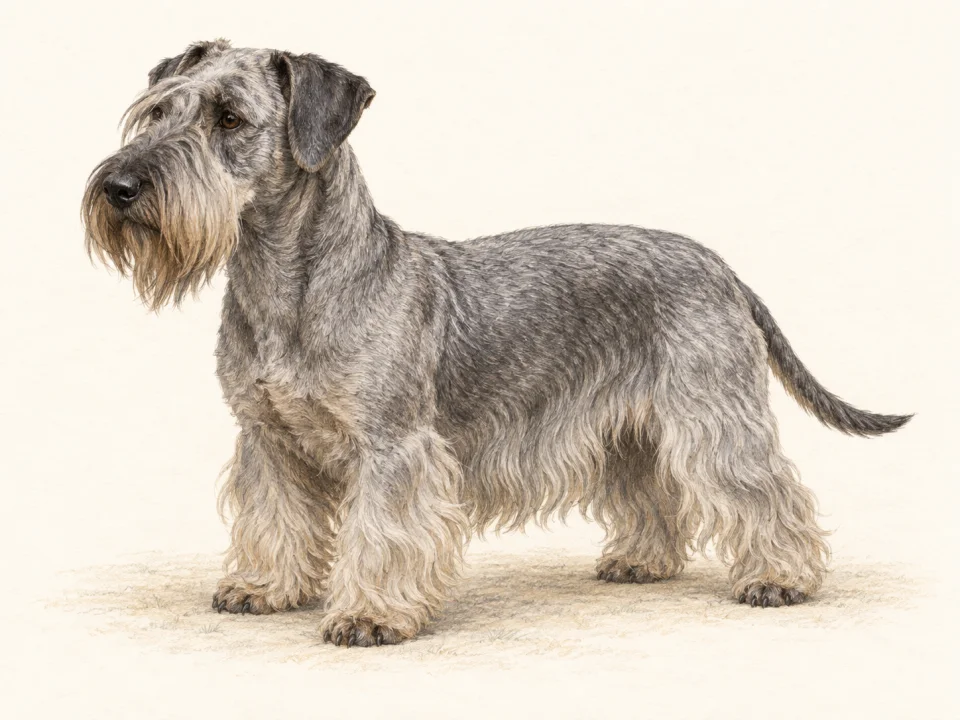
Cesky coat maintenance differs from that of some other terriers: AKC recommends clipping the body rather than hand stripping. Find a groomer familiar with the breed or willing to work from appropriate guidance. Ask for a between-appointment brushing and bathing plan. The silky coat does not shed dirt like a harsher coat, so appearance alone should not determine the next care session.[1]
Keep ear care comfortable and individualized
The cited grooming discussion calls attention to hair and debris around the ears. Ask your veterinarian and groomer what care is appropriate for this dog instead of treating a routine as permission for painful handling. New discomfort, odor or discharge needs assessment. Practice calm inspection between appointments, alongside nail and dental care, rather than reserving all handling for a long grooming visit.[1]
Use rewards and track food across caregivers
AKC recommends positive, reward-based training and notes that harsh methods can cause the dog to disengage. Keep sessions short and achievable. Because the breed can be enthusiastic about food, account for training rewards within the daily feeding plan. A shared treat allowance helps prevent each family member adding extras while assuming someone else is monitoring the total.[1]
Ask for the four separate evaluations
The cited screening panel lists patella evaluation, cardiac examination, ophthalmologist evaluation and a dentition exam. Request identifiable results for the relevant dogs and veterinary interpretation of any uncertainty. The health discussion also mentions movement abnormalities; a new episode should not be self-diagnosed from a breed description. AKC’s 12–15-year lifespan reference cannot establish an individual’s future health.[1]
Frequently asked questions
Should a Cesky Terrier be hand stripped like some other terriers?
AKC recommends clipping the Cesky’s body instead. Work with a groomer who understands the breed’s coat and can explain care between appointments.
Source [1]Does its mellow reputation make off-leash pursuit unlikely?
No. The cited guidance describes strong prey drive and recommends a leash outside secure enclosures. Manage the individual accordingly.
Source [1]How can training treats fit a food-loving Cesky’s routine?
Agree on a daily reward allowance across caregivers and account for it in the feeding plan. Use short positive sessions rather than unlimited treats or harsh corrections.
Source [1]Which evaluations are in the cited health panel?
Patella, cardiac, ophthalmologist and dentition evaluations are listed. Obtain the actual reports and professional interpretation rather than relying on a general assurance.
Source [1]FAQ sources
Sources & methodology
Breed-level measurements and comparison scores provide context. They do not predict an individual dog's health, behaviour or suitability. Open the original publisher pages below to verify the facts and compare any later updates.
- American Kennel Club — Cesky Terrier breed and care guidance ↗Reference 1 · reviewed 2026-09-27
Make it about your dog
Build a profile around your dog's age, experiences and everyday needs.
Meet your dog →Explore local care