
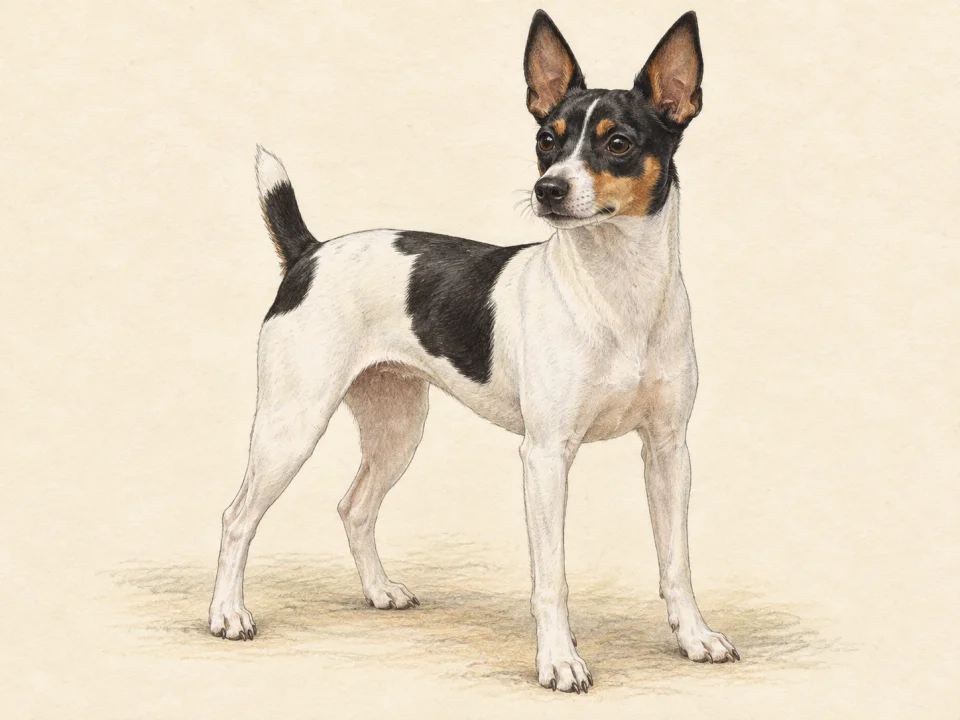
A toy-sized working terrier still needs thoughtful handling
The parent club traces the breed to small Smooth Fox Terriers crossed with toy breeds, while emphasizing that working-terrier traits remain. It also cautions against choosing one for very young children. Consider whether everyone at home can interact gently, keep doors secure and avoid chasing or grabbing the dog. Let an adult manage lifting and supervise play, with a quiet place the dog can leave to voluntarily. The club advises against continuous outdoor living and notes the need for protection in cold weather. Plan for brief, comfortable outdoor trips and an indoor home life rather than assuming a small dog can look after itself in the yard.[1]
Keep training rewards in the daily food budget
AKC highlights weight management while describing an athletic dog that enjoys walks and play. In a small household companion, it is easy for rewards from several people to add up unnoticed. Agree who prepares the day’s food and training rewards, and tell the veterinarian about extras when discussing body condition. Do not copy a fixed portion from another dog merely because it is also a toy breed. Use short games and walks suited to this dog’s fitness, with a comfortable place to rest afterward. The coat needs little elaborate grooming, but nail handling should start gently while the puppy is young; dental care also remains part of routine care. Easy brushing is not the same as having no maintenance to learn.[2]
A patella examination is not a DNA swab
The parent club’s health page identifies patellar luxation and distinguishes its veterinary examination from the available DNA tests for primary lens luxation, congenital hypothyroidism with goiter and spinocerebellar ataxia. Ask to see each parent’s actual results and clarify which conditions a panel includes. A general “genetically tested” label does not show that the knees were examined, or that every named condition was covered. The club also discusses additional concerns and optional testing, so use the list to start a veterinary conversation rather than as proof that no other disease exists. If your dog develops a movement or eye problem, seek assessment even when the parents had reassuring screening.[3]
Frequently asked questions
Is a Toy Fox Terrier a good default choice for very young children?
The parent club cautions against that pairing. Adults must be able to ensure gentle handling, supervise interactions and provide a retreat; small size alone does not make a dog easy for a child to manage.
Source [1]Does its easy coat remove the need for routine grooming?
No. Coat care is simple, but nails and teeth still need attention. Introduce handling gradually and learn appropriate care from your veterinarian or groomer.
Source [2]Does a DNA panel replace the Toy Fox Terrier’s patella evaluation?
No. The parent club explicitly describes patella evaluation as a veterinary assessment, separate from genetic tests for named inherited conditions.
Source [3]FAQ sources
- American Toy Fox Terrier Club — About Toy Fox Terriers ↗FAQ reference 1
- American Kennel Club — Toy Fox Terrier care ↗FAQ reference 2
- American Toy Fox Terrier Club — Health information ↗FAQ reference 3
Sources & methodology
Breed-level measurements and comparison scores provide context. They do not predict an individual dog's health, behaviour or suitability. Open the original publisher pages below to verify the facts and compare any later updates.
- American Toy Fox Terrier Club — About Toy Fox Terriers ↗Reference 1 · reviewed 2026-09-27
- American Kennel Club — Toy Fox Terrier care ↗Reference 2 · reviewed 2026-09-27
- American Toy Fox Terrier Club — Health information ↗Reference 3 · reviewed 2026-09-27
Make it about your dog
Build a profile around your dog's age, experiences and everyday needs.
Meet your dog →Explore local care