
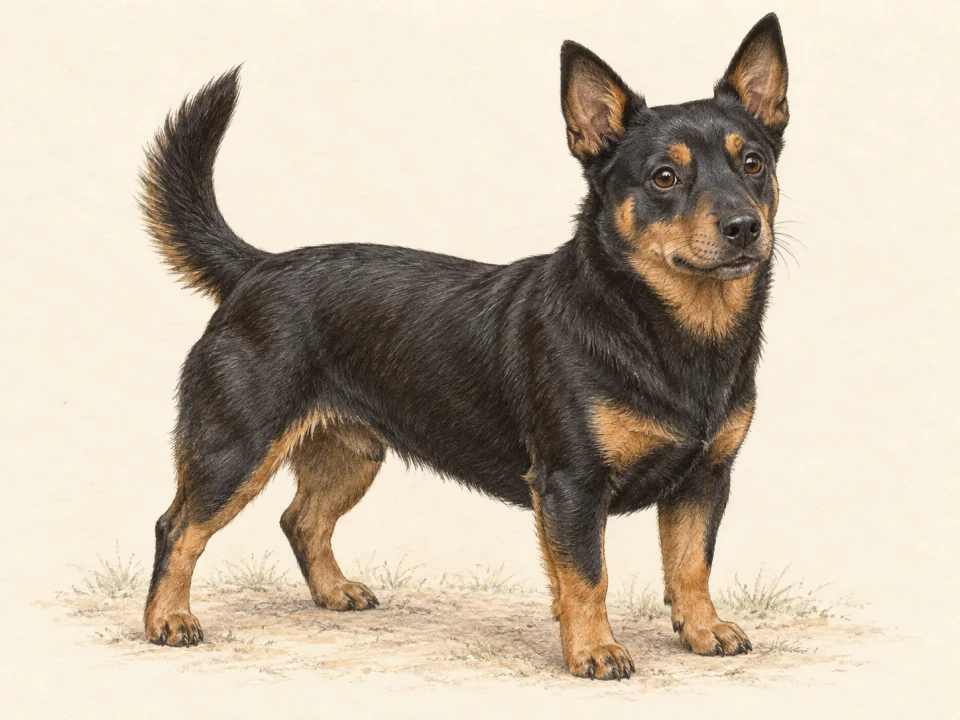
Small enough to carry, still a working dog
AKC describes cattle work alongside terrier-like ratting instincts, with a need for human interaction, activity and mental engagement. Consider what the dog will do with you each day rather than using its size as the main measure of effort. Short learning games, walks and securely managed play offer different kinds of engagement; a new task can be useful without becoming an exhausting workout. The short, weather-resistant coat needs light brushing and occasional bathing, according to AKC. That can make grooming simpler than for a heavily furnished breed, but does not remove nail, dental or routine health care. Before adoption, ask about the individual’s response to moving animals and unfamiliar people, and plan introductions from that history rather than from a cheerful breed description.[1]
Keep eye examinations and DNA tests in separate columns
The UK Lancashire Heeler Club recommends the eye screening scheme alongside DNA tests for Primary Lens Luxation and Collie Eye Anomaly. These do not all answer the same question. When reviewing a dog’s records, list the clinical eye examination and its date separately from the PLL and CEA genetic results. Match every document to the dog’s identity and ask a veterinarian to explain unclear findings. A claim that a parent is “eye tested” is too broad to tell you which of these records exists. Keep copies so later veterinary care can use the underlying information instead of a remembered reassurance.[2]
Check when the eye examination took place
The club’s March 2025 guidance recommends annual clinical eye screening and an examination of both prospective parents within the 12 months before mating. That date matters separately from the DNA result. For a litter you are considering, ask for the mating date and each parent’s eye-examination report; compare the dates rather than accepting an undated assurance. The same guidance puts clinical eye screening in its good-practice category and PLL and CEA/CH DNA tests in best practice, but says the breed clubs recommend only breeders who perform all the health testing. Those category names should not become a reason to omit a record from your questions. Some breeders also check patellas; ask what was actually done. These are the club’s published breeding recommendations, not a diagnosis or a promise that every illness can be screened out.[4]
Do not wait on a painful or cloudy eye because a DNA result was clear
OFA’s University of Missouri information explains that lens displacement can lead to painful inflammation or glaucoma. Redness, tearing, pain or a hazy appearance warrant prompt veterinary attention. It also notes that lens luxation can occur secondary to other eye problems or trauma, so a result for the inherited PLL variant is not protection against every eye disorder. Another important detail is the interpretation of a carrier result: OFA labels it carrier/low risk, not no risk. Bring the actual result to your veterinarian and agree on follow-up; do not decide that a current eye problem can wait based on a genetic label.[3]
Frequently asked questions
Does “eye tested” mean both PLL and CEA DNA tests were done?
Not necessarily. Ask for the named reports and the clinical eye-examination record separately. The Lancashire Heeler Club recommends eye screening as well as those two DNA tests.
Source [1]Is a PLL carrier result the same as no risk?
No. OFA describes carriers as low risk and notes that some can develop PLL. Have a veterinarian interpret the result and assess eye symptoms regardless of genetic status.
Source [2]How recent should the parents’ clinical eye examinations be?
The club’s March 2025 guidance recommends annual screening and examinations of both parents within 12 months before mating. Ask for dated reports and compare them with the mating date; PLL or CEA DNA results answer separate questions.
Source [3]FAQ sources
Sources & methodology
Breed-level measurements and comparison scores provide context. They do not predict an individual dog's health, behaviour or suitability. Open the original publisher pages below to verify the facts and compare any later updates.
- American Kennel Club — Lancashire Heeler ↗Reference 1 · reviewed 2026-09-27
- Lancashire Heeler Club — Health and Welfare ↗Reference 2 · reviewed 2026-09-27
- OFA — Primary Lens Luxation, University of Missouri veterinary information ↗Reference 3 · reviewed 2026-09-27
- Lancashire Heeler Club — health guidance for breeders and owners, March 2025 ↗Reference 4 · reviewed 2026-09-27
Make it about your dog
Build a profile around your dog's age, experiences and everyday needs.
Meet your dog →Explore local care