
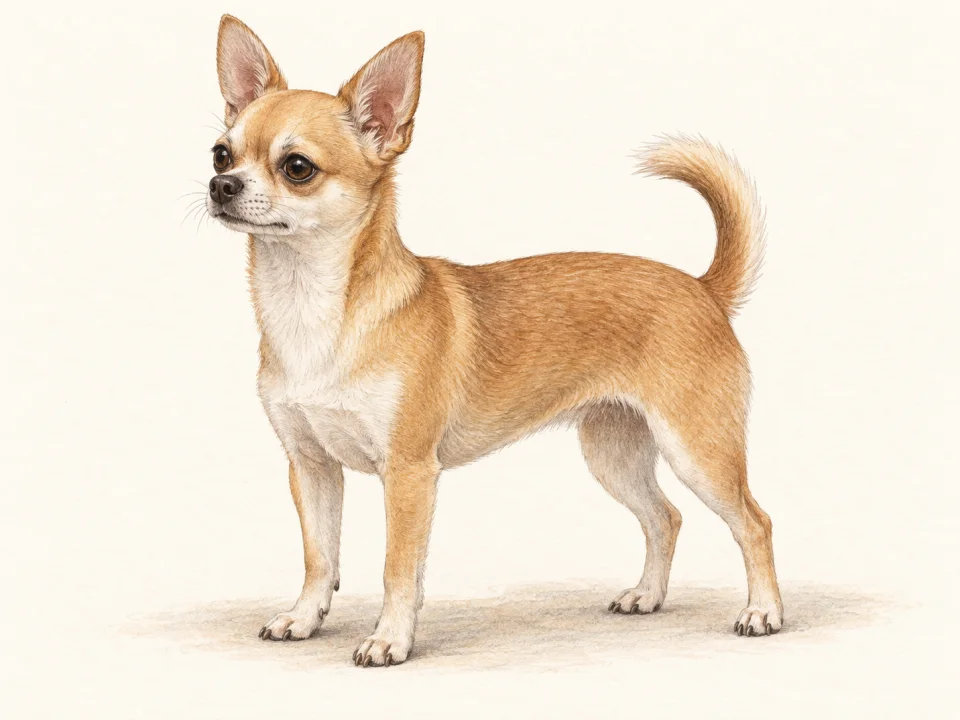
Plan for a full-sized personality in a small body
AKC describes the Chihuahua as confident, adaptable, alert and intelligent. Small size does not remove the need for training, choice and predictable routines. Reward behaviours you want and prevent situations in which barking or defensive behaviour is repeatedly rehearsed.[1]
Make handling physically safe
AKC cautions that the breed is too small for roughhousing. Supervise children and visitors, provide a protected resting area and teach people to invite contact rather than pick up or restrain the dog without warning. Use steps or ramps only when they are stable and appropriate for the individual.[1]
Use reward-based training from the beginning
AKC notes that Chihuahuas are eager to please and respond well to positive techniques. Teach calm greetings, comfortable carrier use, loose-lead walking and handling for nails, teeth and veterinary checks in short sessions. Fear or sudden behaviour change needs professional assessment, not punishment.[1]
Balance modest exercise with daily enrichment
AKC describes relatively modest exercise needs, but every dog still benefits from movement, sniffing and chances to learn. Adjust duration for age, weather, body condition and health. Stop and seek veterinary advice for collapse, breathing difficulty, pain or unusual reluctance to move.[1]
Care for the coat type in front of you
Smooth coats need occasional brushing and regular bathing, while AKC recommends weekly brushing for long coats to reduce tangles. Check ears, nails, skin and teeth during calm cooperative handling. A coat is not reliable protection from every temperature, so watch the individual dog rather than relying on a fixed rule.[1]
Ask for documented health screening
The Chihuahua Club of America encourages cardiac, patella and eye screening. When considering a puppy, ask for the actual results and confirm public records where available. Screening reduces uncertainty but cannot guarantee the future health of an individual dog.[3]
Read consent before close contact
RSPCA advises reading the whole body and context. A dog that approaches with relaxed posture may welcome gentle interaction; turning away, freezing, lip licking, tension or retreat asks for space. Affection should remain optional, including kisses, hugs and being held.[4]
Choose the individual, not a stereotype
Meet the dog more than once when possible and ask how the individual behaves around visitors, handling, other animals, noise and time alone. The breed can suit many city homes, but vocal behaviour, fragility and long-term care still need a realistic household plan.[1]
Frequently asked questions
What are some useful facts about Chihuahuas?
AKC describes the Chihuahua as one of the oldest breeds in the Americas, a Toy Group dog with smooth- and long-coat varieties, an alert temperament and strong adaptability to different homes. Individual behaviour and care needs still vary.
Source [1]What health problems should Chihuahua homes discuss with a veterinarian?
The Chihuahua Club of America encourages breeders to screen hearts, patellas and eyes. Ask for documented results when choosing a puppy and use regular veterinary care for the individual dog; screening is useful risk information, not a health guarantee.
Source [2]What do Chihuahuas love most?
No single preference applies to every Chihuahua. AKC describes an affectionate, attentive companion that often enjoys close family contact, but the best guide is the individual dog's voluntary choices, body language and history.
Source [1]Do Chihuahuas like to be kissed?
Do not assume that any dog enjoys face-to-face contact. RSPCA recommends reading the whole body and giving the dog space when posture becomes tense or the dog turns away. Offer affection in ways the individual can freely approach or leave.
Source [3]FAQ sources
- American Kennel Club — is the Chihuahua right for you? ↗FAQ reference 1
- Chihuahua Club of America — health testing guidance ↗FAQ reference 2
- RSPCA — understanding dog body language ↗FAQ reference 3
Sources & methodology
Breed-level measurements and comparison scores provide context. They do not predict an individual dog's health, behaviour or suitability. Open the original publisher pages below to verify the facts and compare any later updates.
- American Kennel Club — is the Chihuahua right for you? ↗Reference 1 · reviewed 2026-09-09
- Chihuahua Club of America — breed standard ↗Reference 2 · reviewed 2026-09-09
- Chihuahua Club of America — health testing guidance ↗Reference 3 · reviewed 2026-09-09
- RSPCA — understanding dog body language ↗Reference 4 · reviewed 2026-09-09
Make it about your dog
Build a profile around your dog's age, experiences and everyday needs.
Meet your dog →Explore local care