
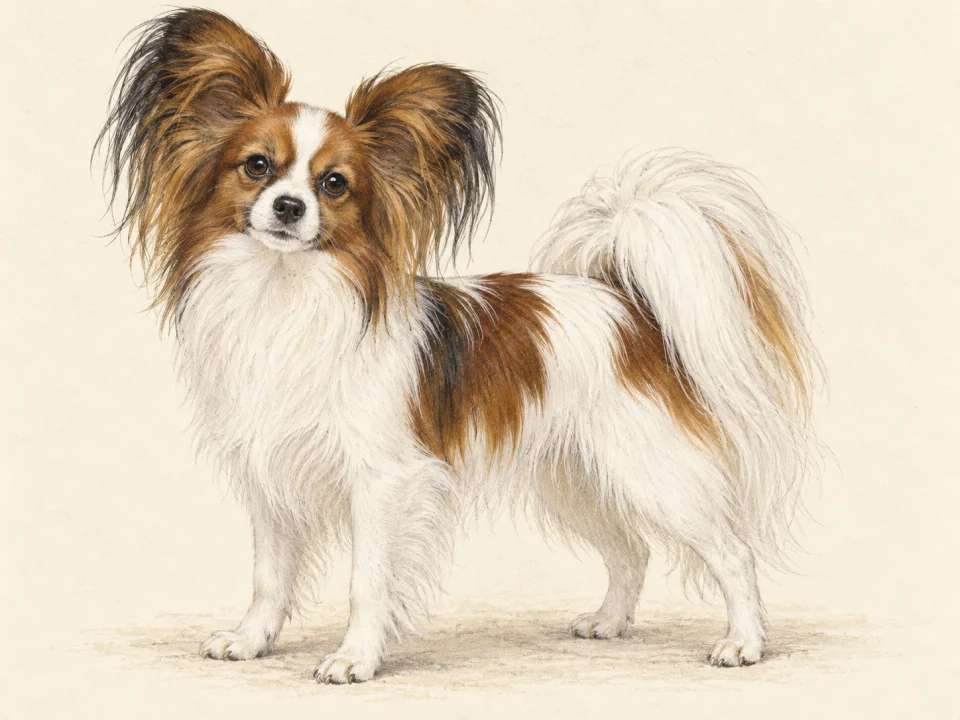
Tiny size does not mean a quiet ornament
AKC lists Papillons at 8–11 inches and 5–10 pounds. That makes their physical space needs modest, but their curiosity and willingness to be active still deserve attention. Plan short learning games and suitable exercise during the day. Measure the dog for equipment and think about doors, steps and household traffic from a small animal’s level.[1]
Protect the ear fringes without skipping the rest
AKC suggests a full grooming session roughly monthly, with brief combing between sessions using a comb or soft slicker brush. Focus on the ear bases, inner hind legs and thigh furnishings. Its bathing guidance is every few months or when the dog becomes particularly dirty. These are starting points: a coat that tangles sooner needs attention sooner. Nail and dental care are separate tasks, not something to leave until bath day.[1]
A coat-care checklist you can actually hand over
Use this household checklist between full grooming sessions. It is a way to share observations, not a medical test or a fixed grooming prescription.
- Set up on a stable, nonslip surface. Let the dog settle before handling the coat; pause if the dog pulls away or becomes distressed.
- Check one area at a time: behind each ear, inside each hind leg, then the thigh furnishings. Record the specific area needing attention instead of writing only “brushed.”
- Do not force a comb through resistance. If you cannot work comfortably through a tangle, leave that area for a groomer rather than continuing to pull.
- Finish with a short handover: date; areas checked; any area left unfinished; and the next person responsible. For example: “Left ear fringe unfinished; book groomer.”
- Keep a separate reminder for nails and dental care. Completing a coat check does not complete the whole care routine.
Teach useful skills in a manageable space
A reward-based game of coming when called or finding a toy can fit into a small home. Keep the floor safe and the challenge appropriate to the dog’s experience. Build one step at a time rather than assuming intelligence means instant understanding. Alternate activity with quiet rest so enthusiasm does not turn every interaction into a demand for more play.[1]
Supervise around larger animals
A Papillon may be bold enough to approach or chase something much larger. Do not confuse confidence with physical safety. Use secure boundaries outdoors and supervise introductions, giving the small dog a way to move away. Separate dogs for meals and rest if needed. Ask children to interact calmly at ground level instead of repeatedly lifting or chasing the dog.[1]
Do Papillons shed? Start with the right expectation
Yes. A single coat is not a promise of a hair-free home. Plan for loose hair as well as tangles; these are different jobs. Brushing out loose hair does not tell you that the hair behind the ears is free of knots. If you are choosing a dog, spend time with the individual and discuss the coat routine with its current caregiver rather than choosing on a non-shedding label alone.[1]
Plan for a potentially long commitment
The AKC lifespan range is 14–16 years. Recommended breeding checks include patella, cardiac and eye evaluations. Request dated results that identify the dogs assessed and keep copies with the dog’s records. A long breed reference range makes planning for changing household circumstances worthwhile, but neither the range nor screening predicts the exact future of one Papillon.[1]
Frequently asked questions
Do Papillons shed even though they have no undercoat?
They can lose hair. Having no undercoat does not mean a completely non-shedding coat. Regular grooming also helps prevent tangles in the ear and leg furnishings.
Source [1]Where does a Papillon’s coat tend to need extra attention?
Check behind the ears, inside the hind legs and around the thigh furnishings. Handle tangles gently, and remember nails, dewclaws and dental care as well as the visible coat.
Source [1]Does a Papillon need exercise if it lives in an apartment?
Yes. Its small size allows many activities in limited space, but it still benefits from suitable walks, play and short training sessions, with rest between them.
Source [1]How long do Papillons live?
AKC lists 14–16 years as a breed reference. An individual lifespan varies; request appropriate health records and maintain individual veterinary care.
Source [1]FAQ sources
- American Kennel Club — Papillon breed and care guidance ↗FAQ reference 1
Sources & methodology
Breed-level measurements and comparison scores provide context. They do not predict an individual dog's health, behaviour or suitability. Open the original publisher pages below to verify the facts and compare any later updates.
- American Kennel Club — Papillon breed and care guidance ↗Reference 1 · reviewed 2026-10-03
Make it about your dog
Build a profile around your dog's age, experiences and everyday needs.
Meet your dog →Explore local care