
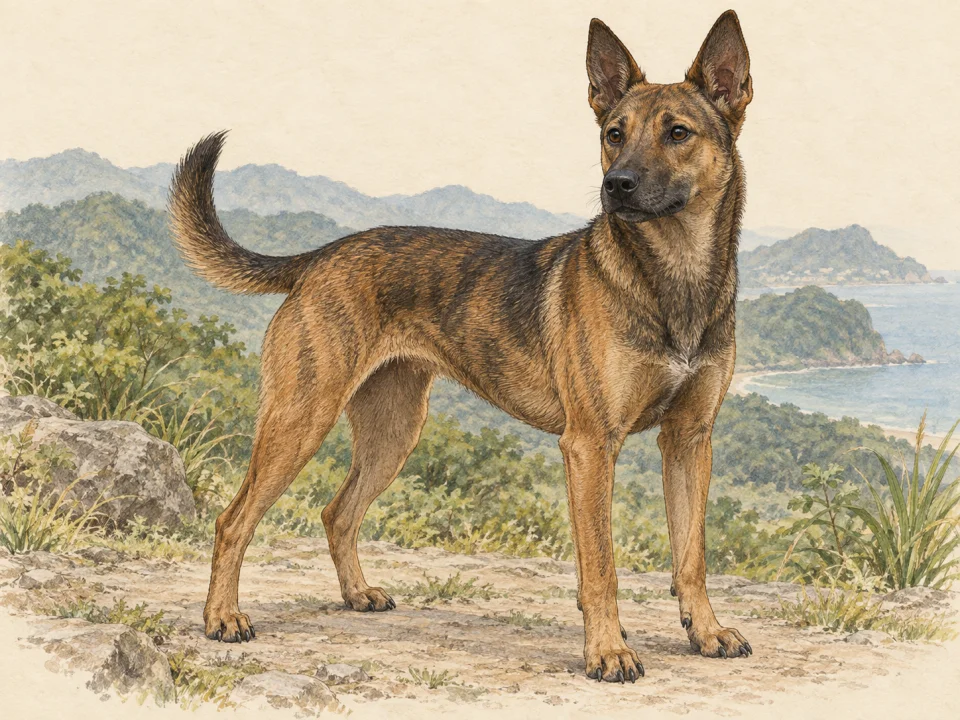
A breed description is a starting point for meeting the dog
The FCI describes an alert, agile dog and identifies hunting, watching and companionship as its roles. That history helps explain the interest in movement and surroundings, but does not tell you how an individual will respond to your elevator, guests or resident pets. Ask the current carer what the dog has actually experienced and which situations remain unfamiliar. The standard gives adult males as 48–53 cm and 14–18 kg, and females as 43–48 cm and 12–16 kg. Use these as breed-reference ranges, not proof of ancestry or a required target weight for a rescue dog. Assess the dog in front of you and ask a veterinarian about its healthy body condition.[1]
An easy coat still leaves an active companion to care for
AKC describes relatively straightforward coat care: regular brushing with occasional bathing, plus attention to nails, ears and teeth. Budget the time saved on elaborate grooming for interaction instead. A useful handover from a breeder or rescue includes the dog’s familiar walking equipment, games it enjoys, handling it accepts and any situations it avoids. Start with those known activities, then introduce new ones gradually. AKC emphasizes making the Taiwan Dog part of the household rather than leaving it outside. A short coat and independent-looking appearance should not be taken as permission for an isolated yard-only life. Ask for the dog’s own veterinary and preventive-care records; a broad statement that a breed is healthy cannot establish an individual animal’s health.[2]
Give a reserved dog room to learn about visitors
AKC notes that Taiwan Dogs can be reserved with unfamiliar people. Put that observation together with AVSAB’s recommendation for reward-based training: arrange introductions that allow distance and choice rather than forcing contact. For example, have a visitor remain seated and avoid reaching while the dog stays at a comfortable distance with its handler. Reward calm attention or turning back to you; end the session before it becomes overwhelming. If the dog cannot relax, use a separate comfortable space and seek qualified behavior help instead of treating distress as disobedience. Loyalty to the household is not a reason to encourage threatening behavior toward guests, and a visitor should never be asked to test how protective a dog is.[3]
Frequently asked questions
Does looking like the Taiwan Dog standard prove a dog’s ancestry?
No. Size, ears, coat and tail are descriptive features, not a pedigree test. For a dog of uncertain background, base household decisions on its observed behavior and health information.
Source [1]Is the Taiwan Dog suited to living alone in a yard?
AKC advises including it in the family household with daily interaction. Secure outdoor access can be useful, but does not replace companionship, walks and training.
Source [2]Should strangers insist on petting a reserved Taiwan Dog?
No. Allow distance and voluntary interaction. Use reward-based teaching and stop when the dog is uncomfortable; obtain professional help for persistent fear or threatening behavior.
Source [3]FAQ sources
- FCI — Taiwan Dog standard No. 348 ↗FAQ reference 1
- American Kennel Club — Taiwan Dog care and temperament ↗FAQ reference 2
- American Veterinary Society of Animal Behavior — Humane training position ↗FAQ reference 3
Sources & methodology
Breed-level measurements and comparison scores provide context. They do not predict an individual dog's health, behaviour or suitability. Open the original publisher pages below to verify the facts and compare any later updates.
- FCI — Taiwan Dog standard No. 348 ↗Reference 1 · reviewed 2026-09-27
- American Kennel Club — Taiwan Dog care and temperament ↗Reference 2 · reviewed 2026-09-27
- American Veterinary Society of Animal Behavior — Humane training position ↗Reference 3 · reviewed 2026-09-27
Make it about your dog
Build a profile around your dog's age, experiences and everyday needs.
Meet your dog →Explore local care