
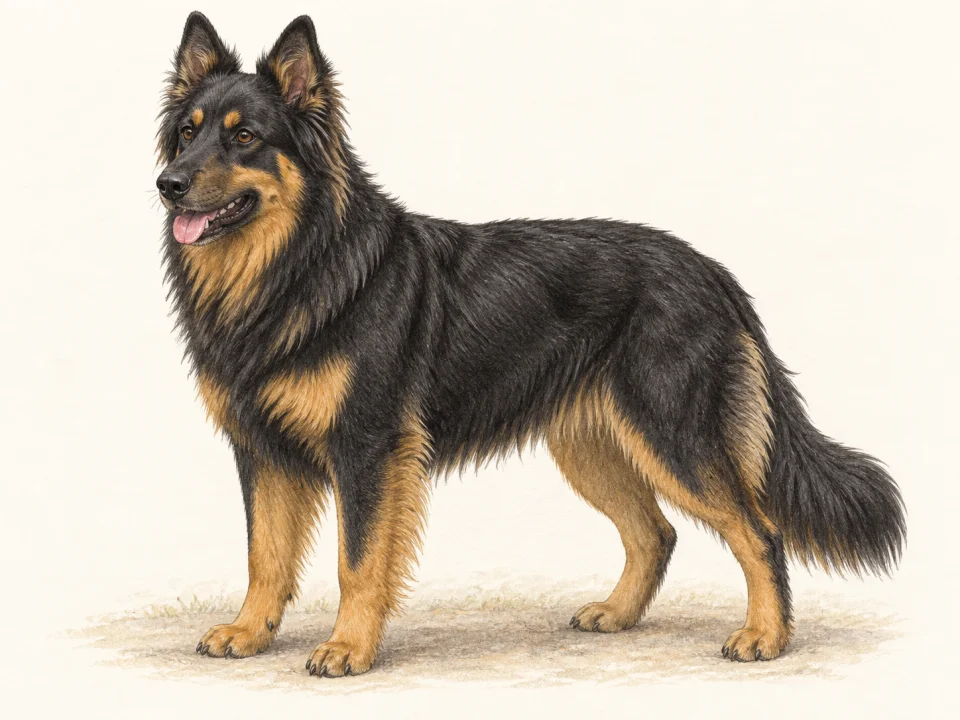
Measure the individual behind the shepherd label
AKC references males at 20.5–21.7 inches and 41–60 pounds, females at 19.3–20.5 inches and 37–53 pounds. Those figures should not be replaced with assumptions from a larger shepherd breed. Use actual chest and neck measurements for equipment and assess body condition separately. A breed name alone cannot tell you how much space a particular dog needs in a vehicle.[1]
Build a repeatable mix of activity and learning
The source describes a dog that enjoys daily exercise, play and training but can also relax with family. Choose a suitable task such as a simple search or a short rewarded skill session alongside walks. Fit the plan to the ordinary workweek and the dog’s development. An ability to settle does not mean engagement can be omitted whenever the household is busy.[1]
Keep the training atmosphere calm
Bohemian Shepherds can be sensitive to harsh or monotonous teaching. Use play, praise or suitable rewards to explain a small action, then stop at a successful point. Increase distractions gradually instead of drilling the same cue louder. If the dog struggles, check whether the environment or task is too difficult before assuming that an intelligent breed ought to understand immediately.[1]
Give alert behavior a manageable routine
The breed can be vocal when it notices something concerning. Practise moving away from an exciting viewpoint and rewarding calm attention before a busy period begins. Prepare a visitor routine with space for quiet observation. Do not assume affectionate behavior with family predicts comfort with every unfamiliar person or situation; supervise and allow a resting alternative when needed.[1]
Use seasonal coat care without ignoring warm conditions
Weekly brushing and occasional bathing are the cited baseline, with attention to seasonal shedding. The coat’s cold-weather usefulness does not make every temperature comfortable. Plan appropriate activity conditions and a comfortable resting space, observing the individual rather than pushing through visible discomfort. Include nails, ears and dental care, even when the outer coat appears easy to maintain.[1]
Ask what the breeding-health program actually assessed
AKC lists a lifespan of 12–15 years. The formal panel is empty, while the health text discusses efforts concerning hips, elbows, degenerative myelopathy, epilepsy and genetic diversity. Request identifiable results and family history, clarifying what each test can establish. Do not turn a program’s goals into a claim that every puppy has been cleared of all those conditions.[1]
Frequently asked questions
Does a Bohemian Shepherd need activity every day?
The cited guidance recommends daily exercise, training or play. Its ability to relax with the household does not remove the need for a regular engaging routine.
Source [1]What teaching approach suits this breed?
Use calm, consistent reward-based lessons with manageable steps. The source cautions against harshness and monotonous drilling.
Source [1]Can a Bohemian Shepherd be an alert, vocal dog?
Yes. Its watchdog background can include vocal responses to perceived concerns. Teach calm alternatives and manage the setting rather than assuming family friendliness means silence.
Source [1]Does the empty test panel mean the breed has no health-screening priorities?
No. The health text describes several breeding-program priorities. Ask for actual individual records and professional interpretation instead of treating those goals as completed clearances.
Source [1]FAQ sources
Sources & methodology
Breed-level measurements and comparison scores provide context. They do not predict an individual dog's health, behaviour or suitability. Open the original publisher pages below to verify the facts and compare any later updates.
- American Kennel Club — Bohemian Shepherd breed and care guidance ↗Reference 1 · reviewed 2026-09-27
Make it about your dog
Build a profile around your dog's age, experiences and everyday needs.
Meet your dog →Explore local care