
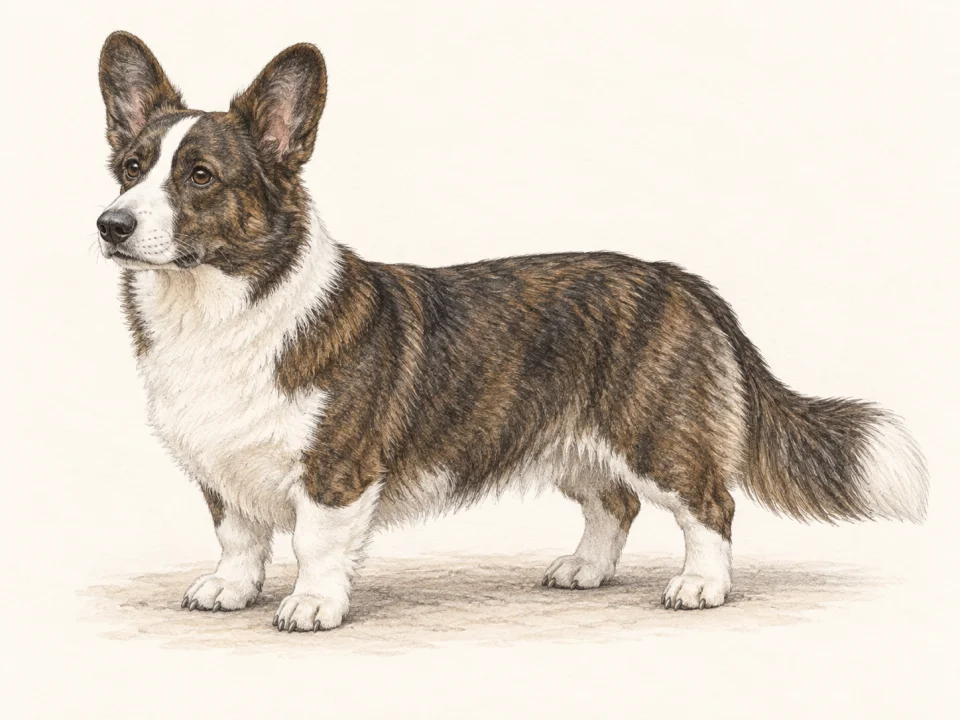
Think of a herding worker rather than a miniature ornament
AKC references 10.5–12.5 inches in height, with males at 30–38 pounds and females at 25–34 pounds. The low outline accompanies a substantial dog developed for work. Ask how the individual spends an ordinary day and what helps it settle. A small height measurement does not mean that carrying the adult everywhere or skipping regular outings is a realistic plan.[1]
Reduce unnecessary jumping around the home
The cited health guidance highlights back concerns and cautions against jumping down from beds or couches and uncontrolled stair use. Review the dog’s usual routes and arrange manageable access to resting areas. Ask your veterinarian about appropriate activity for the individual. New discomfort or difficulty moving deserves assessment rather than being dismissed as normal for a long-bodied breed.[1]
Keep training rewards within the food plan
AKC warns that Cardigans can become overweight easily. Measure routine food and account for treats used by every caregiver, rather than having each person add extras independently. Ask your veterinarian to assess body condition and nutritional needs. Breed weight ranges are background information; they do not tell you whether a particular dog at a particular weight is in appropriate condition.[1]
Give attention and energy a shared task
Regular suitable walks, searching games and short lessons can provide engagement without relying on repeated leaps from furniture. Adapt play to the individual’s comfort and fitness. A simple family schedule can prevent the assumption that someone else already exercised the dog. A companion willing to relax beside you still needs a routine that includes appropriate movement and opportunities to learn.[1]
Maintain the coat without assuming a summer shave is needed
AKC recommends brushing at least weekly and attending to nails and hair around the feet. Discuss practical grooming with an experienced groomer rather than automatically clipping the whole coat short for summer. Whatever the haircut, continue managing hot-weather exposure. A coat description is not a guarantee that the dog can safely remain active in unsuitable temperatures.[1]
Understand what the genetic results cover
The cited panel lists hip evaluation, a degenerative myelopathy common-variant DNA test and a PRA-rcd3 DNA test. Obtain identifiable reports and discuss their limitations with a veterinarian. A result for one genetic variant is not a general promise about future movement or vision. AKC lists a reference lifespan of 12–15 years, while the individual’s ongoing care must respond to actual changes.[1]
Frequently asked questions
Is a Cardigan lightweight because it is short?
Not necessarily. AKC references males at 30–38 pounds and females at 25–34 pounds. Plan equipment and handling for the adult’s actual size.
Source [1]Should I let my Cardigan repeatedly jump down from furniture?
The cited guidance cautions against this and highlights potential back concerns. Arrange manageable access and ask your veterinarian about appropriate activity for the individual.
Source [1]How can several family members avoid overfeeding treats?
Agree on the day’s food and reward plan and record extras. Ask your veterinarian about body condition instead of treating the breed’s weight range as a feeding target.
Source [1]What is included in the cited health-screening panel?
Hip evaluation plus DM common-variant and PRA-rcd3 DNA tests. Request the reports and interpretation; these tests do not guarantee freedom from all future health problems.
Source [1]FAQ sources
Sources & methodology
Breed-level measurements and comparison scores provide context. They do not predict an individual dog's health, behaviour or suitability. Open the original publisher pages below to verify the facts and compare any later updates.
- American Kennel Club — Cardigan Welsh Corgi breed and care guidance ↗Reference 1 · reviewed 2026-09-27
Make it about your dog
Build a profile around your dog's age, experiences and everyday needs.
Meet your dog →Explore local care