
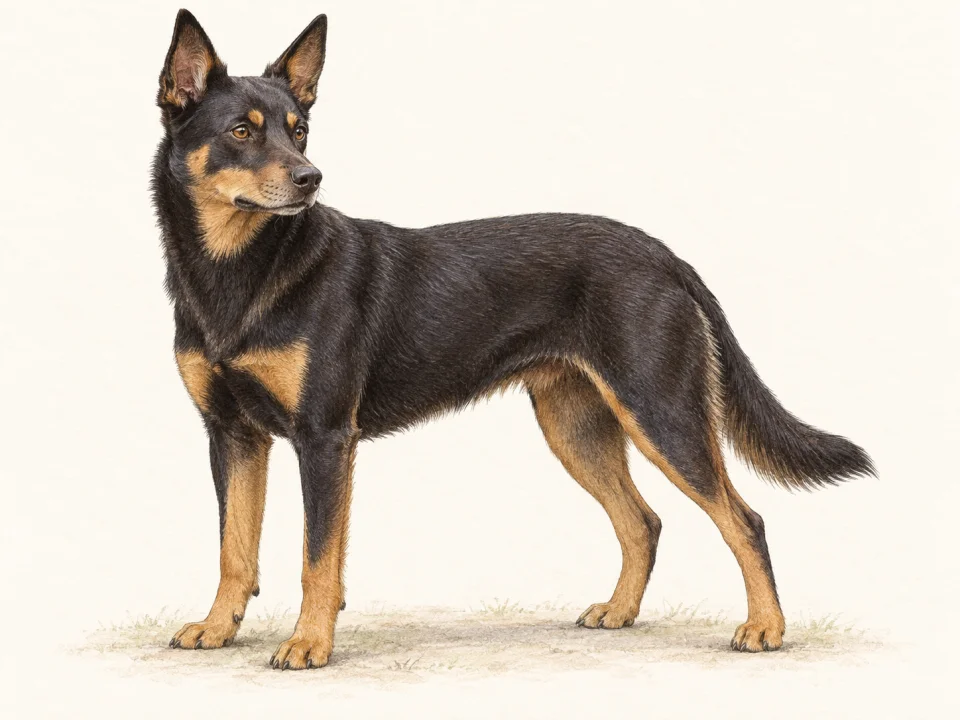
Think sheep work before thinking coat or size
The Kelpie was developed for working sheep in Australian conditions. AKC lists a 17–20 inch height range and 35–50 pounds, but those compact measurements do not describe a low-energy companion. Ask about the individual dog’s background and daily activity before deciding. A manageable physical size is only one part of whether the household can provide an appropriate life.[1]
Make the job specific enough to repeat
A non-farm home needs a realistic alternative to livestock work. Suitable training, scent games or structured dog activities can create a shared task alongside exercise. Name the person, place and time that make the plan possible during a normal week. Avoid relying on the vague promise of lots of walks without considering mental challenge and the owner’s available time.[1]
Manage attempts to move people and animals
The AKC guidance notes that Kelpies may try to herd other pets or children. Prevent repeated chasing by supervising moving play and offering an alternative activity in a separate space. Practise attention and calm waiting away from the excitement first. Do not ask a child or another animal to tolerate persistent behavior simply because it resembles the dog’s traditional work.[1]
Build recovery into an active routine
A working dog should also have opportunities to rest comfortably. After an appropriate activity, reduce distractions and reward quiet settling rather than continually starting another game. Increase physical demands gradually according to health and development. A description of impressive adult endurance is not an exercise prescription for a puppy or evidence that every individual requires the same distance.[1]
The close coat still contains an underlayer
The Kelpie’s outer hair lies flat over a short dense undercoat. Weekly brushing or combing removes loose hair, with bathing when necessary. Inspect the coat and feet after outdoor activity instead of assuming a tidy surface is enough. Teach easy cooperative paw checks and nail handling so routine care remains familiar when an active outing leaves something caught or uncomfortable.[1]
Ask for specifics where the health entry is brief
AKC lists a lifespan reference of 10–13 years but provides no named screening panel in the consulted entry. Request current breed guidance, parent records and family history, and ask a veterinarian to interpret the information. Broad statements about working robustness do not replace actual results. Keep individual health assessment separate from reputation, appearance or a breeder’s general reassurance.[1]
Frequently asked questions
Can an Australian Kelpie herd children or other pets?
It may try, according to the cited AKC guidance. Supervise interactions and redirect the setup before repeated chasing develops; do not expect children or animals to manage the behavior themselves.
Source [1]Does a Kelpie need to live on a farm?
A non-farm home must still provide substantial suitable activity and mental work. Assess the actual routine and individual background rather than assuming ordinary yard access replaces a working outlet.
Source [1]How much coat maintenance does a Kelpie need?
Weekly brushing or combing is the source’s routine recommendation. Its close outer coat still has an undercoat, so low maintenance does not mean no shedding or inspection.
Source [1]Which health tests are listed in the cited Kelpie entry?
It does not provide a named panel. Request current breed-specific recommendations and identifiable records instead of interpreting the missing list as proof that no risks exist.
Source [1]FAQ sources
Sources & methodology
Breed-level measurements and comparison scores provide context. They do not predict an individual dog's health, behaviour or suitability. Open the original publisher pages below to verify the facts and compare any later updates.
- American Kennel Club — Australian Kelpie breed and care guidance ↗Reference 1 · reviewed 2026-09-27
Make it about your dog
Build a profile around your dog's age, experiences and everyday needs.
Meet your dog →Explore local care