
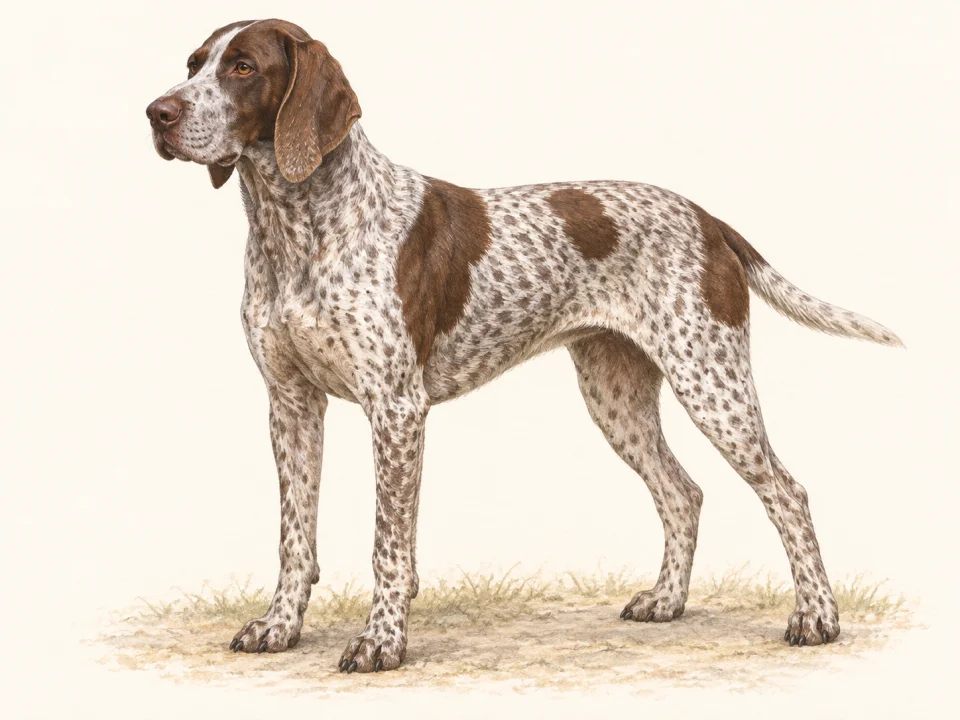
Confirm which French pointer you are meeting
Braque Francais includes Pyrenean and Gascony types; the Pyrenean is the smaller of the two. AKC references 18.5–23 inches and 40–55 pounds for this breed. When comparing dogs, confirm the type and the individual’s background instead of assuming that every French pointer has the same adult size, activity history or experience of living in a household.[1]
Give the retrieve a beginning and an end
AKC describes a natural retrieving inclination. Turn that interest into a cooperative game: present a suitable object, reward bringing it toward you and practice an easy exchange. Start where distractions are limited. The practical goal is a manageable shared activity, not endless repetitions; pause while the dog remains comfortable and willing, and adapt the session to age and fitness.[1]
Treat water interest as interest, not a safety qualification
The breed is described as enjoying water, but an individual may have little experience. Introduce access gradually in suitable conditions with supervision and a clear way out. Observe confidence and effort instead of assuming enthusiasm proves swimming competence. Keep a land-based activity option available so a day’s exercise does not depend on entering unsuitable water or continuing after fatigue.[1]
Prepare a routine for a sociable sporting companion
Suitable walks, searching games and short lessons can give the day a predictable shape. Ask a breeder or rescue how the individual behaves after activity, with visitors and during quiet periods. Introduce new people and dogs gradually. A friendly breed description is useful background, but it does not replace observing interactions or providing a resting space away from household commotion.[1]
Make weekly grooming more than a coat inspection
AKC recommends weekly grooming with occasional bathing for the short coat. Include regular nail, ear and dental care, and get the dog comfortable with gentle handling before those tasks become urgent. After outdoor outings, check for debris around the ears and feet. A painful ear or new skin change needs appropriate assessment rather than being treated as an ordinary grooming inconvenience.[1]
Separate reference lifespan from a health promise
AKC lists 12–15 years and recommends responsible health screening, without a named testing panel on the cited page. Ask what was assessed in the particular parents or dog and obtain the records. Discuss their meaning with your veterinarian, including what remains unknown. Use life-stage and individual condition to guide ongoing care rather than assuming the breed’s reference range predicts this dog’s future.[1]
Frequently asked questions
How does the Pyrenean type differ from the Gascony type?
The Pyrenean is the smaller of the two Braque Francais types. Confirm the type when discussing adult size and care rather than using the names interchangeably.
Source [1]How big is a Braque Francais Pyrenean?
AKC references 18.5–23 inches and 40–55 pounds. These are breed reference ranges; the particular dog’s measurements and condition should guide equipment and care.
Source [1]Will a natural retriever automatically return and release every object?
No. An inclination to retrieve does not establish a trained exchange. Practice bringing an appropriate object toward you and releasing it for a reward in a low-distraction setting.
Source [1]Is a love of water enough to allow unsupervised swimming?
No. Experience, conditions, access and fatigue still matter. Introduce water gradually, supervise and provide a clear exit, regardless of the breed’s retrieving background.
Source [1]FAQ sources
Sources & methodology
Breed-level measurements and comparison scores provide context. They do not predict an individual dog's health, behaviour or suitability. Open the original publisher pages below to verify the facts and compare any later updates.
- American Kennel Club — Braque Francais Pyrenean breed and care guidance ↗Reference 1 · reviewed 2026-09-27
Make it about your dog
Build a profile around your dog's age, experiences and everyday needs.
Meet your dog →Explore local care