
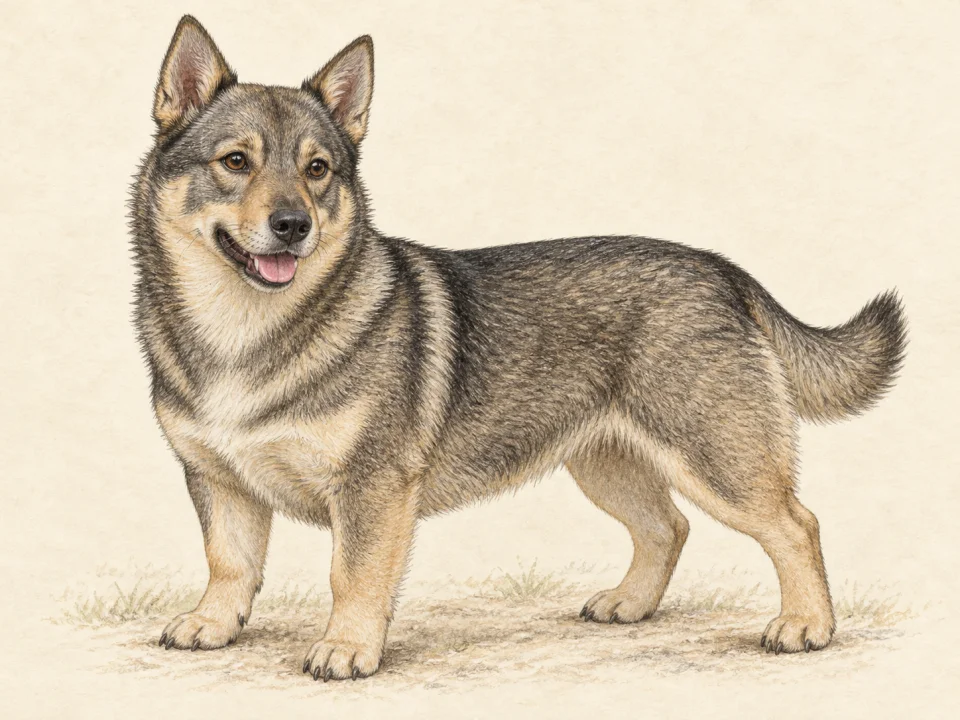
Look beyond the long-and-low outline
The Vallhund is a distinct Swedish herding breed, not simply a corgi with a different color. AKC lists males at 12.5–13.75 inches, females at 11.5–12.75 inches, and a weight range of 20–35 pounds. Its working background matters when planning daily life. Choose activities and training around the individual, rather than assuming short legs mean little interest in work.[1]
Make the day include a thinking job
The AKC guidance notes individual variation in exercise needs. A suitable walk plus play or another shared activity may work for many dogs, while others need more. Add an easy puzzle or a short training exercise and observe the response. Adjust from the dog’s ability to settle and recover, not from a fixed promise that every Vallhund needs an identical schedule.[1]
Teach cooperation with clear rewards
Many Vallhunds enjoy working with their people and respond well to positive, reward-based methods. Teach a small action, mark the success and reward it before increasing distractions. A clicker can help if the handler uses it consistently. Keep the goal practical, such as returning attention during a walk, rather than assuming a smart herder understands a cue it has never been taught.[1]
Plan for a vocal household member
The breed is known for varied vocalizations, so consider nearby neighbors and shared walls before choosing it. Notice what prompts noise, then teach an alternative in an easier situation. For example, reward moving away from a window before a busy period begins. Avoid interpreting every sound as a problem, but do not assume the dog will remain silent because it is small.[1]
Seasonal coat care needs extra time
The dense undercoat can shed heavily twice yearly. Brush through to the skin with an appropriate tool, working in manageable sections rather than skimming the surface. Increase grooming during that period and dry the coat properly after washing. Keep a comfortable routine outside shedding season too, including nails and brief checks for skin changes hidden under the dense hair.[1]
Separate good appetite from nutritional need
An active Vallhund can still gain excess weight. Measure food and account for training rewards, then review body condition rather than assuming exercise cancels extra calories. AKC lists a lifespan of 12–15 years and hip, eye and Swedish Vallhund retinopathy DNA screening. Request identifiable results and ask a veterinarian to interpret any uncertainties about health or weight.[1]
Frequently asked questions
What is a Swedish Vallhund’s temperament?
The breed is typically sociable, cheerful and keen to work with people, with the determination of a cattle herder. Individual energy and behavior vary, so use reward-based training and suitable daily activity.
Source [1]Is a Swedish Vallhund a type of corgi?
No. It is a distinct Swedish breed, despite a similarly low, long body shape.
Source [1]Do Swedish Vallhunds shed a lot?
They can shed their dense undercoat heavily twice a year. Brushing through the coat, rather than only smoothing the surface, becomes especially useful during those periods.
Source [1]What eye test should a Vallhund breeder discuss?
Ask about Swedish Vallhund retinopathy DNA testing and eye evaluations, alongside hip screening. Request results for the actual dogs and professional interpretation where needed.
Source [1]FAQ sources
Sources & methodology
Breed-level measurements and comparison scores provide context. They do not predict an individual dog's health, behaviour or suitability. Open the original publisher pages below to verify the facts and compare any later updates.
- American Kennel Club — Swedish Vallhund breed and care guidance ↗Reference 1 · reviewed 2026-09-27
Make it about your dog
Build a profile around your dog's age, experiences and everyday needs.
Meet your dog →Explore local care