
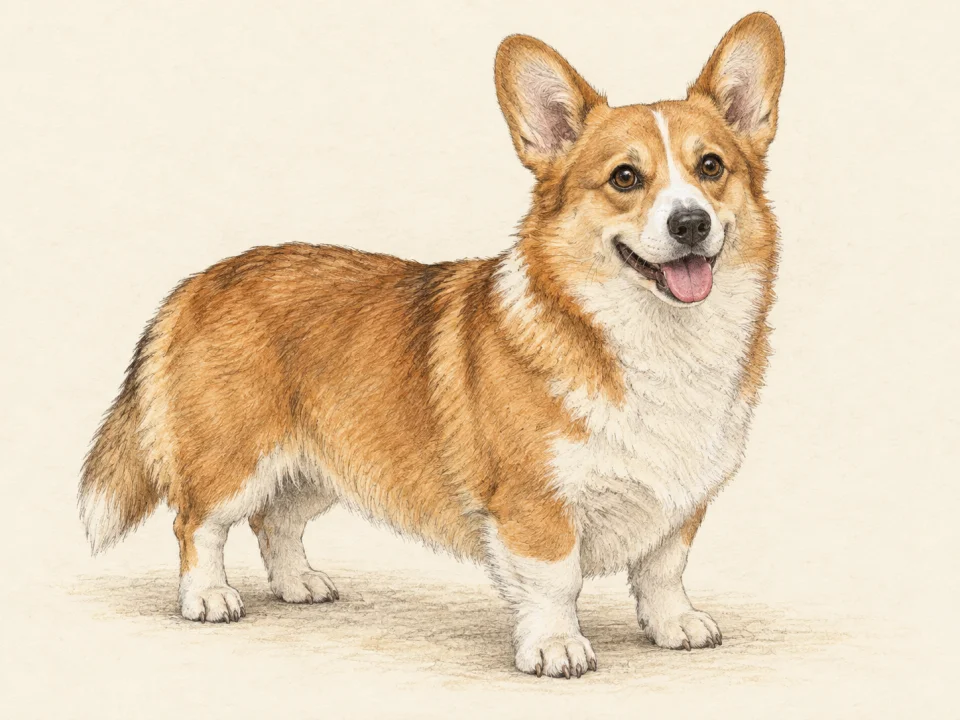
Start with the herding background
Pembrokes were developed to move livestock and remain strong, active dogs despite their compact height. Expect alertness, initiative and a need to use both body and brain. Give appropriate outlets instead of treating working behaviour as a personality flaw.[1]
Make training a household habit
AKC recommends early socialisation and patient, reward-based training. Agree on cues and boundaries before the dog arrives. Practise in short sessions, then add distraction gradually; intelligence does not mean a skill transfers automatically to every setting.[1]
Plan moderate daily movement
AKC recommends moderate daily exercise and notes that many Pembrokes enjoy activities such as agility, herding, obedience and tracking. Choose activities that fit the individual dog’s age and health, and discuss pain or movement changes with a veterinarian.[1]
Channel alert barking
A herding and watchdog background can come with a noticeable voice. Track the context before trying to suppress the sound: arrivals, window activity, excitement or unmet needs may require different plans. Reward useful alternatives and protect enough rest.
Respect the double coat
AKC describes a weatherproof double coat with regular shedding and heavier seasonal periods. Brushing helps remove loose coat, but a no-shed promise is unrealistic. Include nail and ear care in calm, cooperative handling.[2]
Keep weight in the health conversation
Measure food and account for training treats. Ask your vet to show you how to check body condition rather than relying on appearance alone. Weight is only one part of health, but it can affect comfort and the practicality of an active routine.[1]
Ask for health-screening evidence
AKC lists hip and elbow dysplasia, eye and cardiac conditions, degenerative myelopathy and von Willebrand disease among screening discussions for the breed. Ask to see records and review their meaning with your veterinarian.[1]
Check the family fit in real situations
AKC notes that properly socialised Pembrokes can live well in families and may suit older children especially. Observe the individual around movement and handling. Supervise dog-child interactions and give the dog a resting space that is never treated as a play area.[2]
Frequently asked questions
Is a Pembroke Welsh Corgi high maintenance?
Expect regular shedding, moderate daily exercise, mental work and consistent training. Whether that feels demanding depends on the household’s time and expectations.
Source [1]Is a Pembroke Welsh Corgi a good family dog?
AKC says a properly socialised Pembroke can be a good family companion and may fit especially well with older children. Evaluate the individual dog and supervise children.
Source [1]What health problems can Pembroke Welsh Corgis have?
AKC lists hip and elbow dysplasia, eye and cardiac conditions, degenerative myelopathy and von Willebrand disease among relevant screening discussions.
Source [2]How much exercise does a Pembroke Welsh Corgi need?
AKC recommends moderate daily exercise for physical and mental health. Long walks and slow jogs may suit healthy adults, but adapt activity to the individual.
Source [2]FAQ sources
- American Kennel Club — is a Pembroke right for you? ↗FAQ reference 1
- American Kennel Club — Pembroke Welsh Corgi breed information ↗FAQ reference 2
Sources & methodology
Breed-level measurements and comparison scores provide context. They do not predict an individual dog's health, behaviour or suitability. Open the original publisher pages below to verify the facts and compare any later updates.
- American Kennel Club — Pembroke Welsh Corgi breed information ↗Reference 1 · reviewed 2026-09-09
- American Kennel Club — is a Pembroke right for you? ↗Reference 2 · reviewed 2026-09-09
Make it about your dog
Build a profile around your dog's age, experiences and everyday needs.
Meet your dog →Explore local care