
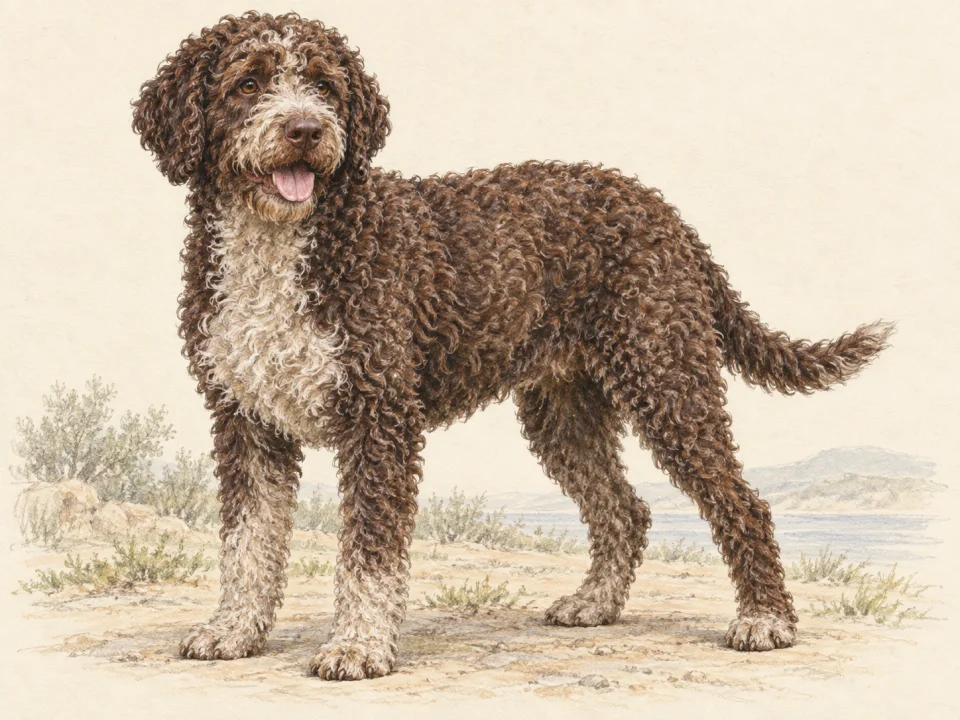
Agree on the coat plan before the groomer starts
SWDCA advises an even clip and avoiding brushing or combing the coat out. If you want cords, arrange a demonstration with someone experienced in this breed; leaving the coat untouched is not a cording plan. Pay attention where friction encourages matting, including the neck and behind the ears. The club recommends squeezing shampoo through rather than scrubbing, blotting rather than rubbing with a towel, and complete drying. Ask the groomer to show how to distinguish separate cords from tight felted areas at the skin. Painful mats or inflamed skin need professional assessment. Do not tear a resistant mat or put scissors against hidden skin. Discuss a shorter manageable coat if maintaining cords is beyond the time or skills currently available.[1]
Read the results behind the CHIC number
The club’s published CHIC list includes an eye examination, hip evaluation, autoimmune thyroiditis testing, congenital hypothyroidism with goiter, prcd-PRA and early-onset PRA testing. Check the current requirements when reviewing a prospective litter, since programs can change. The club explicitly explains that the number records completion and public availability of results, not whether every result is normal. Open the parents’ individual records and note the test, date, identity and interpretation. A generic claim of thyroid tested is especially worth clarifying because the list contains both an autoimmune thyroid evaluation and a test for a different congenital disorder. If a document is unfamiliar, ask the veterinarian to interpret it before treating it as reassurance.[2]
A healthy-looking parent can carry the CHG variant
Dr. John Fyfe’s explanation on the club website describes congenital hypothyroidism with goiter as a recessively inherited condition associated with a TPO gene mutation. A carrier can look healthy, so outward appearance does not establish genetic status. For puppy buyers, the useful step is to request the parents’ actual CHG results and ask how the mating was assessed. Do not confuse a carrier result with a diagnosis of thyroid illness in the adult dog. Conversely, a puppy with poor growth or another developmental concern needs veterinary assessment; this page is not a way to diagnose the cause or select treatment. Keep congenital genetic screening separate from any clinical thyroid investigation recommended for your own dog.[3]
Frequently asked questions
Should I brush a Spanish Water Dog’s cords out like a Poodle coat?
The parent club advises against brushing or combing out this coat. Learn breed-specific care and agree on the clip or cording plan with an experienced groomer before work begins.
Source [1]Does a CHIC number mean every Spanish Water Dog health test passed?
No. SWDCA explains that it reflects testing and public disclosure, not the quality of every result. Read each reported result and confirm current program requirements.
Source [2]Can a parent that looks healthy carry the CHG mutation?
Yes. The veterinary explanation describes recessive inheritance and outwardly healthy carriers. Appearance cannot replace the genetic report, and carrier status is not the same as clinical thyroid disease.
Source [3]FAQ sources
Sources & methodology
Breed-level measurements and comparison scores provide context. They do not predict an individual dog's health, behaviour or suitability. Open the original publisher pages below to verify the facts and compare any later updates.
- Spanish Water Dog Club of America — Grooming the SWD ↗Reference 1 · reviewed 2026-09-27
- Spanish Water Dog Club of America — CHIC and the SWDCA ↗Reference 2 · reviewed 2026-09-27
- Dr. John C. Fyfe, Michigan State University, via SWDCA — Congenital Hypothyroidism with Goiter ↗Reference 3 · reviewed 2026-09-27
Make it about your dog
Build a profile around your dog's age, experiences and everyday needs.
Meet your dog →Explore local care