
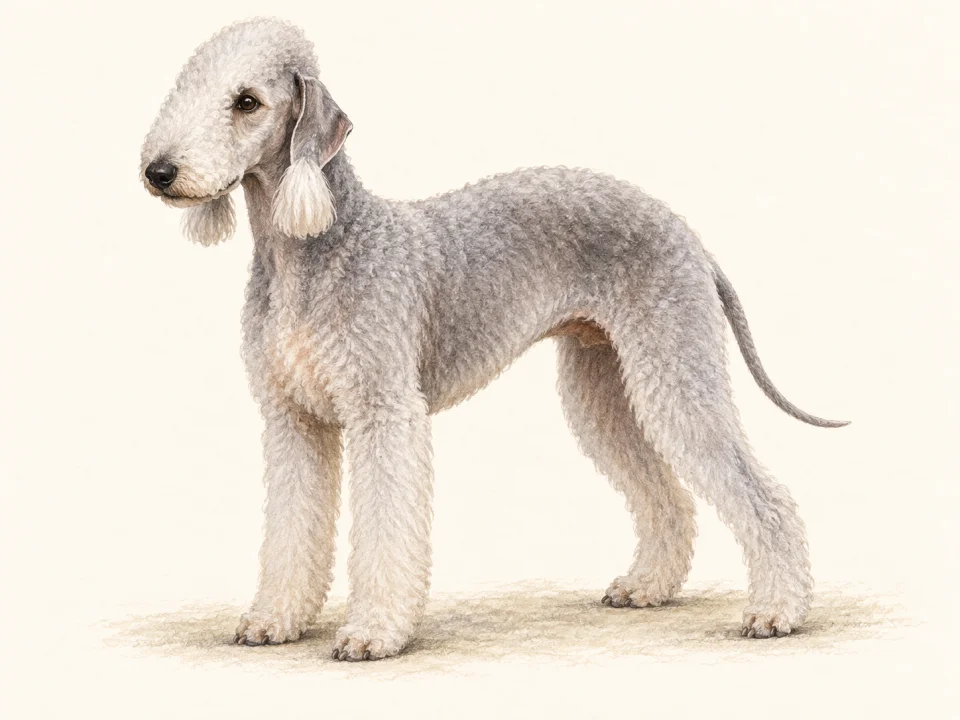
Do not let the lamb-like appearance set expectations
AKC lists the Bedlington at 15–17.5 inches and 17–23 pounds. Its curved outline and distinctive trim do not make it a passive toy. Consider the terrier’s activity and chasing background when choosing a household fit. Measure the individual for equipment, and assess condition separately from the silhouette created by clipping and the dog’s naturally arched shape.[1]
Low shedding shifts the work rather than removing it
The coat grows quickly despite shedding very little. AKC describes brushing or combing once or twice weekly and clipping about every two months. Agree on a realistic schedule with a groomer who knows the breed. A clean floor does not show whether tangles are developing, and a professional appointment does not replace all care between visits.[1]
Make the trim comfortable and maintainable
The coat combines softer and harsher hair rather than the typical wiry texture of some other terriers. Ask for a demonstration before attempting a complex trim, especially near ears and eyes. Keep short cooperative handling sessions part of ordinary life. The goal is comfortable skin and movement as well as appearance; do not continue through pain simply to preserve a particular outline.[1]
Keep pursuit inside safe boundaries
The Bedlington was bred to chase small animals, despite its gentle-looking presentation. Use a leash on walks and secure enclosure for free play. Practise attention and returning for a reward without using success as permission to ignore containment. A sudden moving animal can create a different challenge from a lesson in a quiet garden.[1]
Use activity followed by a clear settling routine
Suitable walks, play and other shared activities can meet the needs of an energetic adult, with adjustments for age and health. Afterwards, provide a comfortable place for quiet time near the household. For training, use positive rewards and achievable steps. Harsh physical correction is a poor substitute for explaining the task and can turn a learning problem into conflict.[1]
Ask specifically about copper toxicosis records
The AKC lifespan reference is 11–16 years. Its recommended panel includes patella and eye evaluations plus copper toxicosis DNA testing. Request the actual report and the tested dog’s identity, and seek professional interpretation of what the result covers. Do not create a special diet or treatment from the breed label alone; individual medical decisions need veterinary assessment.[1]
Frequently asked questions
Does a Bedlington Terrier’s low-shedding coat need grooming?
Yes. AKC describes brushing or combing once or twice weekly and clipping approximately every two months. Low shedding does not prevent coat growth or tangles.
Source [1]Is a Bedlington safe off leash because it looks gentle?
Appearance does not remove the chasing instinct. Use a leash outside secure enclosures while teaching useful attention and recall skills.
Source [1]Which DNA test should I ask a Bedlington breeder about?
Ask for copper toxicosis DNA test records, alongside patella and eye evaluations. Have a veterinarian explain the scope of a result rather than treating it as a complete health guarantee.
Source [1]Should every Bedlington receive a special medical diet?
Do not prescribe a diet from the breed name alone. Discuss the individual’s health and test results with a veterinarian before making medical feeding changes.
Source [1]FAQ sources
Sources & methodology
Breed-level measurements and comparison scores provide context. They do not predict an individual dog's health, behaviour or suitability. Open the original publisher pages below to verify the facts and compare any later updates.
- American Kennel Club — Bedlington Terrier breed and care guidance ↗Reference 1 · reviewed 2026-09-27
Make it about your dog
Build a profile around your dog's age, experiences and everyday needs.
Meet your dog →Explore local care