
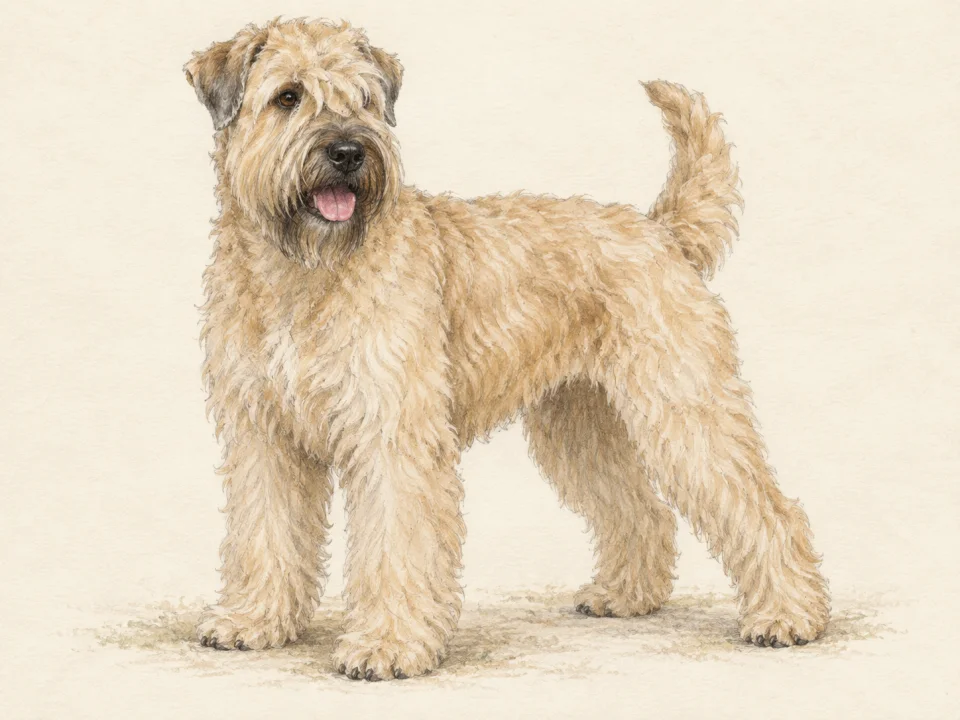
Brush, then check with a comb
SCWTCA describes working through small sections and following the brush with a metal comb. That second pass matters: a coat can look tidy on the surface while a comb still catches underneath. Include the underarms, inside the rear legs, feet, tail and beard rather than stopping after the back looks smooth. Have a groomer demonstrate gentle handling on your own dog and choose a position the dog can tolerate comfortably. Keep early sessions short and rewarding. If a comb meets resistance, stop and locate the tangle instead of pulling harder. Tight mats or sore skin call for professional help, not scissors near skin hidden by hair. Ask about a maintainable pet trim if the current length repeatedly exceeds the care you can provide.[1]
PLN genetic risk is different from current kidney health
Protein-losing nephropathy, or PLN, involves loss of protein through the kidneys. The Wheaten Health Endowment explains that the associated-variant DNA test estimates relative risk; it does not say that the dog currently has PLN or will inevitably develop it. A lower-risk result is not a lifetime guarantee either. Keep the laboratory report, including its exact terminology, and share it with your veterinarian. Avoid translating a result into a reassuring label such as completely kidney clear. Blood and urine testing investigate a different question: whether there are present abnormalities that need attention. A dog that appears energetic can still need the screening plan discussed with its clinician.[2]
Bring a monitoring checklist to the appointment
The club’s published protocol starts health screening at one year and includes blood chemistry, a complete blood count and urinalysis, with a urine protein-to-creatinine ratio or microalbuminuria test as an additional request. Take the protocol and DNA report to your veterinarian and agree which tests and frequency fit your dog; risk status can change the monitoring schedule. Ask whether the urine protein assessment is included rather than assuming every routine urine test covers it. Save the reports so the clinician can compare results over time. The club also cautions that an abnormal result may have multiple explanations and may require repeat or additional testing. Do not diagnose PLN or start a restrictive diet from one number. New symptoms should prompt contact with the veterinary team rather than waiting for the next scheduled screen.[3]
Frequently asked questions
Is brushing the surface enough to prevent Wheaten mats?
No. The club advises combing after brushing each section and including less visible areas such as the underarms and inside the rear legs. Do not force a comb through a snag.
Source [1]Does a high-risk PLN DNA result mean my Wheaten already has kidney disease?
No. The test describes relative genetic risk, not a diagnosis or certainty of future disease. Review the actual result with your veterinarian and keep up the agreed blood and urine monitoring.
Source [2]Is urine protein testing automatically included in a urinalysis?
Not necessarily. SCWTCA lists the urine protein-to-creatinine ratio or microalbuminuria test as an add-on. Ask the clinic what was performed and let the veterinarian interpret the findings.
Source [3]FAQ sources
- SCWTCA — Brushing and Combing ↗FAQ reference 1
- Wheaten Health Endowment — Understanding PLN Testing ↗FAQ reference 2
- SCWTCA — Annual Testing Protocols ↗FAQ reference 3
Sources & methodology
Breed-level measurements and comparison scores provide context. They do not predict an individual dog's health, behaviour or suitability. Open the original publisher pages below to verify the facts and compare any later updates.
- SCWTCA — Brushing and Combing ↗Reference 1 · reviewed 2026-09-27
- Wheaten Health Endowment — Understanding PLN Testing ↗Reference 2 · reviewed 2026-09-27
- SCWTCA — Annual Testing Protocols ↗Reference 3 · reviewed 2026-09-27
Make it about your dog
Build a profile around your dog's age, experiences and everyday needs.
Meet your dog →Explore local care