
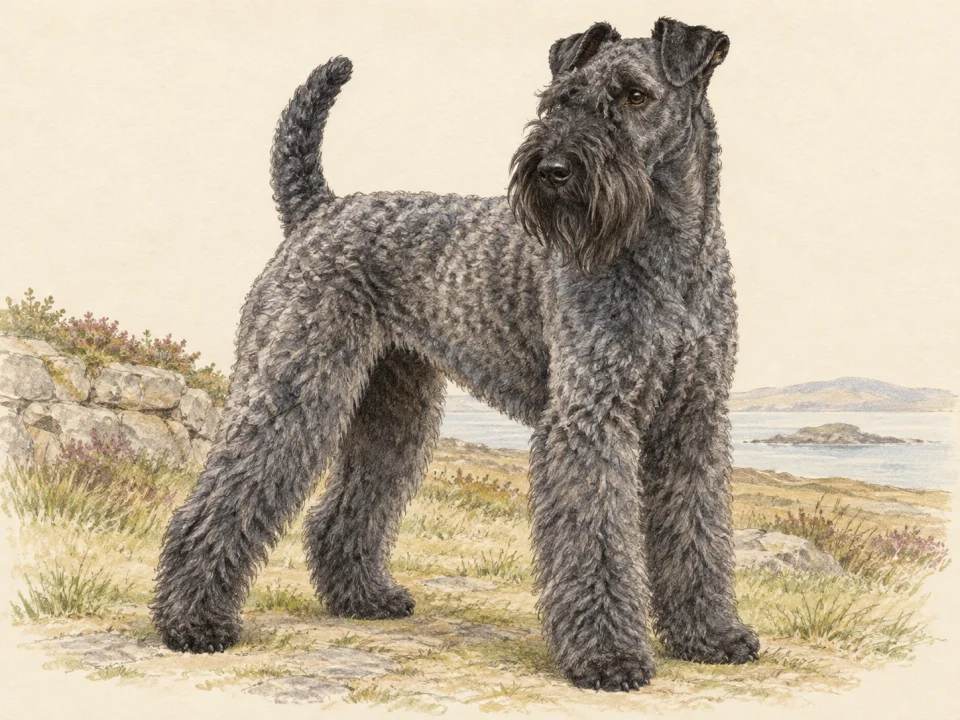
A dark puppy is not a contradiction of the name
The AKC standard describes a gradual clearing process from apparent black at birth toward mature blue-gray shades. Transitional brown tones and mixtures can occur, and the pace varies between dogs. Darker areas on the head, muzzle, ears, tail and feet are permitted. Keep this developmental change in mind when comparing puppy and adult photographs: the name does not mean a puppy must already look like a finished show dog. The standard’s color requirements concern conformation judging. They do not establish the individual’s health or value as a companion, and a promise about an exact eventual shade should not replace records and a thoughtful match.[1]
Arrange the combing and the haircut as separate jobs
AKC recommends thorough weekly brushing and combing to prevent matting, together with a full grooming roughly every six to eight weeks. A scheduled haircut does not remove the work between appointments. Before adoption, ask a Kerry-experienced groomer or breeder to demonstrate the tools and the difference between a manageable pet trim and a show finish. Decide who will maintain the beard and body coat, and who will help if the dog becomes uncomfortable with handling. The point is a comfortable, cared-for coat rather than copying a photograph at any cost. AKC also describes a dog that enjoys activities with its person, including training and canine sports. Choose opportunities suited to the individual instead of assuming that a walk followed by a grooming appointment supplies all the interaction it needs.[2]
Do not let a DNA panel replace the hip and eye reports
The US Kerry Blue Terrier Club’s published health statement recommends a hip evaluation through OFA or PennHIP and an eye examination by a boarded veterinary ophthalmologist. Those are specific evaluations: a statement that the parents had DNA testing does not by itself document either one. When considering a puppy, request reports linked to each parent’s identity and ask which tests were performed, when, and what the findings mean. Keep laboratory results separate from imaging and clinical examinations so a missing assessment is visible. A veterinarian can explain the relevance and limitations of each record; no collection of certificates removes every future health risk.[3]
Frequently asked questions
Why does a Kerry Blue Terrier puppy look black?
The AKC standard describes apparent black at birth followed by a variable clearing process toward blue-gray. Puppy and mature photographs can therefore look quite different.
Source [1]Does a regular haircut replace brushing a Kerry Blue Terrier?
No. AKC recommends weekly brushing and combing as well as periodic full grooming. Plan for care between appointments, not only the haircut.
Source [2]Which examinations does the US Kerry Blue Terrier Club health statement recommend?
It names hip evaluation through OFA or PennHIP and a veterinary ophthalmologist’s eye examination. Request the actual reports; a generic DNA-tested claim does not document those examinations.
Source [3]FAQ sources
- AKC — Official Kerry Blue Terrier Standard ↗FAQ reference 1
- American Kennel Club — Kerry Blue Terrier ↗FAQ reference 2
- United States Kerry Blue Terrier Club — Parent Club Health Statement ↗FAQ reference 3
Sources & methodology
Breed-level measurements and comparison scores provide context. They do not predict an individual dog's health, behaviour or suitability. Open the original publisher pages below to verify the facts and compare any later updates.
- AKC — Official Kerry Blue Terrier Standard ↗Reference 1 · reviewed 2026-09-27
- American Kennel Club — Kerry Blue Terrier ↗Reference 2 · reviewed 2026-09-27
- United States Kerry Blue Terrier Club — Parent Club Health Statement ↗Reference 3 · reviewed 2026-09-27
Make it about your dog
Build a profile around your dog's age, experiences and everyday needs.
Meet your dog →Explore local care