
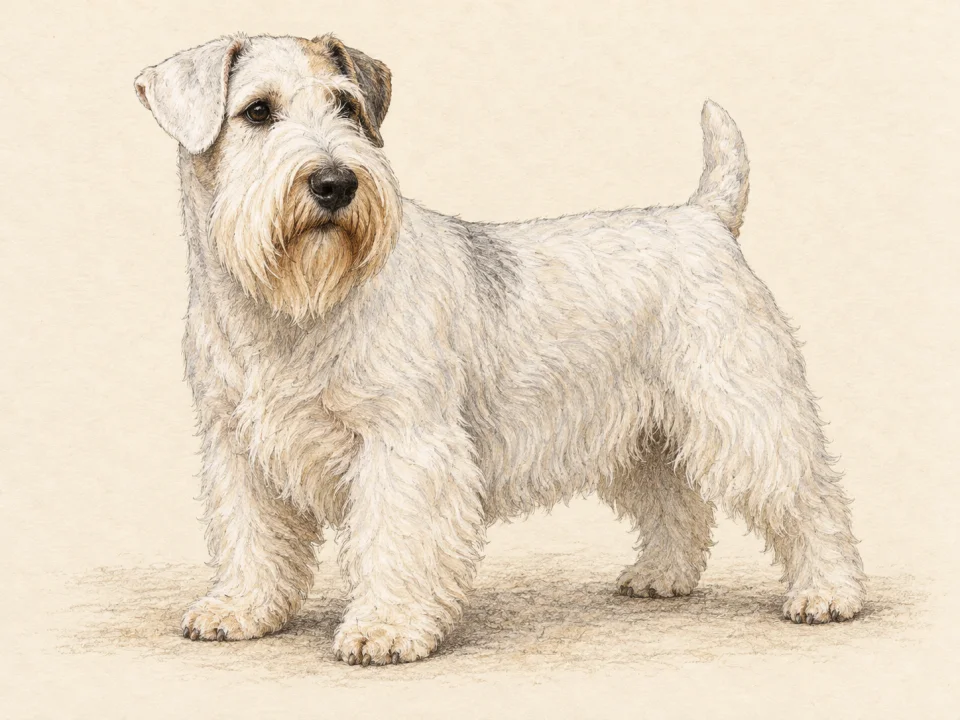
Make the facial coat manageable between appointments
AKC notes that the Sealyham’s furnishings can mat and recommends frequent brushing and combing, with regular stripping or clipping. A pet can have shorter furnishings for easier care. Discuss the eyebrow fall and beard specifically with the groomer: how will you keep the area comfortable, inspect it and maintain it between visits? Learn the method while the coat is in good condition rather than waiting for tight tangles. A shorter pet trim does not remove the need to look at the eyes and skin. Avoid treating new tearing as merely a grooming nuisance or trimming around a painful eye at home. The useful distinction is between routine coat maintenance and an eye that has changed; the latter needs a veterinary decision, not just a different haircut.[1]
Request the DNA report and the eye-examination record
The Sealyham Terrier Club’s UK guidance lists primary lens luxation DNA testing and clinical eye testing separately. For a buyer, that distinction matters more than a general claim that the parents have been checked. Ask for each dog’s identity, the named test and its actual result, alongside the eye-examination date and finding. A laboratory result answers a genetic question; an examination assesses the eyes at the time of the visit. Confirm the screening recommendations used by the breeder’s own national club rather than treating UK registration guidance as a US rule. Keep copies for your veterinarian and ask what follow-up is appropriate for the individual dog. A visually clear-looking eye or a short facial trim is not evidence of genetic status.[2]
An eye change should not wait for the next groom
Cornell describes primary lens luxation as displacement of the eye’s lens and warns that forward displacement is an emergency because pressure can rise rapidly. Redness, squinting, cloudiness, altered pupils or sudden visual difficulty warrant prompt veterinary attention. These signs do not let an owner diagnose PLL, but they are enough to stop treating the problem as ordinary hair irritation. Contact a veterinarian or emergency clinic and describe when the change began. Cornell also notes that one copy of the associated variant is not universally risk-free; interpretation depends on breed and the individual report. Do not use a reassuring label on a certificate to dismiss a newly painful eye, and do not start leftover eye medication without veterinary direction.[3]
Frequently asked questions
Can a pet Sealyham have shorter facial furnishings?
Yes. AKC describes shorter furnishings as a practical pet option. Agree the trim and between-visit care with a groomer, while continuing to check the eyes and surrounding skin.
Source [1]Does a PLL DNA result replace an eye examination?
No. The breed club lists genetic testing and clinical eye testing separately. Request both kinds of records and discuss follow-up with your veterinarian.
Source [2]Should I wait for a grooming appointment if my Sealyham starts squinting?
No. Squinting, redness, cloudiness or sudden visual changes need prompt veterinary attention. Cornell warns that some lens displacements are emergencies; do not assume the eyebrow hair is the cause.
Source [3]FAQ sources
- American Kennel Club — Sealyham Terrier care ↗FAQ reference 1
- Sealyham Terrier Club — Health guidance ↗FAQ reference 2
- Cornell University College of Veterinary Medicine — Primary lens luxation ↗FAQ reference 3
Sources & methodology
Breed-level measurements and comparison scores provide context. They do not predict an individual dog's health, behaviour or suitability. Open the original publisher pages below to verify the facts and compare any later updates.
- American Kennel Club — Sealyham Terrier care ↗Reference 1 · reviewed 2026-09-27
- Sealyham Terrier Club — Health guidance ↗Reference 2 · reviewed 2026-09-27
- Cornell University College of Veterinary Medicine — Primary lens luxation ↗Reference 3 · reviewed 2026-09-27
Make it about your dog
Build a profile around your dog's age, experiences and everyday needs.
Meet your dog →Explore local care