
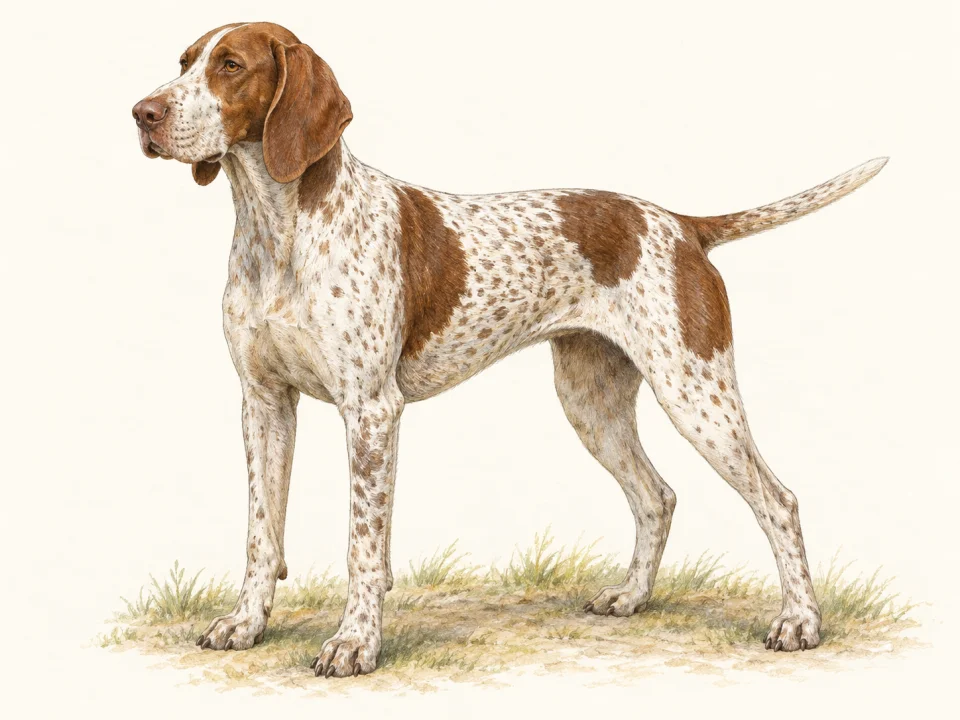
Recognize the Saint-Germain name and background
AKC traces the breed to a believed nineteenth-century cross between a Braque Francais and a Pointer in France. It was initially associated with Compiegne before the kennel moved to the Saint-Germain region. This is a pointing-dog background, so assess the individual’s experience and interests rather than treating a graceful appearance as evidence of a low-activity companion.[1]
Fit the adult dog into your everyday space
The cited reference gives males at 22–24 inches, females at 21–23 inches, and weight at 40–58 pounds. Check the dog’s actual measurements when choosing a crate, car restraint or resting area. A medium-sized adult also needs polite movement through shared spaces. Practice waiting at doors and settling away from a busy kitchen before those situations become difficult.[1]
Build a field-to-home transition
AKC describes an even, amiable temperament and a trainable companion at home and in the field. Help those settings connect through a repeatable routine: an appropriate outing, water and recovery, then a quiet resting opportunity. Observe the individual’s response and adjust. General temperament descriptions do not tell you how a particular dog will behave after an unfamiliar, exciting day.[1]
Offer several ways to use attention and energy
Walks, supervised fenced play and suitable retrieving or searching games can make activity varied. On a day when an outdoor plan falls through, use short indoor learning tasks as part of an adapted routine. These are practical options, not a fixed exercise prescription. A puppy, older dog or dog with a health limitation needs a plan appropriate to its condition.[1]
Keep a simple weekly care checklist
AKC recommends weekly grooming and occasional bathing. Include nail length, ears and teeth in the routine rather than checking them only when a bath is due. Handling a little at a time can make inspection more manageable. If a previously comfortable task becomes painful, stop and seek appropriate advice instead of assuming the dog simply needs firmer restraint.[1]
Make the health conversation specific
The cited page lists a reference lifespan of 12–15 years and recommends screening but provides no named test panel. Before choosing a dog, ask what health assessments were performed, which dog each report identifies and what follow-up is recommended. Review unclear results with a veterinarian. A broad statement that the breed is healthy does not establish the status of an individual.[1]
Frequently asked questions
Why was the breed once called the Compiegne Pointer?
AKC associates the early name with the kennel’s location. The Saint-Germain name followed its relocation to that region of France.
Source [1]What adult size should I plan for?
AKC gives 22–24 inches for males, 21–23 inches for females and a weight reference of 40–58 pounds. Measure the individual when selecting equipment.
Source [1]Does an even temperament mean little exercise is needed?
No. The breed has a pointing-dog background, and the cited care guidance includes regular walks and suitable activities. Observe the individual and build a sustainable routine.
Source [1]Is there a named health-screening panel on the cited AKC page?
No named panel is supplied there. Request the actual assessments and results for the dog or its parents and ask a veterinarian to explain their scope.
Source [1]FAQ sources
Sources & methodology
Breed-level measurements and comparison scores provide context. They do not predict an individual dog's health, behaviour or suitability. Open the original publisher pages below to verify the facts and compare any later updates.
- American Kennel Club — Braque Saint-Germain breed and care guidance ↗Reference 1 · reviewed 2026-09-27
Make it about your dog
Build a profile around your dog's age, experiences and everyday needs.
Meet your dog →Explore local care