
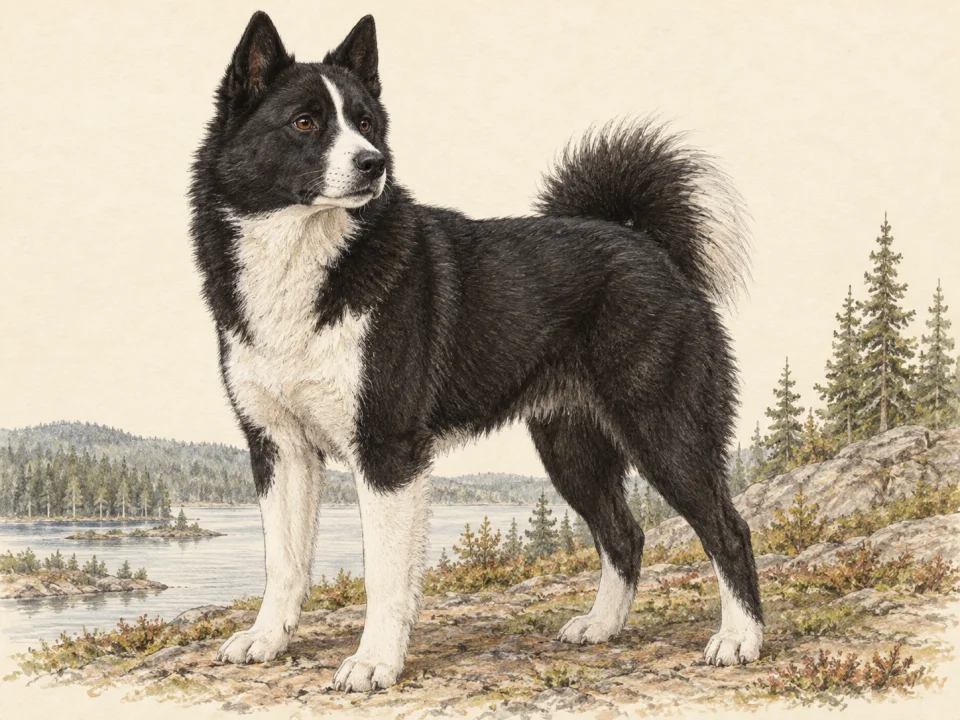
The barking has a working purpose
The FCI describes a hunting dog used primarily for elk and bear, working independently but communicating the location of game by barking. That background helps explain why the breed should not be selected as an ornamental spitz and then expected to have no interest in wildlife. For a household, the decision is whether it can offer appropriate activity while keeping outdoor access controlled. Before adoption, discuss the individual dog’s experience around wildlife and the environments in which it has actually lived. A record of successful work with an experienced handler is different from evidence that the dog will be comfortable with a particular family’s routine.[1]
Make a plan that does not depend on enjoying the dog park
AKC warns that interactions with other dogs can be challenging. Do not make communal off-leash play the only exercise option in your plan, or arrange a close encounter merely to find out how the dog reacts. Discuss existing dogs individually with the rescue, breeder and a qualified behavior professional, including whether separate resting and activity arrangements would be practical. A calm meeting is useful information, but it is not a promise about every future encounter. The FCI’s desired temperament is a breed ideal; its wording about people should not be treated as a guarantee that any individual can never bite. Handling history, current behavior and responsible supervision still matter. For routine maintenance, AKC recommends weekly grooming and occasional bathing, with regular nail and dental care. The bigger adoption question is usually the match between the dog’s working tendencies and the household’s management capacity.[2]
A conservation working dog is not a home bear-deterrent device
Washington Department of Fish and Wildlife’s 2011 program publication describes Karelian Bear Dogs used in research, education, wildlife conflict work and work involving orphaned or injured wildlife. This is an example of an organized working program, not evidence that buying a puppy makes a yard or a hiking trip safe from bears. Do not send a pet toward wildlife to imitate professional work. If wildlife is creating a problem near your home, use the relevant local wildlife agency’s guidance. A breed name is not a substitute for specialist handling or a site-specific response.[3]
Frequently asked questions
Must a Karelian Bear Dog have a long curled tail?
No. The FCI standard explicitly accepts a natural bobtail and gives it equal value to a natural long tail. This describes natural variation, not a recommendation to alter a dog’s tail.
Source [1]Should I get a Karelian Bear Dog to chase bears from my property?
Do not treat a companion dog as a bear-control tool. WDFW’s publication describes a professional program; contact the appropriate wildlife agency about a local conflict rather than encouraging a pet to confront wildlife.
Source [2]FAQ sources
Sources & methodology
Breed-level measurements and comparison scores provide context. They do not predict an individual dog's health, behaviour or suitability. Open the original publisher pages below to verify the facts and compare any later updates.
- FCI — Karelian Bear Dog standard No. 48, 2015 ↗Reference 1 · reviewed 2026-09-27
- American Kennel Club — Karelian Bear Dog ↗Reference 2 · reviewed 2026-09-27
- Washington Department of Fish and Wildlife — Karelian Bear Dog Program publication, 2011 ↗Reference 3 · reviewed 2026-09-27
Make it about your dog
Build a profile around your dog's age, experiences and everyday needs.
Meet your dog →Explore local care