
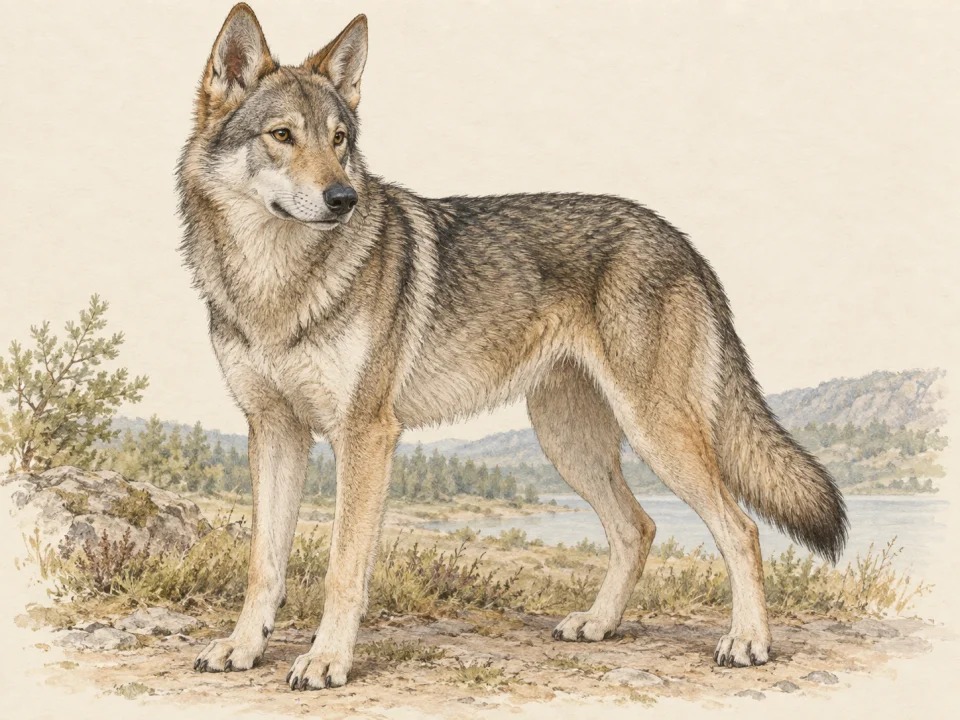
A wolf-like appearance is not a protection-dog qualification
The FCI history describes an early attempt to improve working ability through German Shepherd and wolf ancestry, but the established breed developed as a companion rather than the intended working dog. Its standard describes reserve with strangers and avoidance of unfamiliar situations. Neither its size nor its appearance establishes that it will confront an intruder, welcome every visitor or enjoy a busy public setting. When meeting a prospective dog, consider ordinary situations: a delivery at the door, a visiting friend and a change of caregiver. Ask what has actually happened in those settings. A photograph cannot answer these questions, and a breed description cannot predict an individual’s response.[1]
Plan introductions around choice, not forced contact
For a household considering this reserved breed, a useful visitor plan starts before the door opens. Give the dog a comfortable place away from arrivals, tell visitors not to approach or corner it, and allow room to observe without being handled. This is a practical starting point, not a treatment plan for established fear. AVSAB recommends reward-based methods for training and behavior modification; a wolf-related history is not a reason for physical corrections or attempts to establish dominance. If avoidance disrupts walks, veterinary care or ordinary life, discuss it with your veterinarian and a qualified behavior professional. Record the situation and the distance at which the dog became uncomfortable, rather than labeling it stubborn. Do not arrange repeated confrontations to test whether it has improved.[2]
Recognize the seasonal coat before choosing a routine
The FCI standard distinguishes a fuller, undercoat-dominated winter coat from a summer coat in which the outer hair is more prominent. A thinner summer outline alone is therefore different from a newly irritated or patchy area. Keep track of changes in the individual dog, especially if scratching or discomfort accompanies them, and have concerning changes assessed by a veterinarian. Before bringing the dog home, ask for a demonstration of the tools and handling it already accepts. Short, comfortable practice is more useful than waiting until a long grooming session is unavoidable. Include the person who will provide holiday care in this preparation; unfamiliar handling deserves the same thought as unfamiliar visitors.[1]
Measure the individual before arranging transport
AKC’s overview supplies the height, weight and lifespan ranges in the quick facts. The FCI standard is more specific about shoulder height: 65–75 cm for males and 60–70 cm for females, allowing slight upward deviations. It does not give a numerical weight range. Neither source turns a puppy’s expected adult size into a guarantee. If you are arranging a carrier or vehicle space, obtain the adult dog’s actual measurements and check the equipment’s limits. For a puppy, ask about adult relatives and plan to reassess fit during growth. Because unfamiliar situations may prompt avoidance, discuss how the dog already travels and practice comfortable entry before relying on a new transport arrangement for a necessary veterinary visit. Size and willingness to enter are separate practical questions.[1]
Frequently asked questions
Is a Saarloos Wolfhond a German Shepherd with a different coat?
No. German Shepherd and wolf ancestry form part of its history, but the FCI recognizes it as a separate Dutch breed. Do not assume German Shepherd working expectations apply to it.
Source [1]Should visitors insist on petting a reserved dog to socialize it?
No. Allow distance and voluntary interaction rather than forcing contact. Persistent fear needs an individualized professional plan; AVSAB recommends reward-based behavior work.
Source [2]Should the coat look equally full in summer and winter?
Not necessarily. The breed standard describes a marked seasonal difference. New bald patches, irritated skin or discomfort still deserve veterinary attention rather than being dismissed as seasonal change.
Source [1]FAQ sources
- FCI — Saarlooswolfhond standard, May 2015 English edition ↗FAQ reference 1
- AVSAB — Humane training and behavior position statements ↗FAQ reference 2
Sources & methodology
Breed-level measurements and comparison scores provide context. They do not predict an individual dog's health, behaviour or suitability. Open the original publisher pages below to verify the facts and compare any later updates.
- FCI — Saarlooswolfhond standard, May 2015 English edition ↗Reference 1 · reviewed 2026-09-27
- AVSAB — Humane training and behavior position statements ↗Reference 2 · reviewed 2026-09-27
- American Kennel Club — Saarloos Wolfhond overview ↗Reference 3 · reviewed 2026-09-27
Make it about your dog
Build a profile around your dog's age, experiences and everyday needs.
Meet your dog →Explore local care