
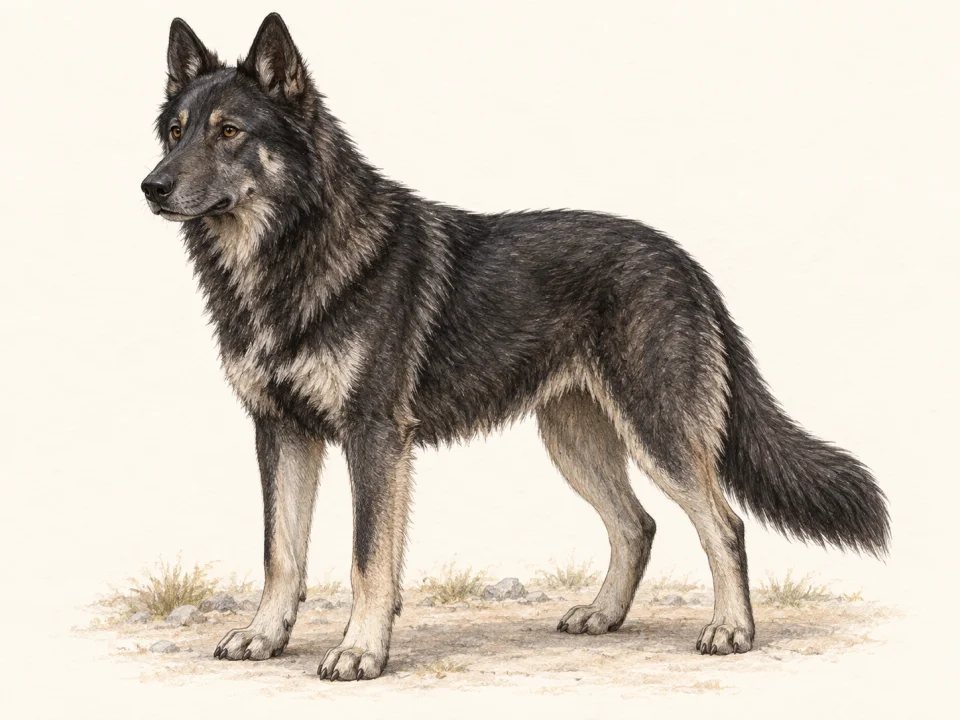
Look beyond the wolf-like appearance
AKC describes a Mexican breed with a powerful head, relatively long legs and a medium-length coat. Its historical account refers to wolf ancestry while stating that modern breeding no longer uses wolf crosses. That background is not a practical personality test. Ask about the particular dog’s upbringing, experiences and behavior rather than assuming an appearance predicts either unusual danger or effortless companionship.[1]
Size the household plan for a large adult
The cited reference gives males at 24–29 inches, females at 22–27 inches and weight at 70–100 pounds. Check transport, resting space and secure equipment against the individual’s measurements. Practice calm passage through doorways and controlled greetings early. An athletic dog can be physically demanding to handle even when friendly, so every regular caregiver needs a workable routine.[1]
Provide activity with a secure boundary
AKC describes substantial physical and mental activity needs and recommends leashes and safely fenced play. Build outings and learning tasks into ordinary weekdays rather than relying entirely on occasional long adventures. Examine the space before allowing free play. A history of successful recall does not guarantee a response when something unexpectedly distracting appears beyond the boundary.[1]
Keep the puppy plan different from the adult plan
The cited guidance suggests short daily walks and secure play for puppies. Do not copy a demanding adult sport schedule simply because the breed is athletic. Develop skills and conditioning gradually with advice appropriate to age and health. A useful household record tracks the activities attempted and how comfortably the dog settles and recovers, not only how far it traveled.[1]
Make consistency more important than force
AKC recommends early social experiences, puppy classes and continuing positive, reward-based training. Agree on cues and reward the same responses across caregivers. Increase distractions gradually instead of testing a new skill in the hardest setting first. A broad description of adaptability is not a guarantee that every individual is already comfortable with visitors, unfamiliar dogs or a busy public environment.[1]
Prepare for seasonal coat work and evidence-based care
Brushing every few days is the cited starting point, with more frequent work during heavier shedding once or twice yearly. Include regular nail checks and occasional baths as needed. The health section provides no named screening panel, so request the actual care and test records and discuss them with a veterinarian. The 11–12-year lifespan reference is not an individual health prediction.[1]
Frequently asked questions
Does a wolf-like appearance tell me how a Calupoh will behave?
No. Evaluate the individual’s upbringing, behavior and care history. AKC’s historical account is background information, not a substitute for meeting and assessing the dog.
Source [1]Can a well-trained Calupoh always be trusted off leash?
No training guarantees a response to every distraction. The cited guidance recommends a leash and safely fenced play areas.
Source [1]How does grooming change during shedding?
AKC suggests brushing every few days ordinarily and more frequently during heavier seasonal shedding. Adjust to the actual coat rather than assuming the normal routine will always be enough.
Source [1]Does the cited source provide a named health-test panel?
No. Ask which assessments were actually performed, obtain the records and discuss their meaning with a veterinarian instead of treating a general healthy-breed statement as clearance.
Source [1]FAQ sources
- American Kennel Club — Calupoh breed and care guidance ↗FAQ reference 1
Sources & methodology
Breed-level measurements and comparison scores provide context. They do not predict an individual dog's health, behaviour or suitability. Open the original publisher pages below to verify the facts and compare any later updates.
- American Kennel Club — Calupoh breed and care guidance ↗Reference 1 · reviewed 2026-09-27
Make it about your dog
Build a profile around your dog's age, experiences and everyday needs.
Meet your dog →Explore local care