
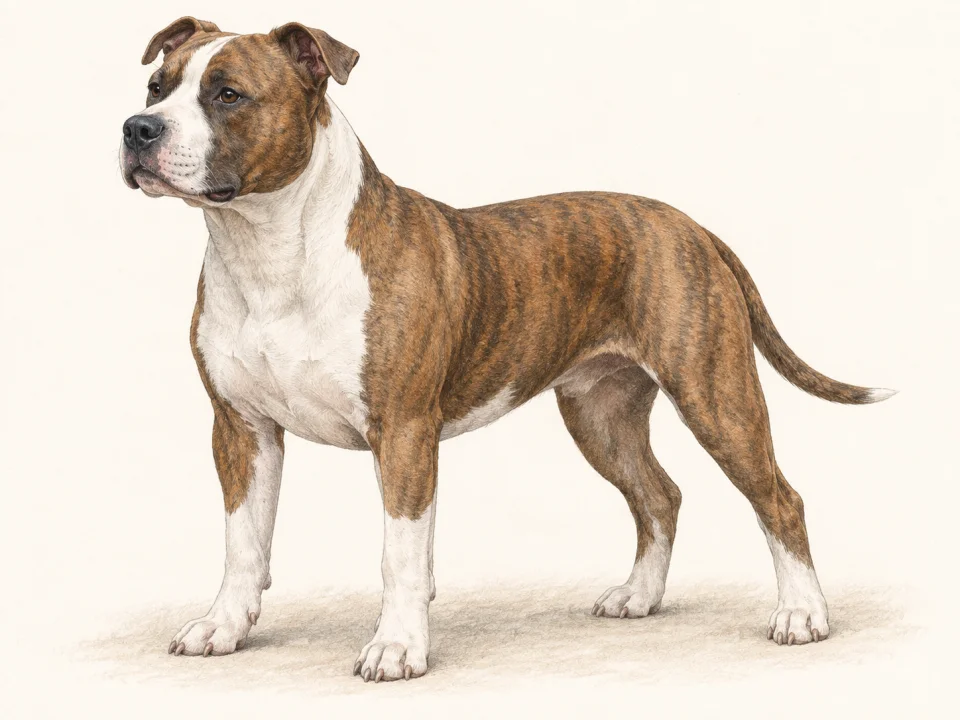
Plan equipment for the individual build
AKC lists males at 18–19 inches and 55–70 pounds, females at 17–18 inches and 40–55 pounds. Measure chest and neck before choosing a harness; a stocky shape can make a generic medium or large label unhelpful. Body condition remains separate from muscular appearance. Do not use the upper end of the weight reference as a feeding target for a growing dog.[1]
Teach everyday strength management early
Practise walking with a loose leash, waiting at a doorway and releasing a toy for a reward before these actions are needed around excitement. Make household cues consistent and rehearse in quiet places first. A strong, enthusiastic greeting can cause an accidental collision even without hostile intent. Give visitors a calm arrival routine and children direct adult supervision.[1]
Separate people friendliness from dog compatibility
The AKC guidance cautions that difficulties with other dogs can develop even after good early social experience. Do not leave an AmStaff unattended with other dogs. Plan secure separate spaces for meals, rest and absences, and evaluate each introduction carefully. Supervised success in one setting should not be treated as a permanent guarantee across toys, food or a new group.[1]
Choose shared exercise rather than yard isolation
The breed benefits from physical and mental challenges with its people. Suitable walks, controlled play and reward-based learning can form a practical weekday routine. Adjust intensity to age and health instead of assuming every individual should perform demanding athletic activities. A fenced yard provides a location for engagement, but leaving the dog there alone does not supply the relationship or structure.[1]
Use short-coat care to notice the less visible details
A weekly soft-brush session generally handles routine coat maintenance. Include nails, teeth and ears, and take notice of persistent itching or a new skin change. Keep cooperative handling lessons brief and rewarding so checking a paw is familiar before it becomes urgent. The ease of brushing should not lead to overlooking discomfort hidden beneath an otherwise glossy coat.[1]
Request specific screening documentation
AKC lists a lifespan of 12–16 years. Its recommended panel includes hip, cardiac and thyroid evaluations plus NCL4A DNA testing. Ask which dogs were assessed, when and with what result, rather than accepting a general health-checked description. Have a veterinarian interpret uncertain findings. These records address particular conditions and do not establish that an individual can never develop another problem.[1]
Frequently asked questions
How big is an American Staffordshire Terrier?
AKC references males at 18–19 inches and 55–70 pounds, females at 17–18 inches and 40–55 pounds. Fit equipment to actual measurements and assess body condition independently.
Source [1]Can an AmStaff be left alone with another dog after successful introductions?
The cited AKC guidance advises against leaving AmStaffs unattended with other dogs. Arrange secure separate spaces for absences rather than treating previous friendly interactions as a guarantee.
Source [1]Is a fenced yard enough to meet an AmStaff’s needs?
No. The breed benefits from shared activity and mental engagement with people. A yard is useful space, but does not replace walks, play and training appropriate to the individual.
Source [1]Which DNA test appears in the AmStaff screening recommendations?
AKC lists NCL4A DNA testing alongside hip, cardiac and thyroid evaluations. Request results identifying the actual dogs and professional interpretation where needed.
Source [1]FAQ sources
Sources & methodology
Breed-level measurements and comparison scores provide context. They do not predict an individual dog's health, behaviour or suitability. Open the original publisher pages below to verify the facts and compare any later updates.
- American Kennel Club — American Staffordshire Terrier breed and care guidance ↗Reference 1 · reviewed 2026-09-27
Make it about your dog
Build a profile around your dog's age, experiences and everyday needs.
Meet your dog →Explore local care