
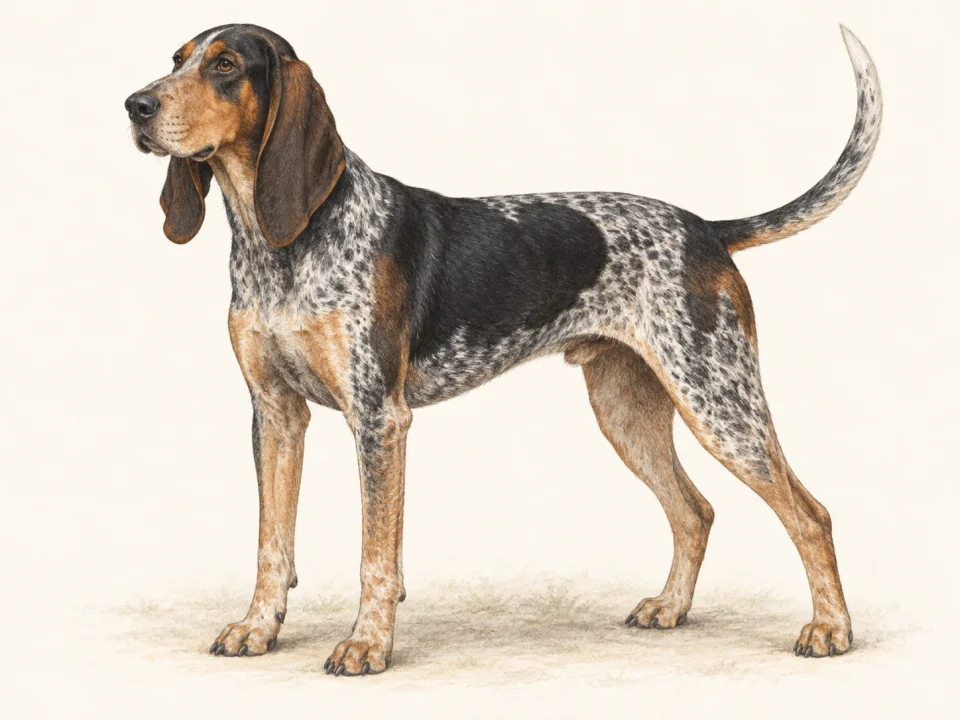
Check the full name before comparing hounds
The American English Coonhound is distinct from the American Foxhound and English Foxhound. AKC lists males at 24–26 inches, females at 23–25 inches, with a weight range of 45–65 pounds. Use the full breed name when requesting records or comparing care advice. For an individual dog, actual measurements and body condition are more useful than aiming for the largest reference figure.[1]
Containment remains essential after training
A compelling scent can take over a hound’s attention. Use a leash outside secure enclosures and check gates before allowing free movement. Practise returning attention in a quiet setting, then gradually introduce distractions while keeping the physical boundary. Successful recall beside the house is not evidence that the same response will interrupt a fresh trail in unfamiliar woodland.[1]
Make the exercise commitment concrete
This is a high-energy working hound, so assess the ordinary weekday schedule before choosing it. Identify who provides suitable activity when work runs late and where safe exercise is possible. An adult in appropriate condition may enjoy demanding outings, but puppies and dogs with health limitations need individual plans. A quiet recovery period matters as well as the outing itself.[1]
Consider the voice before the housing decision
The ringing hound voice can carry beyond a property boundary. Ask about the actual dog’s vocal behavior and consider neighbors, shared walls and periods alone. Reward calmer alternatives when possible, but do not choose the breed on a promise that training will make it silent. If quiet housing is essential, resolve that constraint before bringing the dog home.[1]
Teach household skills outside the exciting context
Practise exchanging a toy for a reward, settling and waiting while doors open before testing those skills around excitement. Let dogs eat without interference and supervise shared resources. A friendly home temperament does not mean every handling situation is comfortable. If guarding or distress appears, seek qualified help rather than repeatedly taking objects away to test the dog.[1]
Read beyond the screening-panel heading
The AKC lifespan reference is 11–12 years. Although its formal panel names no recommended tests, the health text discusses hip, elbow and eye screening. Ask for specific results instead of treating the empty panel as reassurance. Weekly coat care is straightforward, but include ear and nail checks. Ask a veterinarian about individual concerns rather than assuming a working background excludes illness.[1]
Frequently asked questions
Is an American English Coonhound the same as an American Foxhound?
No. They are different breeds. Use the complete name when comparing size, care information and health records.
Source [1]Can a trained American English Coonhound run freely in unfenced places?
Do not rely on that. A strong scent can override a practiced response; use a leash outside secure enclosures while continuing training.
Source [1]Is an American English Coonhound usually quiet?
The breed is known for a loud, carrying hound voice. Assess the individual and your housing situation without assuming training can guarantee silence.
Source [1]Does the empty health-test panel mean screening is unnecessary?
No. The cited AKC health text discusses hip, elbow and eye screening despite the panel heading. Request actual identifiable records and veterinary interpretation.
Source [1]FAQ sources
Sources & methodology
Breed-level measurements and comparison scores provide context. They do not predict an individual dog's health, behaviour or suitability. Open the original publisher pages below to verify the facts and compare any later updates.
- American Kennel Club — American English Coonhound breed and care guidance ↗Reference 1 · reviewed 2026-09-27
Make it about your dog
Build a profile around your dog's age, experiences and everyday needs.
Meet your dog →Explore local care