
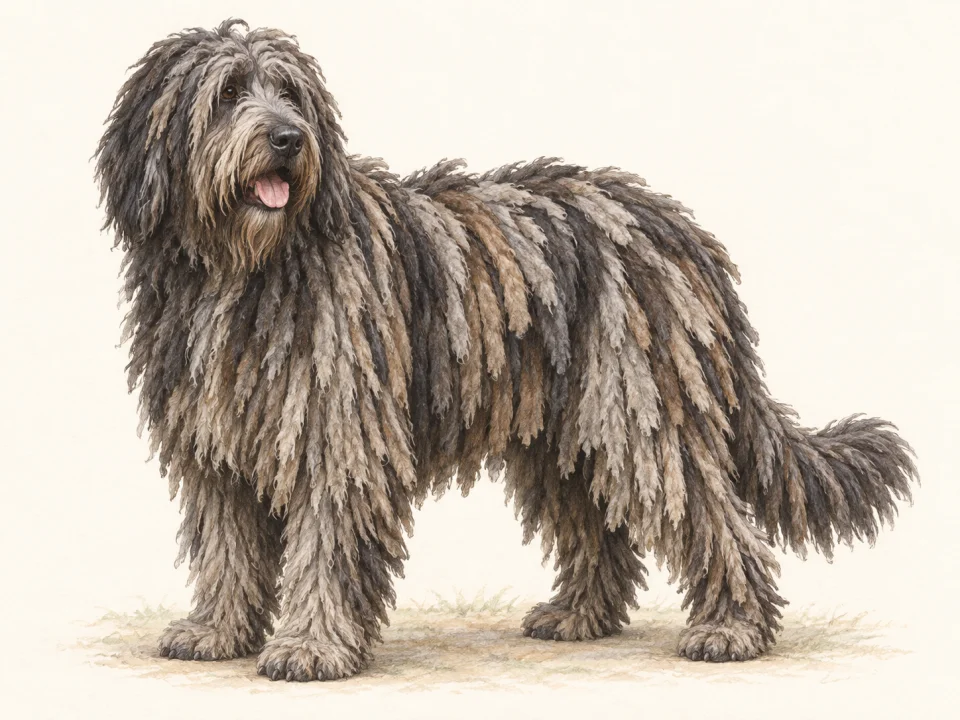
Understand flocks before treating them as ordinary tangles
The coat combines three hair textures that form flat, felted sections called flocks. This is different from neglecting an ordinary long coat until it mats. Ask an experienced breed contact to show what healthy separation and skin access look like. Do not copy routine brushing or detangling instructions from another shaggy breed without understanding how this particular coat develops.[1]
Prepare for the transition from puppy coat
The AKC guidance describes additional hair textures appearing around a year of age, when the forming coat needs deliberate separation. Arrange a demonstration before that stage rather than guessing how to pull apart the hair. Work with someone familiar with the breed and prioritize comfort. The adult coat’s relatively low routine workload does not mean the developmental stage needs no attention.[1]
Keep skin care separate from the unusual appearance
Mature flocks do not need the same ordinary brushing schedule as a conventional double coat. Still inspect comfort, cleanliness and the skin where accessible, and seek help for odor, pain or a new irritated area. Discuss coat problems with a breed-experienced groomer and veterinarian before making major changes. Unusual hair structure should not hide a health issue or justify painful handling.[1]
Plan for a substantial dog beneath the coat
AKC references males at 23.5 inches and 70–84 pounds, females at 22 inches and 57–71 pounds. Consider vehicle access and how an adult would be assisted if injured. Measure for equipment rather than choosing from the apparent coat volume. Body condition needs individual assessment, since the flocked outline is a poor substitute for understanding the dog beneath it.[1]
Combine moderate activity with clear partnership
The breed benefits from suitable daily activity with its people, rather than being left alone to exercise itself. Teach practical cues through short reward-based lessons and introduce unfamiliar situations gradually. Independent thinking can coexist with cooperation when the task is clear. Provide a calm visitor routine and a quiet resting option instead of assuming a patient reputation removes the need for supervision.[1]
Request records rather than relying on robustness
AKC lists a lifespan of 13–15 years and recommends hip and elbow evaluations plus a degenerative myelopathy DNA test. Ask for the tested dogs’ identities and dates and seek professional interpretation of the genetic result. No test panel establishes complete future health. Include nails, ears and dental care in the routine even when mature coat grooming requires less frequent work.[1]
Frequently asked questions
Are a Bergamasco’s flocks just neglected mats?
No. The breed’s different hair textures form characteristic flat flocks. Their development and separation need breed-specific guidance rather than ordinary long-coat detangling advice.
Source [1]When should I learn how to manage the changing coat?
Arrange guidance before the transition around a year of age described by AKC. A breed-experienced person should demonstrate safe separation rather than leaving you to improvise.
Source [1]Does low adult coat maintenance mean no skin checks?
No. Monitor comfort and cleanliness and seek advice for pain, odor or irritated skin. The unusual coat should not conceal a developing problem.
Source [1]Which health records should I ask about?
Request hip and elbow evaluations and the listed degenerative myelopathy DNA result, with identities and dates. Ask a veterinarian to explain what the results can and cannot establish.
Source [1]FAQ sources
Sources & methodology
Breed-level measurements and comparison scores provide context. They do not predict an individual dog's health, behaviour or suitability. Open the original publisher pages below to verify the facts and compare any later updates.
- American Kennel Club — Bergamasco Sheepdog breed and care guidance ↗Reference 1 · reviewed 2026-09-27
Make it about your dog
Build a profile around your dog's age, experiences and everyday needs.
Meet your dog →Explore local care