
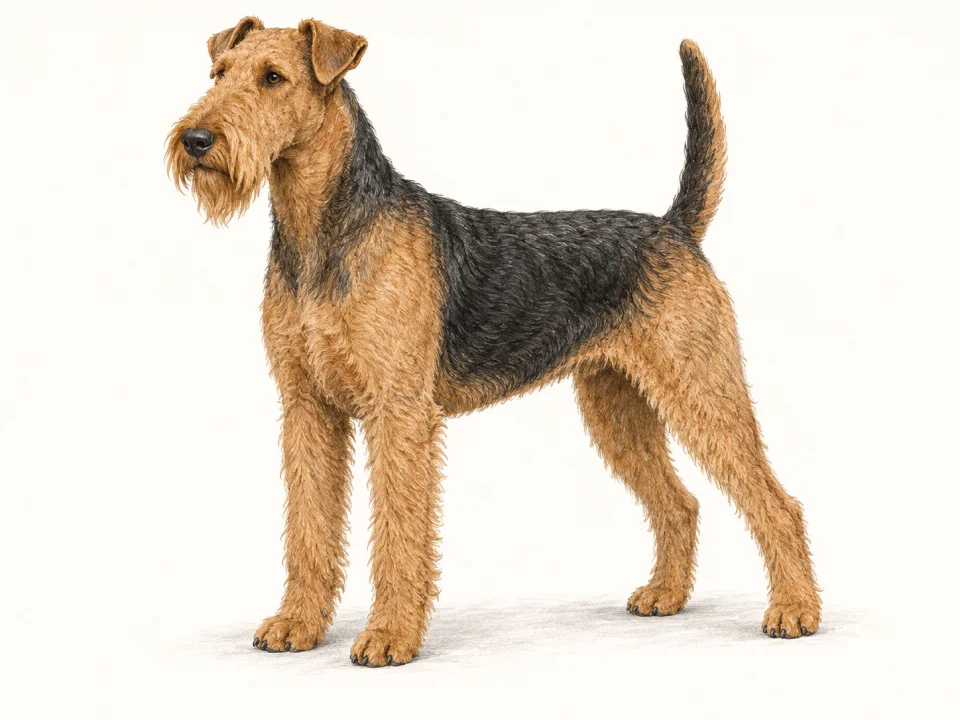
Allow for the largest terrier
AKC lists a reference height of 23 inches and a weight range of 50–70 pounds. Measure practical spaces such as the vehicle opening and the dog’s intended resting place. Consider who can manage the adult during an unexpected change of routine. The word terrier can suggest a smaller dog, so make decisions using the actual adult proportions and the individual’s handling experience.[1]
Organize play around the people sharing the room
AKC notes the combination of strength and exuberance when discussing children. Before a visit, agree where active play will occur and where the dog can rest separately. Assign an adult who can manage the arrangement throughout. Ask how the individual behaves when play ends; the transition back to a quiet activity is as useful to observe as enthusiasm for a game.[1]
Vary the task rather than drilling endlessly
The source recommends varied training for a dog that can lose interest in repetition. Choose two useful household skills with a qualified trainer and practice in manageable settings. Record what made each session easier or harder. That record can guide the next lesson without assuming a missed response is deliberate defiance. Agree on the cues so every person is teaching the same task.[1]
Decide who maintains the wiry coat
AKC describes routine brushing and periodic full grooming, which may involve clipping or stripping. Ask the groomer to explain the choice for your dog and show the work required between appointments. Keep a record of the last visit and the method used. Budget for the whole process rather than choosing from photographs of finished trims or assuming a short coat needs no attention.[1]
Build a useful first veterinary folder
Collect existing examination and screening reports, vaccination records and the current feeding information. Mark missing documents as unknown rather than treating a general statement about health as evidence. At the appointment, ask which records matter for this dog and what needs follow-up. Keep the responses beside the documents so another carer can understand what has been checked and what remains open.[1]
Audit a wet-weather working day
Choose a day when the usual outdoor plan would be inconvenient. Decide who provides the outings, where wet-coat cleanup happens and how rest is protected while the household works. Ask whether the proposed backup carer can follow that plan. Testing the logistics on paper helps identify a gap before an energetic adult dog arrives and everyone assumes someone else will take over.[1]
Frequently asked questions
How large is an Airedale Terrier?
The published reference is around 23 inches tall and 50–70 pounds. It is the largest terrier breed, so plan for an adult with substantial strength.
Source [1]Should an Airedale be clipped or stripped?
Both appear in AKC’s grooming guidance. Discuss the individual coat, your goals and upkeep with a groomer before choosing a method.
Source [1]Is repetitive training ideal for an Airedale?
The source favors variety. Choose useful skills and manageable sessions, then adjust from observations rather than repeating a task simply to fill time.
Source [1]What should families check before an Airedale arrives?
Plan supervised play and a separate rest area, particularly with small children. Ask about the individual’s experience ending play and settling around people.
Source [1]FAQ sources
Sources & methodology
Breed-level measurements and comparison scores provide context. They do not predict an individual dog's health, behaviour or suitability. Open the original publisher pages below to verify the facts and compare any later updates.
- American Kennel Club — Airedale Terrier breed and care guidance ↗Reference 1 · reviewed 2026-09-26
Make it about your dog
Build a profile around your dog's age, experiences and everyday needs.
Meet your dog →Explore local care