
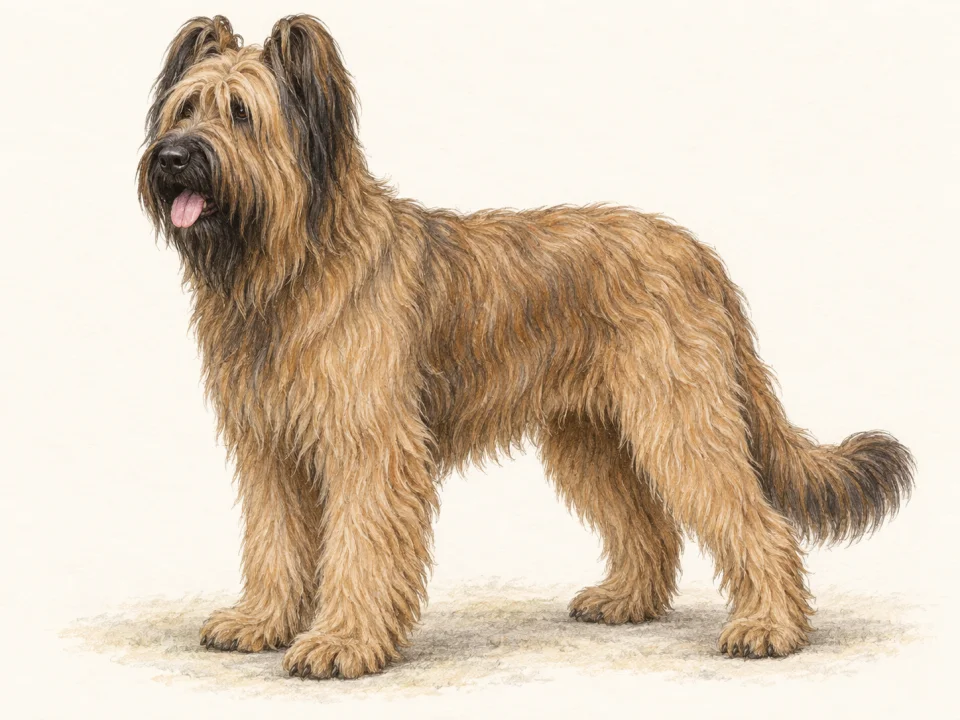
Evaluate the dog underneath the coat
AKC gives males at 23–27 inches and females at 22–25.5 inches, with a broad weight reference of 55–100 pounds. Meet adults when possible and ask how they move through a home, greet visitors and settle. The shaggy appearance can obscure a powerful, active dog whose practical needs are different from those of a decorative longhaired companion.[1]
Learn to brush through the whole coat
AKC recommends brushing several times weekly, reaching the skin rather than only smoothing the surface. Ask an experienced groomer to demonstrate sectioning and checking the coat without pulling painfully. Begin with brief pleasant handling sessions before a puppy needs extensive grooming. A household care checklist can record which areas were completed so a polished top layer does not conceal neglected tangles underneath.[1]
Give the herding mind a useful assignment
Plan appropriate physical activity alongside tasks such as finding an object, following cues or learning a dog sport. A secure exercise area can help, but a Briard also benefits from participation with its person. Choose activities you can maintain during an ordinary week. A dog bred to work is unlikely to find enough engagement in watching family activity from behind a fence.[1]
Keep learning interesting without changing the rules
The breed was developed to make decisions while working, so learning may require more than repetitive drills. Use positive, varied lessons with consistent cues and manageable steps. Practice an easy success before adding a harder distraction. AKC describes quick learning and good memory; those qualities make clear everyday routines valuable, rather than making training unnecessary or guaranteeing instant obedience.[1]
Manage protective behavior with supervised introductions
AKC notes family attachment and possible wariness of strangers. Arrange gradual introductions and allow space instead of requiring every visitor to approach or handle the dog. Supervise children directly; they should not be assigned to the dog as a flock or left under its protection. Continue suitable social experiences through adulthood while respecting the individual’s comfort and maintaining physical control.[1]
Distinguish eye examinations from the CSNB DNA test
The cited recommended panel includes hip and ophthalmologist evaluations plus congenital stationary night blindness testing. Request identifiable results and ask a veterinarian what each assessment covers. A genetic result for one condition cannot replace an examination for other eye concerns. AKC gives a reference lifespan of about 12 years, but ongoing care must respond to the individual rather than a predicted birthday.[1]
Frequently asked questions
Is surface brushing enough for a Briard?
No. AKC recommends brushing through to the skin several times weekly. Have an experienced groomer demonstrate comfortable technique and how to find tangles beneath the outer hair.
Source [1]Can a Briard be responsible for watching the children?
No. Adult supervision remains necessary. A protective herding background should not be treated as a substitute for safe, actively supervised interactions.
Source [1]Does a CSNB DNA result replace an eye examination?
No. The cited panel lists both the genetic test and an ophthalmologist evaluation, as well as hip evaluation. They provide different information.
Source [1]Why might repetitive training be difficult?
The Briard has a working background involving independent decisions. Keep lessons positive and varied while retaining clear cues, rather than interpreting every lapse of attention as a need for harsher handling.
Source [1]FAQ sources
- American Kennel Club — Briard breed and care guidance ↗FAQ reference 1
Sources & methodology
Breed-level measurements and comparison scores provide context. They do not predict an individual dog's health, behaviour or suitability. Open the original publisher pages below to verify the facts and compare any later updates.
- American Kennel Club — Briard breed and care guidance ↗Reference 1 · reviewed 2026-09-27
Make it about your dog
Build a profile around your dog's age, experiences and everyday needs.
Meet your dog →Explore local care