
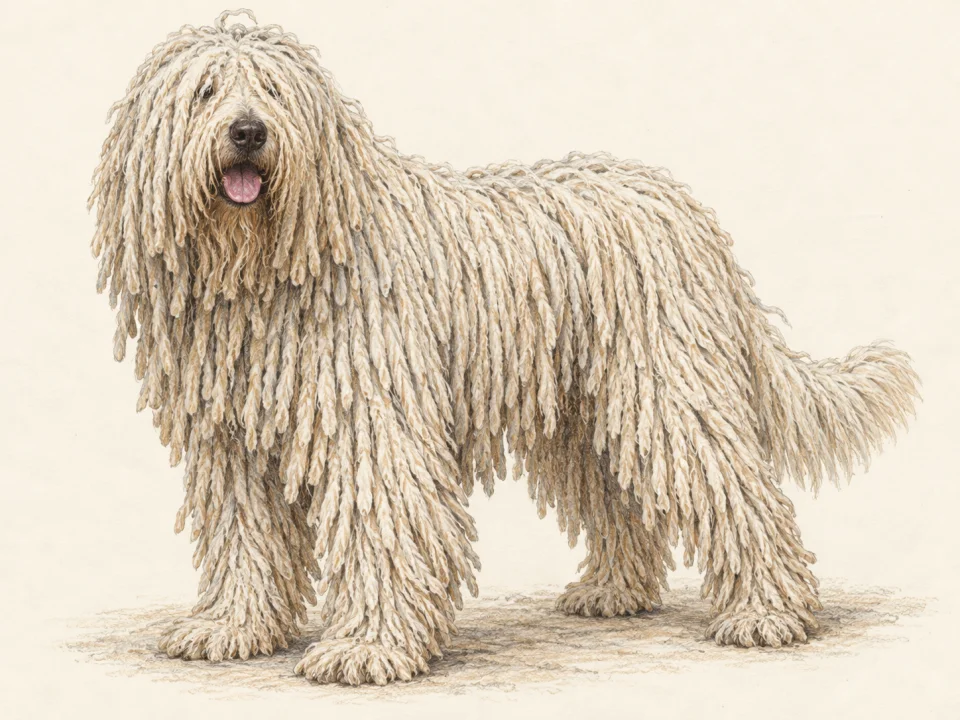
The cords develop; they do not eliminate grooming
The Komondor Club of America explains that cords form as the undercoat and outer coat combine, usually beginning around eight to twelve months. New growth can join neighboring cords at the base, so maintenance continues after the recognizable adult coat has appeared. The club recommends regular separation and emphasizes keeping the coat clean and dry. Before taking on this coat, arrange an in-person demonstration from someone experienced with Komondorok. Ask them to show the difference between maintaining separate cords and leaving a broad mat, and agree on when to get professional help rather than pulling at tight hair. Include drying in the plan before starting a bath: the job is not finished when shampoo is rinsed out. Persistent odor, discomfort or difficulty separating an area is a reason to seek help, not to dismiss the problem as simply how this breed is supposed to look.[1]
Visitor arrangements belong in the adoption decision
AKC identifies the Komondor as an independent flock guardian and cautions that unfamiliar loose dogs can trigger guarding responses. A dog park should therefore not be the household’s only exercise plan. Consider how you would give the dog activity in a secure setting and how visitors, delivery workers and care professionals would enter the property. Work out a comfortable separate area and a routine that can be used before the door opens, rather than improvising after someone has arrived. Discuss the specific dog’s handling and social history with the person placing it and seek qualified training support early. The coat can make the dog look almost sculptural, but it covers a powerful, agile animal. A household needs to be able to manage that individual safely; appearance, affection toward familiar people and previous experience with a smaller dog are not substitutes for that assessment.[2]
Frequently asked questions
Is a Komondor puppy born with long cords?
No. The Komondor Club of America describes cords beginning to form around eight to twelve months and growing longer over time. Their development still requires ongoing care.
Source [1]Can I finish a Komondor bath as soon as the shampoo is rinsed out?
Plan for thorough drying as well. The breed club stresses keeping the corded coat dry; arrange appropriate equipment and experienced help before bathing rather than leaving drying as an afterthought.
Source [2]Is a dog park the best way to exercise a Komondor?
It should not be assumed to be suitable. AKC warns that loose unfamiliar dogs can prompt guarding responses. Plan secure alternatives and assess the individual with knowledgeable help.
Source [1]FAQ sources
- Komondor Club of America — About the Komondor ↗FAQ reference 1
- American Kennel Club — Komondor ↗FAQ reference 2
Sources & methodology
Breed-level measurements and comparison scores provide context. They do not predict an individual dog's health, behaviour or suitability. Open the original publisher pages below to verify the facts and compare any later updates.
- Komondor Club of America — About the Komondor ↗Reference 1 · reviewed 2026-09-27
- American Kennel Club — Komondor ↗Reference 2 · reviewed 2026-09-27
Make it about your dog
Build a profile around your dog's age, experiences and everyday needs.
Meet your dog →Explore local care