
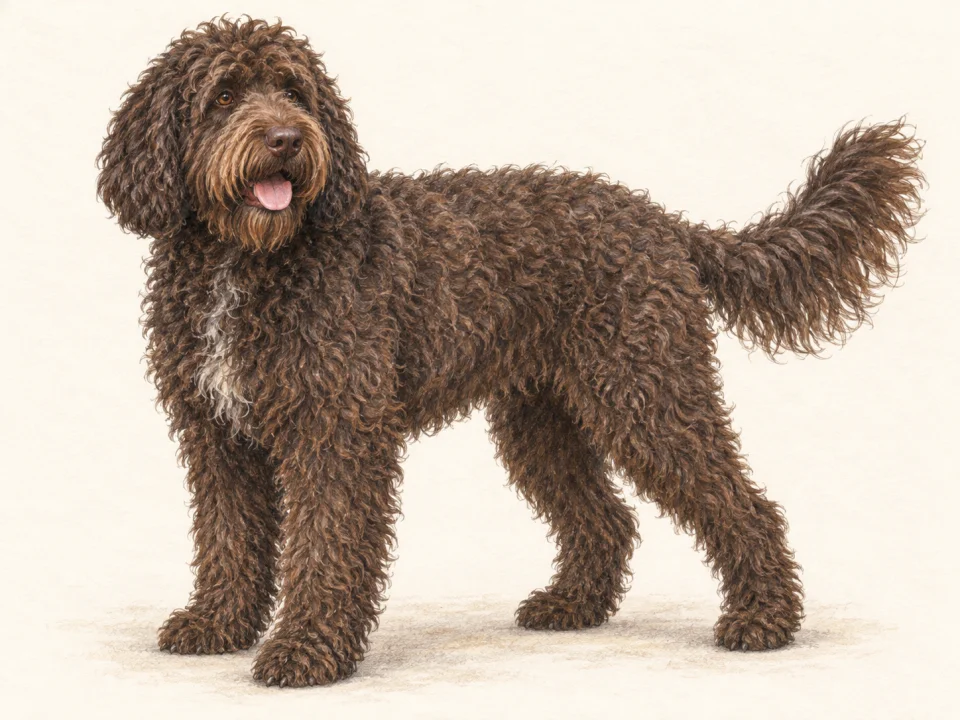
The curls cover a sporting dog
AKC lists the Barbet at 19–24.5 inches and 35–65 pounds. Its traditional work includes finding, flushing and retrieving birds, especially around water. When evaluating a household fit, consider opportunities for shared activity as well as the appeal of the coat. Measure the individual for equipment and keep body condition separate from how large a fluffy outline appears.[1]
Check the coat all the way to the skin
A surface brushing can leave tangles underneath dense curls. Work methodically through sections and use a suitable comb to check that the coat is clear without pulling. Ask a knowledgeable groomer to demonstrate tools and a maintainable trim. Schedule enough time between appointments for home care; professional grooming does not prevent every knot from developing afterward.[1]
Distinguish a show finish from comfortable pet care
The AKC grooming description includes a detailed show-style preparation and trim. A household needs a safe routine suited to the individual coat and lifestyle, not an attempt to reproduce a photograph without guidance. Discuss bathing, drying and coat length with the groomer. Pay attention to skin comfort and easy movement before deciding whether the outline looks perfectly rounded.[1]
Make water outings supervised shared activities
A background in retrieving from water does not make every swimming situation suitable. Introduce access gradually, check conditions and provide a clear way out. Supervise rather than assuming a willing swimmer cannot become tired. Appropriate walks, searching games and training also provide activity when water access is unavailable, so the routine can remain workable throughout the week.[1]
Keep lessons upbeat and separations manageable
The breed’s sensitive, responsive nature favors positive reward-based teaching. Choose a small achievable action and keep the setting calm enough for learning. Account for companionship during long days away and build comfortable short separations gradually. A sociable personality is a reason to plan household involvement, not a guarantee that the dog will adapt immediately to every absence.[1]
Gather health evidence beyond a sturdy appearance
AKC lists a lifespan of 12–14 years and recommends hip, elbow and eye evaluations. Ask for the dated records and which dogs they describe, then discuss wider family history with the breeder and veterinarian. Include regular ear, nail and dental care in your own routine. Neither a robust frame nor clear screening establishes that every later health issue has been excluded.[1]
Frequently asked questions
Is brushing the outside of a Barbet’s coat enough?
No. Dense curls need checking through to the skin for tangles. Ask a knowledgeable groomer to demonstrate appropriate brushing and combing rather than pulling through knots.
Source [1]Does every pet Barbet need a show-style trim?
The cited source describes show preparation, but a pet needs a comfortable, maintainable routine. Agree on coat length, drying and home care with a groomer familiar with the breed.
Source [1]Does a Barbet have to swim for exercise?
No. Suitable walks, play, searching and training can also provide activity. Swimming should be introduced and supervised safely rather than treated as an automatic requirement.
Source [1]Which Barbet screening records should I request?
Ask for hip, elbow and eye evaluation results identifying the dogs assessed, plus wider health history. Review unclear findings with a veterinarian.
Source [1]FAQ sources
- American Kennel Club — Barbet breed and care guidance ↗FAQ reference 1
Sources & methodology
Breed-level measurements and comparison scores provide context. They do not predict an individual dog's health, behaviour or suitability. Open the original publisher pages below to verify the facts and compare any later updates.
- American Kennel Club — Barbet breed and care guidance ↗Reference 1 · reviewed 2026-09-27
Make it about your dog
Build a profile around your dog's age, experiences and everyday needs.
Meet your dog →Explore local care