
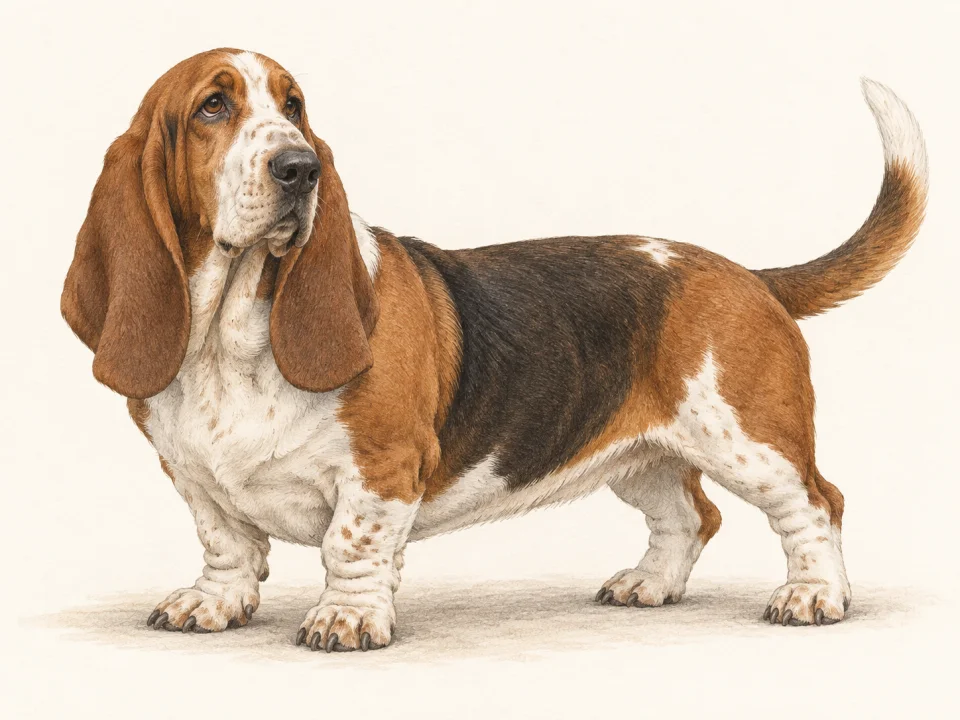
Plan for weight as well as height
AKC lists a weight reference of 40–65 pounds. A Basset’s low outline can conceal how much help it may need during transport or illness. Consider vehicle access and how you would assist the individual safely before choosing one. Assess body condition with your veterinarian rather than interpreting every heavy-looking feature as excess weight or feeding toward the largest number.[1]
Keep the daily walk moderate and purposeful
Bassets need regular exercise despite a reputation for taking life slowly. A suitable walk with time to investigate safe smells can provide activity and shared engagement. Match pace and distance to age and condition, then offer comfortable rest. A dog that settles readily after an outing still needs that routine; an apparent preference for the sofa should not become the entire care plan.[1]
Teach around the nose rather than competing with it
A scent-focused dog may seem inattentive when the environment becomes interesting. Practise a simple response in a quiet setting, reward it and add distractions gradually. Keep outings controlled instead of relying on a cue learned only indoors. Patient consistency is more useful than repeated demands while the dog is already absorbed in a trail, especially when a road or open gate is nearby.[1]
Make ear checks familiar and comfortable
Long hanging ears deserve regular inspection. Teach the dog to accept a brief gentle check before a problem occurs, and ask your veterinarian to demonstrate suitable care. Head shaking, scratching, pain or a change in odor needs assessment rather than repeated unplanned cleaning. Keep a note of changes so the discussion is about the individual’s signs, not simply the breed’s ear shape.[1]
Do not mistake a short coat for no shedding
AKC notes that Bassets can shed considerably despite smooth short hair. A weekly soft-brush or suitable shedding-tool session helps remove loose coat. Include nails and dental care rather than ending the routine when the surface looks tidy. Grooming also provides a chance to notice discomfort, but should not be forced over a painful area just to complete the session.[1]
Ask for the actual eye and DNA reports
The lifespan reference is 12–13 years. AKC’s recommended panel includes an eye examination and DNA tests for MPS I, Basset thrombopathia, Lafora disease and Basset primary open-angle glaucoma. Request results tied to the tested dogs and professional interpretation where needed. A list of test names in an advertisement is not the same as documentation, nor does it exclude every possible later illness.[1]
Frequently asked questions
Is a Basset Hound a lightweight dog because it is short?
No. AKC lists a 40–65 pound weight range. Plan transport and handling around the individual’s actual size, not only its low height.
Source [1]Do Basset Hounds shed?
Yes, sometimes considerably. Weekly brushing helps manage loose hair, while nails, ears and teeth need their own regular care.
Source [1]Is a Basset too stubborn to train?
It can learn with patient, consistent reward-based teaching. Begin away from strong scent distractions and increase difficulty gradually instead of repeating a cue in a setting where the dog cannot yet respond.
Source [1]Which signs make an ear check more than routine grooming?
Head shaking, persistent scratching, pain or an unusual odor call for veterinary assessment. Do not assume repeated cleaning will resolve every ear problem.
Source [1]FAQ sources
Sources & methodology
Breed-level measurements and comparison scores provide context. They do not predict an individual dog's health, behaviour or suitability. Open the original publisher pages below to verify the facts and compare any later updates.
- American Kennel Club — Basset Hound breed and care guidance ↗Reference 1 · reviewed 2026-09-27
Make it about your dog
Build a profile around your dog's age, experiences and everyday needs.
Meet your dog →Explore local care