
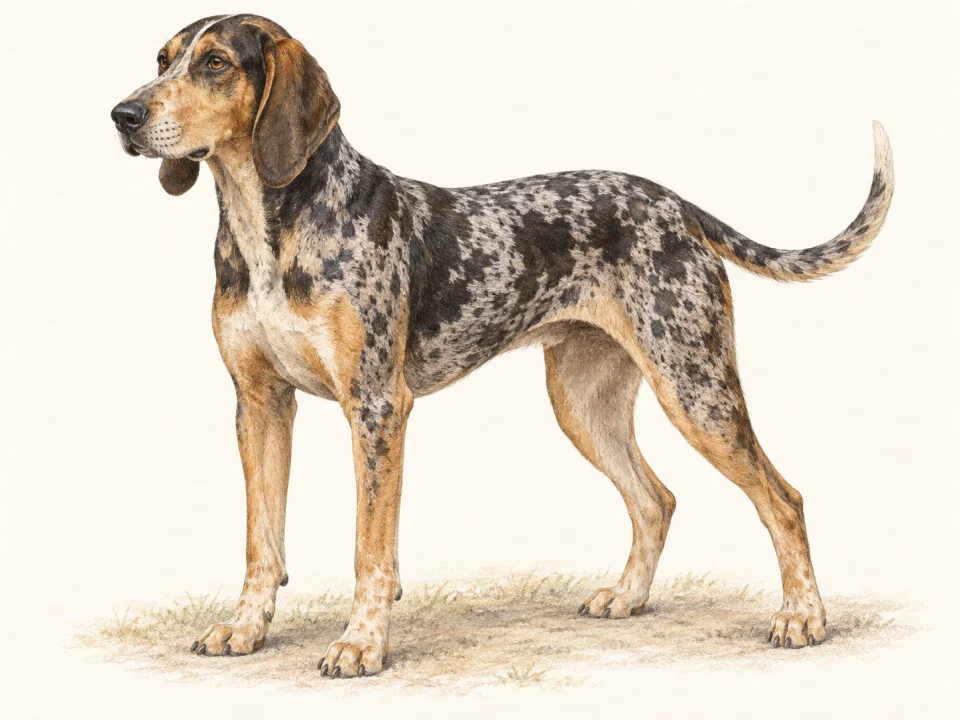
The name does not require a spotted coat
AKC describes solid, leopard and brindle patterns in this breed. A solid-colored dog therefore should not be dismissed solely because it lacks spots. Equally, a leopard pattern does not by itself establish breed identity. Check records and the individual history when choosing a dog, keeping appearance separate from the questions of health, behavior and suitability for your home.[1]
Secure the route before following the nose
Tracking ability is central to the breed’s background. A new scent can draw attention far beyond the household boundary, so use a leash on outings and secure enclosure for free movement. Practise attention and returning for rewards in easy settings, then add difficulty gradually. Training is valuable, but should not be used as proof that a compelling trail will be ignored.[1]
Offer an active schedule you can sustain
The AKC guidance describes an energetic hunting dog best matched to an active home. Map out ordinary weekday activity as well as weekend plans. A supervised search game or short learning task adds mental work to suitable walks and play. If the only available plan is leaving the dog alone in a yard, reconsider how daily engagement will actually happen.[1]
Measure the individual within the broad size range
The source lists males at 22–27 inches and 45–75 pounds, females at 21–25 inches and 35–65 pounds. Those ranges cover considerable variation. Measure before selecting a harness, crate or vehicle arrangement and assess body condition separately. A lighter dog is not automatically underweight, and feeding toward the largest number is not a sound growth strategy.[1]
A smooth outline still hides a double coat
The outer coat is relatively rough over a finer undercoat. Weekly brushing and occasional bathing are the AKC baseline, with regular attention to nails, ears and teeth. After a wooded outing, inspect the coat and feet for caught material. Make checks brief and cooperative; pain or an irritated area warrants advice rather than repeated grooming over the same spot.[1]
Discuss merle breeding with evidence rather than appearance
The health guidance warns that mating two merle dogs can produce puppies with increased hearing and vision risks. Ask about parentage, relevant testing and individual veterinary assessments instead of choosing only by color. Do not diagnose impairment from coat appearance. AKC lists a lifespan of 12–15 years but no named screening panel in this entry, so request current breed guidance and identifiable records.[1]
Frequently asked questions
Must an American Leopard Hound have spots?
No. The breed can be solid-colored, leopard-patterned or brindled. Coat pattern alone cannot establish or exclude an individual’s breed identity.
Source [1]Can recall training replace a fence for this breed?
No reliable promise can be made that training will interrupt every scent pursuit. Use secure containment and a leash outside enclosed areas while practising useful recall skills.
Source [1]What should I ask about a merle puppy’s parents?
Ask about parentage and relevant health assessments. The cited AKC guidance warns of increased hearing and vision risks from merle-to-merle matings; individual assessment is more useful than judging by appearance.
Source [1]Is the American Leopard Hound a low-activity companion?
It is an energetic tracking breed. Plan regular suitable physical activity and mental engagement rather than relying on yard access alone.
Source [1]FAQ sources
Sources & methodology
Breed-level measurements and comparison scores provide context. They do not predict an individual dog's health, behaviour or suitability. Open the original publisher pages below to verify the facts and compare any later updates.
- American Kennel Club — American Leopard Hound breed and care guidance ↗Reference 1 · reviewed 2026-09-27
Make it about your dog
Build a profile around your dog's age, experiences and everyday needs.
Meet your dog →Explore local care