
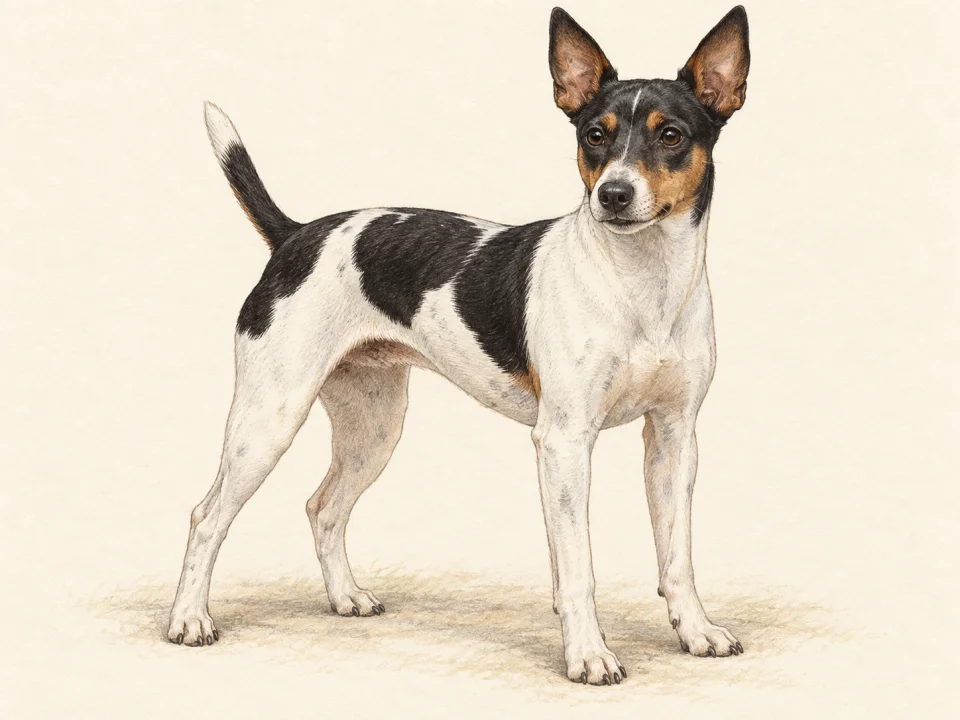
Use height to understand the two size divisions
Under the AKC standard, Miniature means 10 through 13 inches at the shoulder, while Standard means over 13 through 18 inches. These are height divisions, not separate guarantees about temperament or exercise needs. If a breeder describes a puppy as miniature, ask about the measured adult relatives and the uncertainty in predicting the puppy’s eventual size. Select a harness and carrier from the individual’s measurements, checking fit again as it grows. Photographs can be misleading when there is no scale. The standard also permits several natural ear positions and a naturally long tail; neither feature alone is a reason to assume the dog is a different breed. Pedigree documentation and an appearance-based guess answer different questions.[1]
Inspect the enclosure from a small hunter’s perspective
AKC warns that the urge to chase can override an off-leash opportunity when a cat or squirrel appears. Practice recall, but use a leash or genuinely secure enclosure rather than treating a successful recall in the kitchen as proof outdoors. Before play, check beneath gates, around the bottom of fencing and where maintenance has left openings. The breed’s historical work includes pursuit below ground, so look for disturbed soil as well as obvious gaps. For homes with pet rodents or other small animals, plan separate secure spaces and do not use a face-to-face meeting to test whether the terrier will be gentle. Offer supervised games and training that do not depend on chasing wildlife. A small dog’s escape route may be easy for a standing adult to overlook.[2]
Ask for named tests rather than a general health claim
The RTCA’s July 2021 statement lists cardiac, hip, patella, Legg-Calve-Perthes and primary lens luxation DNA assessments among its required tests at that time. It distinguishes optional specialist eye examinations, BAER hearing tests and elbow evaluations. Confirm the current protocol with the club when considering a litter, rather than treating a dated document as an unchanging rule. Ask for the individual findings and dates for both parents, with the dog’s identification attached. A primary lens luxation DNA result does not describe every aspect of eye health, and a genetic panel does not replace the joint examinations. Have your veterinarian explain unclear results before you make a decision; a list of test names without results is incomplete evidence.[3]
Frequently asked questions
Is a 13-inch Rat Terrier miniature or standard under AKC rules?
Miniature. The standard places dogs from 10 through 13 inches in that division; the Standard division begins above 13 inches and extends through 18 inches, measured at the shoulder.
Source [1]Can recall training replace a leash around squirrels?
Do not rely on that. AKC highlights the breed’s strong chase instinct. Use a leash or secure enclosure while continuing reward-based recall practice.
Source [2]Does a clear lens-luxation DNA result mean every eye condition is excluded?
No. The club statement lists the DNA test separately from a specialist eye examination. Ask what each report actually assesses and discuss the results with your veterinarian.
Source [3]FAQ sources
- American Kennel Club — Rat Terrier standard ↗FAQ reference 1
- American Kennel Club — Rat Terrier care ↗FAQ reference 2
- Rat Terrier Club of America — July 2021 health statement ↗FAQ reference 3
Sources & methodology
Breed-level measurements and comparison scores provide context. They do not predict an individual dog's health, behaviour or suitability. Open the original publisher pages below to verify the facts and compare any later updates.
- American Kennel Club — Rat Terrier standard ↗Reference 1 · reviewed 2026-09-27
- American Kennel Club — Rat Terrier care ↗Reference 2 · reviewed 2026-09-27
- Rat Terrier Club of America — July 2021 health statement ↗Reference 3 · reviewed 2026-09-27
Make it about your dog
Build a profile around your dog's age, experiences and everyday needs.
Meet your dog →Explore local care