
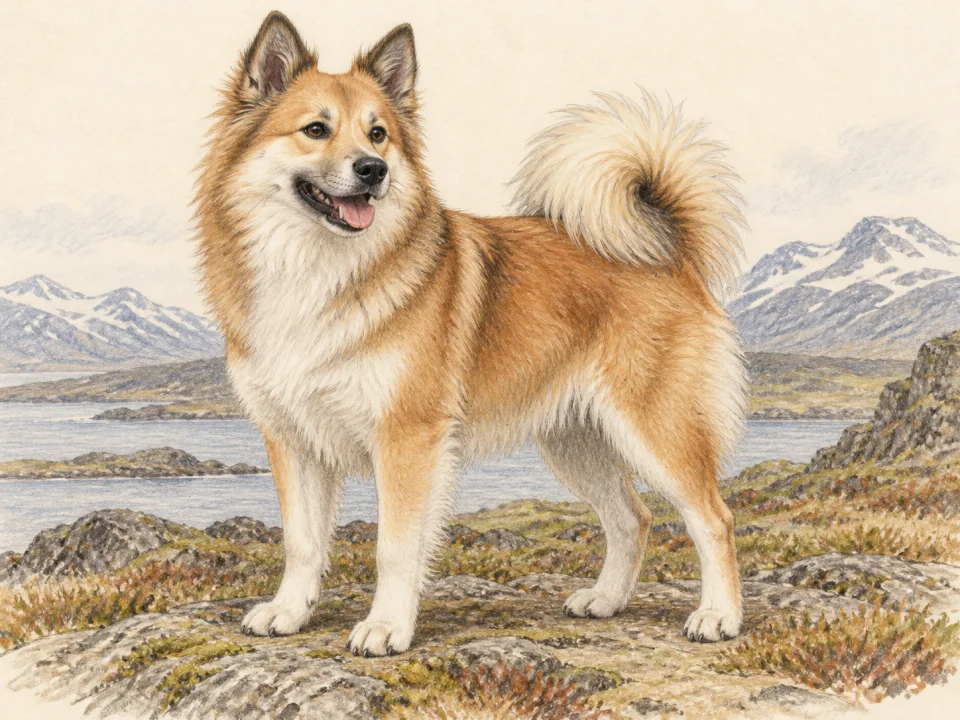
Put sound tolerance on the household checklist
The AKC standard effective March 2026 explicitly connects barking with the Icelandic Sheepdog’s herding and driving work. Do not assume a friendly expression means a quiet companion for a sound-sensitive building. Ask a breeder or rescue what prompts the individual to vocalize and what happens during arrivals, outdoor activity and separation. Identify which situations your home can manage before choosing the dog. In training, teach useful alternatives and reward settled behavior with patient guidance; provoking barking to punish it does not help you understand the trigger. If vocalization accompanies distress, seek appropriate help rather than treating every instance as ordinary herding behavior. The standard describes an ideal outgoing temperament, not a guarantee that every dog will enjoy every visitor. Keep introductions comfortable and pay attention to the individual’s response.[1]
Short-haired does not mean without an undercoat
The breed has both long and shorter coats, and both include a dense, soft undercoat. AKC recommends regular brushing, with more frequent care during seasonal shedding. Ask a groomer to show how to reach loose undercoat gently, including the thicker neck, hindquarters and tail, rather than only brushing the visible surface. The current standard also requires dewclaws and describes double rear dewclaws as desirable; remember those nails during care checks instead of assuming walks wear them all down. A practical care session can combine a comfortable coat check with a look at nails, stopping for help if anything is painful. Separately, plan shared walks, play or training and coverage for necessary absences. AKC emphasizes family involvement, so choosing the shorter coat does not reduce the dog’s need for company or suitable activity.[2]
Frequently asked questions
Is barking unusual for an Icelandic Sheepdog?
No. The AKC standard links barking to its livestock work. Consider your household’s sound tolerance, but investigate distress or a sudden change rather than dismissing every vocalization as breed behavior.
Source [1]Does the shorter coat lack the dense undercoat?
No. The standard describes a thick, soft undercoat in both coat lengths. Both need appropriate grooming, especially when loose hair increases.
Source [1]FAQ sources
Sources & methodology
Breed-level measurements and comparison scores provide context. They do not predict an individual dog's health, behaviour or suitability. Open the original publisher pages below to verify the facts and compare any later updates.
- AKC Official Standard — Icelandic Sheepdog, effective March 2026 ↗Reference 1 · reviewed 2026-09-27
- American Kennel Club — Icelandic Sheepdog ↗Reference 2 · reviewed 2026-09-27
Make it about your dog
Build a profile around your dog's age, experiences and everyday needs.
Meet your dog →Explore local care