
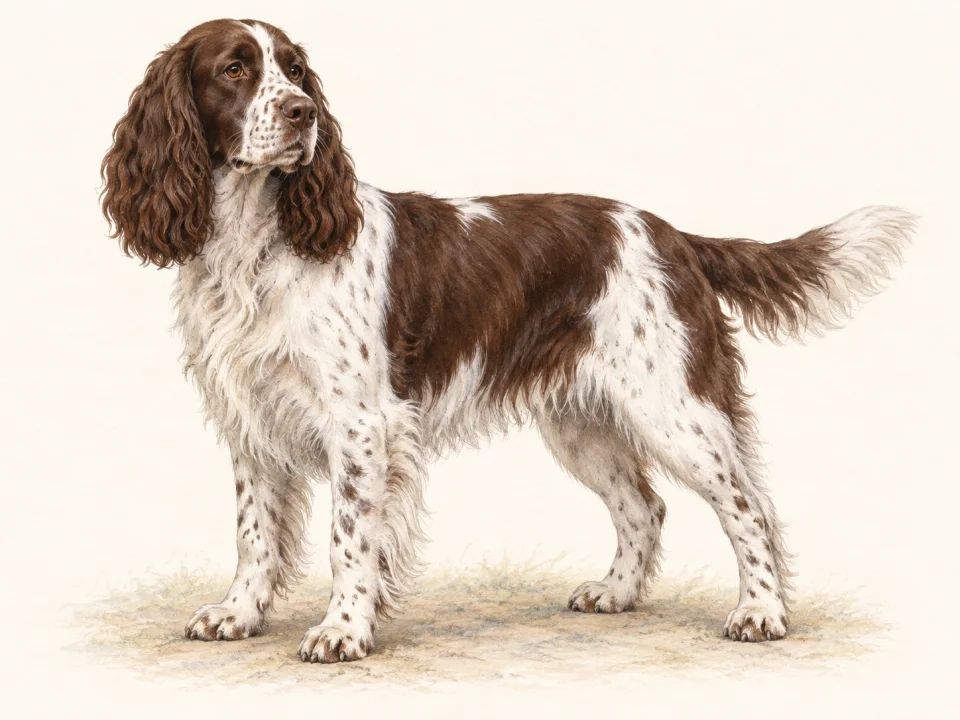
Field and bench describe backgrounds, not two guarantees
The US parent club describes field-bred Springers as typically leaner, with a lighter coat, while show or bench Springers generally have more coat and feathering. Both backgrounds can participate in performance and companion activities. Use that distinction to start a conversation, not to conclude that a bench-bred puppy will need little activity or a field-bred dog cannot live comfortably at home. Ask what the parents do, how the puppy has been raised and what support is available for your intended activities. Request a grooming demonstration on an adult with a comparable coat. Seeing the work behind the appearance is more useful than selecting from a photograph and discovering the maintenance afterward.[2]
Two different kinds of eye evidence belong in the paperwork
ESSFTA’s 2024 health statement lists PRA-crd4/cord1 genetic testing separately from clinical eye examinations. It recommends parental ophthalmologist examinations within twelve months before breeding, continued annual examinations, and an ophthalmologist examination of puppies. Hips and elbows are also included in its minimum screening recommendations. A DNA result and an eye examination answer different questions: record both rather than accepting the word “clear” without knowing which assessment it describes. For a puppy discussion, bring a checklist with the parents’ identities, test names, examination dates and the puppy’s own examination record. Ask your veterinarian to explain the findings and gaps. The statement also cautions that a genetic finding need not correspond to clinical disease, so avoid interpreting a report as a diagnosis or a guarantee on your own.[3]
Put companionship into the weekday plan
AKC describes a dog that wants to be with its family and may develop problems when regularly left alone for long periods. Before concentrating on weekend hikes or a sport class, map an ordinary weekday: who is present, when the dog can go out and who provides care if work runs late. A yard does not answer those questions. For an adult dog, ask what time alone already looks like and build from observed experience. For a puppy, arrange support rather than assuming future trainability solves an immediate care gap. Daily interaction can include short training, exploration and play suited to the individual; it need not all be strenuous exercise. Leave room for rest and for the coat checks that follow outdoor activity, particularly where feathering collects debris.[1]
Frequently asked questions
Are bench-bred Springers automatically low-energy pets?
No. The parent club’s distinction includes differences in build and coat, and both backgrounds participate in activities. Assess the individual and the daily care you can provide.
Source [1]Does a PRA DNA result replace an ophthalmologist examination?
No. ESSFTA’s 2024 statement recommends these separately. Ask for the named DNA result and dated clinical eye examination records.
Source [2]Does a fenced yard replace time with the family?
No. AKC emphasizes companionship as well as activity. Plan human care and interaction during ordinary workdays rather than relying on access to a yard alone.
Source [3]FAQ sources
- ESSFTA — Frequently Asked Questions ↗FAQ reference 1
- ESSFTA Health Statement — August 2024 ↗FAQ reference 2
- American Kennel Club — English Springer Spaniel ↗FAQ reference 3
Sources & methodology
Breed-level measurements and comparison scores provide context. They do not predict an individual dog's health, behaviour or suitability. Open the original publisher pages below to verify the facts and compare any later updates.
- American Kennel Club — English Springer Spaniel ↗Reference 1 · reviewed 2026-09-27
- ESSFTA — Frequently Asked Questions ↗Reference 2 · reviewed 2026-09-27
- ESSFTA Health Statement — August 2024 ↗Reference 3 · reviewed 2026-09-27
Make it about your dog
Build a profile around your dog's age, experiences and everyday needs.
Meet your dog →Explore local care