
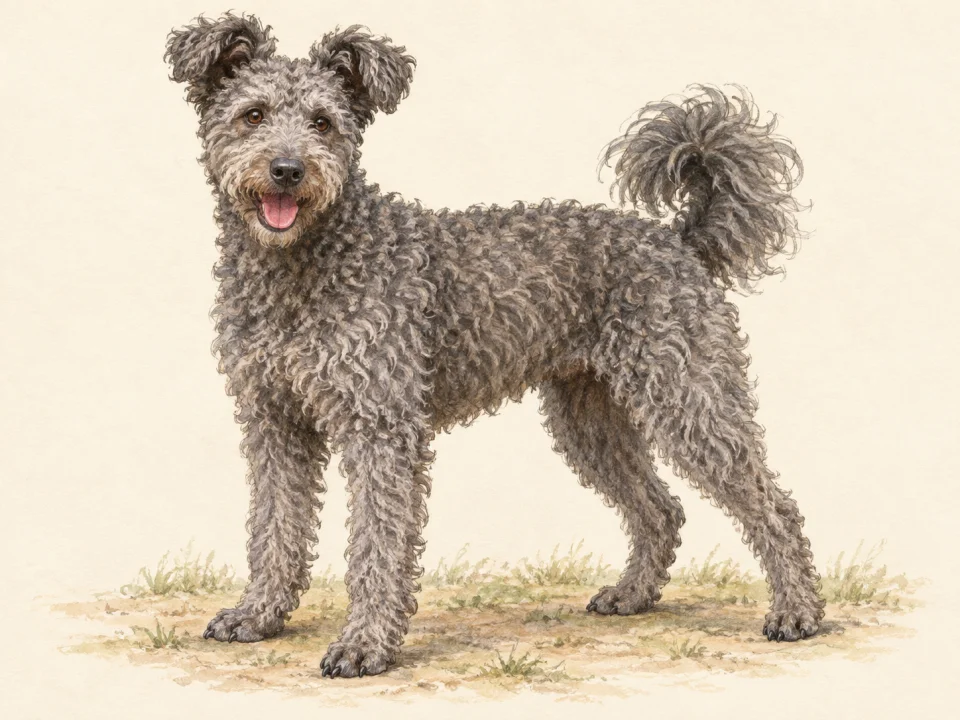
Keep the curls without overlooking tangles
AKC describes a combination of softer and harsher hairs. Its grooming sequence is combing, wetting the coat so the curls reform, then tidying the shape; it advises against blow-drying for the characteristic finish. This is not the cord-maintenance routine used for a Puli. Ask a groomer who knows Pumik to show you the difference between a healthy curl and a tangle close to the skin. Agree whether your appointment is for routine maintenance or a show-style trim, and put comfort and accessible skin checks ahead of a particular silhouette. AKC gives three to six weeks as a combing interval, but inspect your own dog between appointments and bring developing tangles to the groomer’s attention. Hair released during grooming means the coat still needs maintenance even when little hair is visible on the floor.[1]
Make a noise plan for the home you actually have
AKC notes that Pumik enjoy vocalizing and need mental as well as physical activity. Before choosing one for an apartment or shared building, consider the sounds at your doorway and the places from which a dog could watch passing people. Ask a breeder or rescue how the individual responds to these situations and how readily it settles afterward. Keep a simple observation note: what happened immediately before the barking, where the dog was and what helped it become comfortable again. That gives a trainer more useful information than the label “stubborn.” Teach and reward an alternative such as moving with you away from the window or settling in a quieter area. AVSAB recommends reward-based methods; shouting or using aversive equipment is not an appropriate substitute. Seek qualified help when barking accompanies persistent fear, lunging or nipping.[3]
Separate DNA results from joint examinations
The breed club’s health statement approved in March 2020 lists hip and patella evaluations plus DNA results for primary lens luxation and degenerative myelopathy as requirements for its breeding stock. It lists eye examinations and elbow evaluations as optional additional information. Read that as a dated club policy, and check the club for updates when considering a litter. A DNA panel does not replace a hip or patella assessment. Ask for the reports under each parent’s registered name, record the examination dates and have a veterinarian explain unfamiliar findings. If the seller supplies only a list of tests, request the results as well. Use the information to ask informed questions about the mating rather than interpreting the number of tests as a health score.[2]
Frequently asked questions
Should a Pumi coat form cords like a Puli’s?
No. The Pumi’s care routine maintains curls through combing and wetting, rather than developing long cords. Have an experienced groomer demonstrate the intended texture and how to detect tangles.
Source [1]Is a Pumi a quiet companion because it is small?
Do not assume that. AKC describes a vocal, active breed. Assess the individual and the noise demands of your home before choosing one, with time available for training and activity.
Source [1]Does a genetic test panel cover the recommended joint checks?
No. The club’s March 2020 statement distinguishes DNA testing for primary lens luxation and degenerative myelopathy from hip and patella evaluations. Request the actual records for each rather than treating them as interchangeable.
Source [2]FAQ sources
Sources & methodology
Breed-level measurements and comparison scores provide context. They do not predict an individual dog's health, behaviour or suitability. Open the original publisher pages below to verify the facts and compare any later updates.
- American Kennel Club — Pumi breed and care information ↗Reference 1 · reviewed 2026-09-27
- Hungarian Pumi Club of America — Health statement approved March 30, 2020 ↗Reference 2 · reviewed 2026-09-27
- American Veterinary Society of Animal Behavior — Humane training guidance ↗Reference 3 · reviewed 2026-09-27
Make it about your dog
Build a profile around your dog's age, experiences and everyday needs.
Meet your dog →Explore local care