
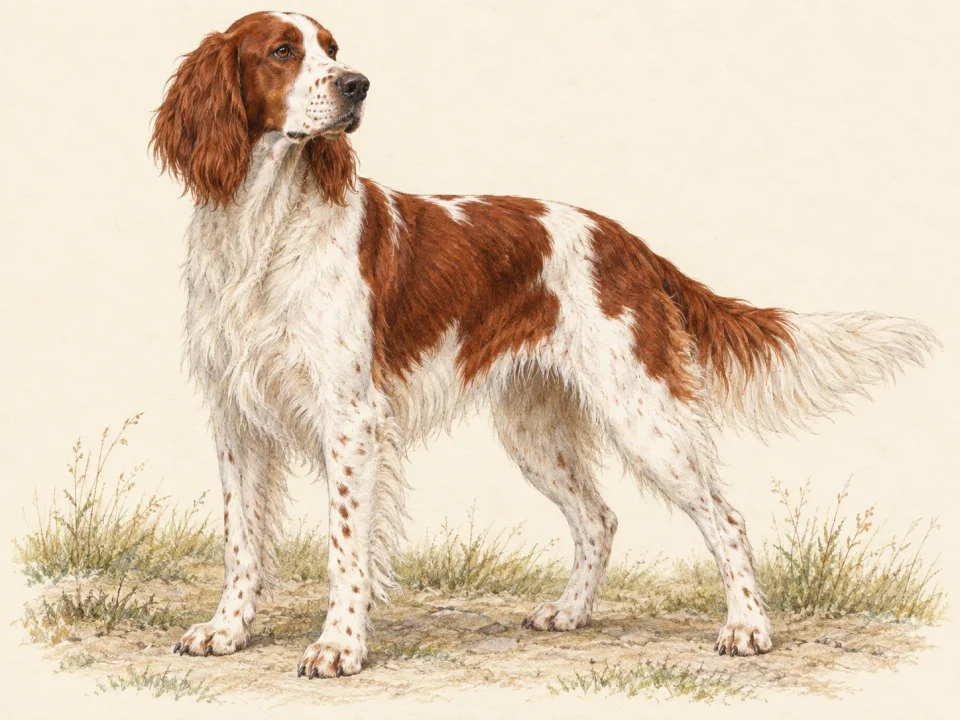
Plan for a bird dog, including the quiet parts of the day
AKC describes a high-energy hunting breed that responds to short, positive and engaging training. Before choosing one, consider how activity, learning and rest will fit into ordinary weekdays. Ask to see the individual beyond an exciting field session: how does it settle afterward, accept handling and respond to familiar instructions? A puppy’s enthusiasm should not set the pace for sustained running or cycling. Discuss appropriate progression with your veterinarian and provide manageable activity while the dog grows, rather than using a fixed birthday as automatic clearance for demanding exercise. After outings, make time for the coat. AKC recommends weekly brushing and combing to address tangles while retaining a natural appearance. Have a groomer demonstrate gentle care of the longer hair and ears. The red-and-white pattern is eye-catching, but it does not make the dog easier to manage around birds or remove the need for secure handling.[1]
Ask for the test name, not simply a genetic panel
The association’s 2018 health document separately lists hip evaluation, an ophthalmologist eye examination and a DNA test for canine leukocyte adhesion deficiency, or CLAD. It labels PRA DNA testing, thyroid assessment and vWD DNA testing as optional in that document. Keep those distinctions visible when reviewing breeder information. Ask which tests each parent actually had, obtain the reports and confirm current recommendations with the association or veterinarian; an older list should not be treated as an up-to-date laboratory directory. A broad statement that a genetic panel was clear leaves both coverage and individual findings uncertain. Match the report to the named dog and condition, and keep clinical eye findings separate from DNA results. Use professional interpretation for any uncertain result rather than assuming one clear test covers every health concern.[2]
Frequently asked questions
Should an Irish Red and White Setter have an elaborately sculpted coat?
AKC describes a natural presentation with routine brushing and combing, allowing tidying for neatness. Ask for a practical grooming demonstration rather than treating a show photograph as the entire care plan.
Source [1]Does the CLAD DNA test replace an ophthalmologist examination?
No. The association’s health document lists those as separate assessments. Obtain the actual records and confirm current recommendations instead of treating one genetic result as a complete health clearance.
Source [2]FAQ sources
Sources & methodology
Breed-level measurements and comparison scores provide context. They do not predict an individual dog's health, behaviour or suitability. Open the original publisher pages below to verify the facts and compare any later updates.
- American Kennel Club — Irish Red and White Setter ↗Reference 1 · reviewed 2026-09-27
- Irish Red and White Setter Association of America — Health Statement, 2018 document ↗Reference 2 · reviewed 2026-09-27
Make it about your dog
Build a profile around your dog's age, experiences and everyday needs.
Meet your dog →Explore local care