
Plan for alertness before choosing a busy living environment
AKC describes the Mudi as vocal, energetic and interested in work. In a home with a shared hallway, frequent visitors or a street-facing window, first consider what the dog will regularly notice. Ask the breeder or rescue how the individual responds to those situations and how readily it settles afterward. Write down one manageable response for arrivals: where the dog can wait, who will greet the visitor and what calm behavior you can reward. Practice at a quiet time before expecting success during a delivery. Physical activity matters, but more running is not the only answer to every bark. Include learning, suitable outlets for activity and a comfortable resting space. If barking or distress remains difficult to manage, seek qualified help to understand the trigger rather than assuming the dog simply needs to be exhausted. AKC also notes jumping and digging abilities, so inspect the actual outdoor boundary and gates instead of judging security only by the dog’s size.[2]
Read the coat and tail correctly, then look beyond appearance
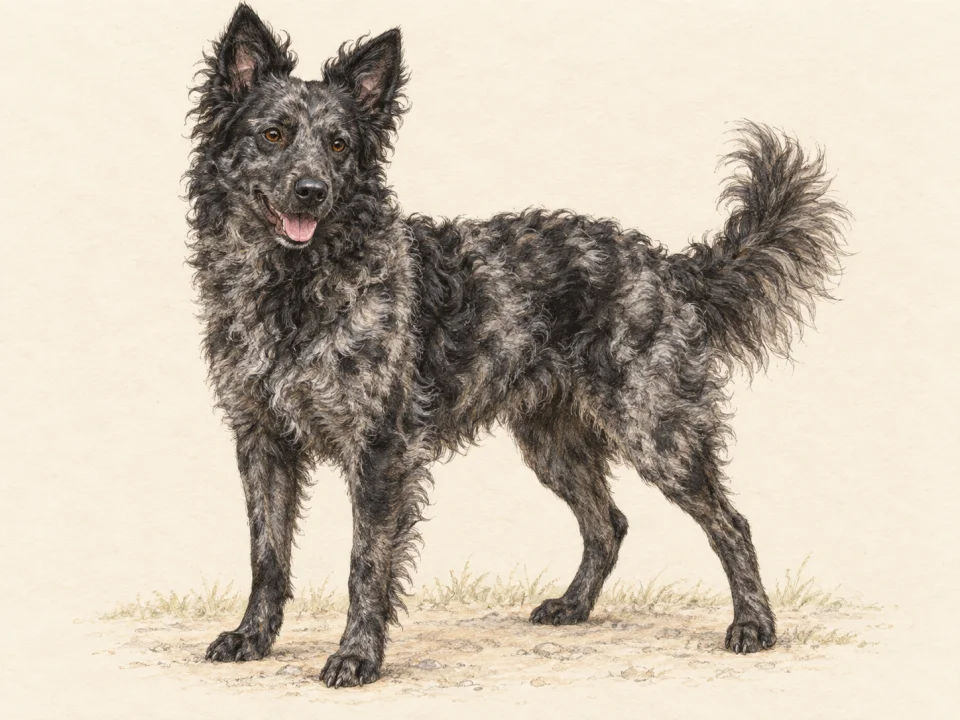
The FCI standard describes short, smooth hair on the head and front of the limbs, with a longer wavy or slightly curly coat on the body. It also recognizes dogs born with or without a natural short tail. A smooth face beside a curly body is therefore not an inconsistency, and a short tail does not by itself tell you how it came to be that length. Ask for the individual’s history when that matters. Coat care is generally straightforward: AKC recommends occasional bathing and brushing or combing to remove dead hair. Learn the routine on the dog you will actually care for, including comfortable nail handling. When comparing candidates, spend at least as much attention on daily behavior and documented health information as on color. Ask to see ordinary interaction and settling, not only a photograph or an impressive performance clip. Herding ability and an attractive appearance answer different questions from whether your schedule and environment meet the dog’s needs.[1]
Frequently asked questions
Is a Mudi likely to be a quiet, low-activity companion?
Do not choose one on that assumption. AKC describes a vocal, alert and energetic working breed. Ask about the individual’s response to everyday triggers and plan activity, learning and rest that fit your household.
Source [1]Is it normal for a Mudi to have a smooth face and a curly body?
Yes. The FCI standard describes short, smooth hair on the head and front of the limbs and a longer wavy or slightly curly body coat. The whole dog is not supposed to have identical hair texture.
Source [2]Can a Mudi be born with a short tail?
Yes. The FCI standard accepts a natural short tail as well as a full tail. Appearance alone cannot establish an individual dog’s history; ask the breeder or rescue for that information.
Source [2]FAQ sources
- American Kennel Club — Mudi ↗FAQ reference 1
- Fédération Cynologique Internationale — Mudi standard, September 2023 ↗FAQ reference 2
Sources & methodology
Breed-level measurements and comparison scores provide context. They do not predict an individual dog's health, behaviour or suitability. Open the original publisher pages below to verify the facts and compare any later updates.
- Fédération Cynologique Internationale — Mudi standard, September 2023 ↗Reference 1 · reviewed 2026-09-27
- American Kennel Club — Mudi ↗Reference 2 · reviewed 2026-09-27
Make it about your dog
Build a profile around your dog's age, experiences and everyday needs.
Meet your dog →Explore local care