
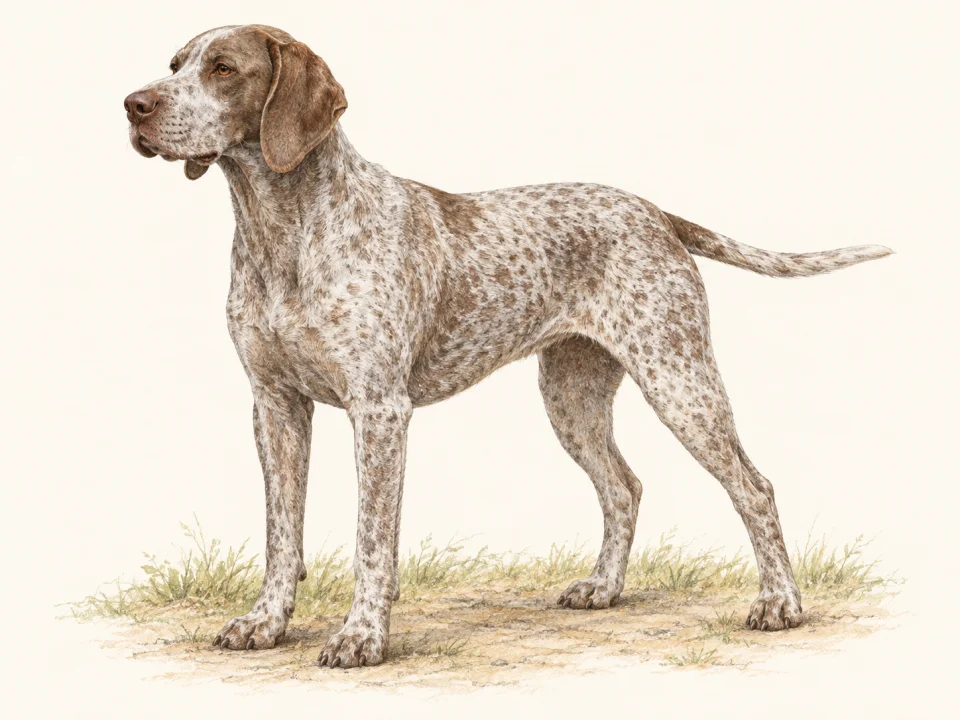
Understand what Bourbonnais Pointing Dog means
The English name describes the breed’s original task: locating game for a hunter. AKC describes a relatively compact pointer suited to a hunter traveling on foot. That background matters when choosing a companion. A quiet expression or affectionate greeting does not establish that the dog will be satisfied with brief bathroom outings and little opportunity to explore with its person.[1]
Choose activities you can sustain outside hunting season
Build a routine with suitable walks, searching games and controlled retrieves, adjusting the effort to age and condition. For a nonhunting home, list the activities you can actually offer on ordinary workdays before committing. A fenced yard can support play, but shared tasks give you opportunities to observe attention, practice cues and learn what helps the individual settle afterward.[1]
Keep instruction calm and understandable
The cited breed guidance emphasizes gentle handling and sensitivity to the handler. Start a new cue in a quiet place, reward a clear success and increase difficulty gradually. If the dog disengages, simplify the task instead of making the lesson louder. Household members can agree on the same release and recall cues so a willing learner receives consistent information.[1]
Use the short coat as a chance for a quick field check
The fine, dense coat is short, with somewhat coarser hair over the back and finer hair on the head and ears. Periodic brushing and occasional bathing form a simple baseline. After outdoor activity, inspect for debris and check the ears, feet and skin while handling gently. Regular nail and dental care remain necessary even when the coat looks clean.[1]
Plan around a medium-sized adult
AKC references 19–22.5 inches and 35–53 pounds. Measure the vehicle space, resting area and equipment for the individual rather than buying everything for a small puppy. Teach calm entry through doors and an uncomplicated resting cue alongside active games. An affectionate sporting dog can benefit from a predictable transition between outdoor exploration and quieter time near the family.[1]
Ask for evidence without inventing a screening checklist
AKC gives a reference lifespan of 10–12 years and advises discussing breed health and screening with responsible breeders. The cited page does not supply a named testing panel. Ask which examinations and genetic tests were performed, request identifiable reports and review their scope with your veterinarian. Neither a general healthy-breed description nor a lifespan range guarantees the future health of a puppy.[1]
Frequently asked questions
Is the Braque du Bourbonnais the same as a Bourbonnais Pointing Dog?
Yes. Bourbonnais Pointing Dog is the English name used by AKC for this French breed.
Source [1]Can a nonhunter provide a suitable home?
Potentially, if the household can provide appropriate shared activity and learning. Decide how walks, searching games and controlled retrieves will fit normal workdays before choosing the breed.
Source [1]What training approach suits a sensitive Bourbonnais?
The cited guidance calls for gentle handling. Use clear cues, manageable steps and rewards; simplify a confusing task instead of increasing pressure.
Source [1]Does its AKC page provide a specific health-test panel?
The cited page recommends health screening but does not list a named panel. Ask for actual reports and veterinary interpretation rather than assuming a standard set was completed.
Source [1]FAQ sources
Sources & methodology
Breed-level measurements and comparison scores provide context. They do not predict an individual dog's health, behaviour or suitability. Open the original publisher pages below to verify the facts and compare any later updates.
- American Kennel Club — Braque du Bourbonnais breed and care guidance ↗Reference 1 · reviewed 2026-09-27
Make it about your dog
Build a profile around your dog's age, experiences and everyday needs.
Meet your dog →Explore local care